

348
Gingele et al.
concentration
Ba(partlculate)
oxygen
minimum
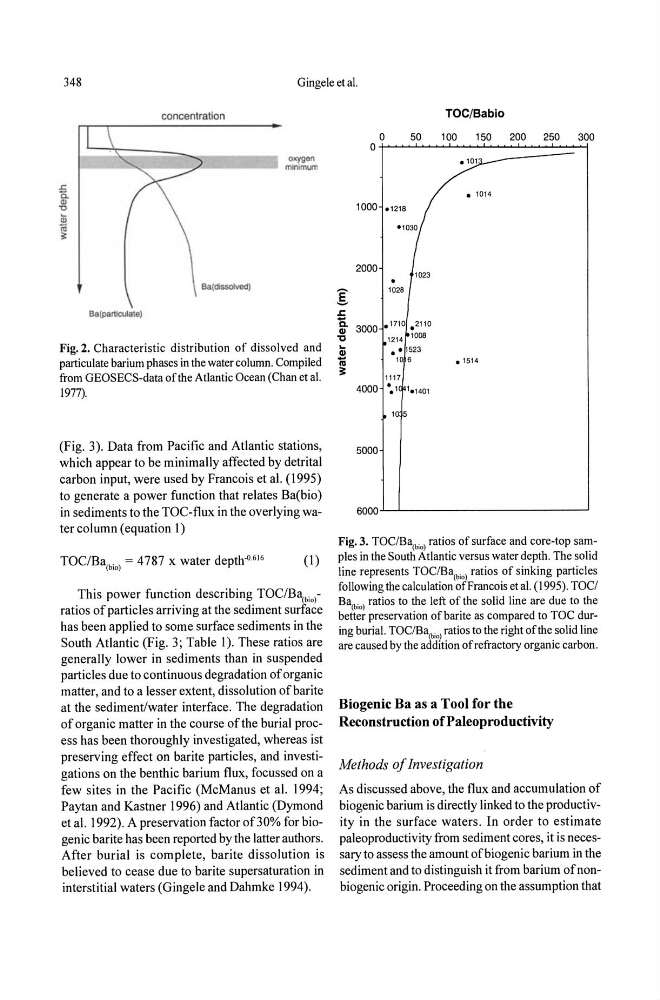
Fig. 2. Characteristic distribution of dissolved and
particulate barium phases in the water column. Compiled
from GEOSECS-data of the Atlantic Ocean (Chan et al.
1977).
(Fig. 3). Data from Pacific and Atlantic stations,
which appear to be minimally affected by detrital
carbon input, were used by Francois et at. (1995)
to generate a power function that relates Ba(bio)
in sediments to the TOC-flux in the overlying watercolumn(equation 1)
TOC/Ba(biO) = 4787 x water depth· o61 6
(I)
This power function describing TOC/Ba(biO)ratios of particles arriving at the sediment surface
has been applied to some surface sediments in the
South Atlantic (Fig. 3; Table I). These ratios are
generally lower in sediments than in suspended
particles due to continuous degradation of organic
matter, and to a lesser extent, dissolution of barite
at the sediment/water interface. The degradation
of organic matter in the course of the burial process has been thoroughly investigated, whereas ist
preserving effect on barite particles, and investigations on the benthic barium flux, focussed on a
few sites in the Pacific (McManus et at. 1994;
Pay tan and Kastner 1996) and Atlantic (Dymond
et at. 1992). A preservation factor of30% for biogenic barite has been reported by the latter authors.
After burial is complete, barite dissolution is
believed to cease due to barite supersaturation in
interstitial waters (Gingele and Dahmke 1994).
TOC/Babio
o
50
100
150
200
250
300
O~~~~~~~~~~~~~
2000
J:
g. 3000 .1710 .2110
"tl
1214 1008
•• 523
10 6
1117
4000 ·.1 1.1401
1 5
5000
.1514
6000~~------------------------~
Fig. 3. TOC/Ba(biO) ratios of surface and core-top samples in the South Atlantic versus water depth. The solid
line represents TOC/Ba(biO) ratios of sinking particles
following the calculation of Francois et al. (1995). TOC/
Ba(bio) ratios to the left of the solid line are due to the
better preservation of barite as compared to TOC during burial. TOC/Ba(bio) ratios to the right of the solid line
are caused by the addition of refractory organic carbon.
Biogenic Ba as a Tool for the
Reconstruction of Paleoproductivity
Methods of Investigation
As discussed above, the flux and accumulation of
biogenic barium is directly linked to the productivity in the surface waters. In order to estimate
paleoproductivity from sediment cores, it is necessary to assess the amount of biogenic barium in the
sediment and to distinguish it from barium of nonbiogenic origin. Proceeding on the assumption that
Gingele et al.
concentration
Ba(partlculate)
oxygen
minimum
Fig. 2. Characteristic distribution of dissolved and
particulate barium phases in the water column. Compiled
from GEOSECS-data of the Atlantic Ocean (Chan et al.
1977).
(Fig. 3). Data from Pacific and Atlantic stations,
which appear to be minimally affected by detrital
carbon input, were used by Francois et at. (1995)
to generate a power function that relates Ba(bio)
in sediments to the TOC-flux in the overlying watercolumn(equation 1)
TOC/Ba(biO) = 4787 x water depth· o61 6
(I)
This power function describing TOC/Ba(biO)ratios of particles arriving at the sediment surface
has been applied to some surface sediments in the
South Atlantic (Fig. 3; Table I). These ratios are
generally lower in sediments than in suspended
particles due to continuous degradation of organic
matter, and to a lesser extent, dissolution of barite
at the sediment/water interface. The degradation
of organic matter in the course of the burial process has been thoroughly investigated, whereas ist
preserving effect on barite particles, and investigations on the benthic barium flux, focussed on a
few sites in the Pacific (McManus et at. 1994;
Pay tan and Kastner 1996) and Atlantic (Dymond
et at. 1992). A preservation factor of30% for biogenic barite has been reported by the latter authors.
After burial is complete, barite dissolution is
believed to cease due to barite supersaturation in
interstitial waters (Gingele and Dahmke 1994).
TOC/Babio
o
50
100
150
200
250
300
O~~~~~~~~~~~~~
2000
J:
g. 3000 .1710 .2110
"tl
1214 1008
•• 523
10 6
1117
4000 ·.1 1.1401
1 5
5000
.1514
6000~~------------------------~
Fig. 3. TOC/Ba(biO) ratios of surface and core-top samples in the South Atlantic versus water depth. The solid
line represents TOC/Ba(biO) ratios of sinking particles
following the calculation of Francois et al. (1995). TOC/
Ba(bio) ratios to the left of the solid line are due to the
better preservation of barite as compared to TOC during burial. TOC/Ba(bio) ratios to the right of the solid line
are caused by the addition of refractory organic carbon.
Biogenic Ba as a Tool for the
Reconstruction of Paleoproductivity
Methods of Investigation
As discussed above, the flux and accumulation of
biogenic barium is directly linked to the productivity in the surface waters. In order to estimate
paleoproductivity from sediment cores, it is necessary to assess the amount of biogenic barium in the
sediment and to distinguish it from barium of nonbiogenic origin. Proceeding on the assumption that