

Organic Carbon and Carbonate as Paleoproductivity Proxies
335
(5) Finally, the sediment samples have to be
checked by microscopical examination for early
diagenetic processes, such as precipitation or
recrystallization of carbonate, which may alter the
carbonate accumulation rates.
The difference in CaC0 3 accumulation between the two sediment cores (Fig. 7) may in part
be due to different populations of plankton. The low
productivity site GeoB 1523 is dominated by
carbonate producers (Riihlemann et al. 1996)
whereas non-skeletal dinoflagellates and opal-secreting organisms may be more important at the
upwelling site GeoB 1016 (Shannon and Pillar 1986;
Schneider et al. 1997). Counts of plankton individuals (Hentschel 1936), however, have shown no
extreme differences in the plankton community
between the two core sites. We thus conclude
that the high organic carbon accumulation rates
in the eastern Atlantic - which induce a strong
metabolically driven calcite dissolution - are
the most important reason for the difference in
carbonate accumulation. The percentage of calcite
flux that is finally buried within the sediment at
depths above the lysocline can be estimated on the
basis of the organic carbon/calcite rain ratio
according to a model by Archer (1991) (Fig. 17).
About 70% of the Holocene calcite flux survives
at station GeoB 1523, whereas only 25% is embedded in the surface sediment at station GeoB 1016.
Only little calcite was preserved during the cold climatic stages when the C org flux and probably the
organic carbon/calcite ratio at site GeoB 1016 was
largely increased. In the oligotrophic open ocean,
however, metabolically driven carbonate dissolution
should only be a minor problem considering the
generally low organic carbon accumulation rates.
In this environment, temporal variations in the
CO/· concentration of the deep water, due to
Primary produdivity CaCO,.production
'\.~\
.<>'
(;
~
'"
~
2J
0.
"
0.
~
IgC m" a" )
[gCaCo, m" a" )
CorgICaCO, · f l
ux relationship
in the modern pelagic ocean
~~~~ w ~ a~ te ~r~Co ~lu ~m ~n ~ ______ ~ ________ ~ 3200m
sediment
c..,,-accumulabon
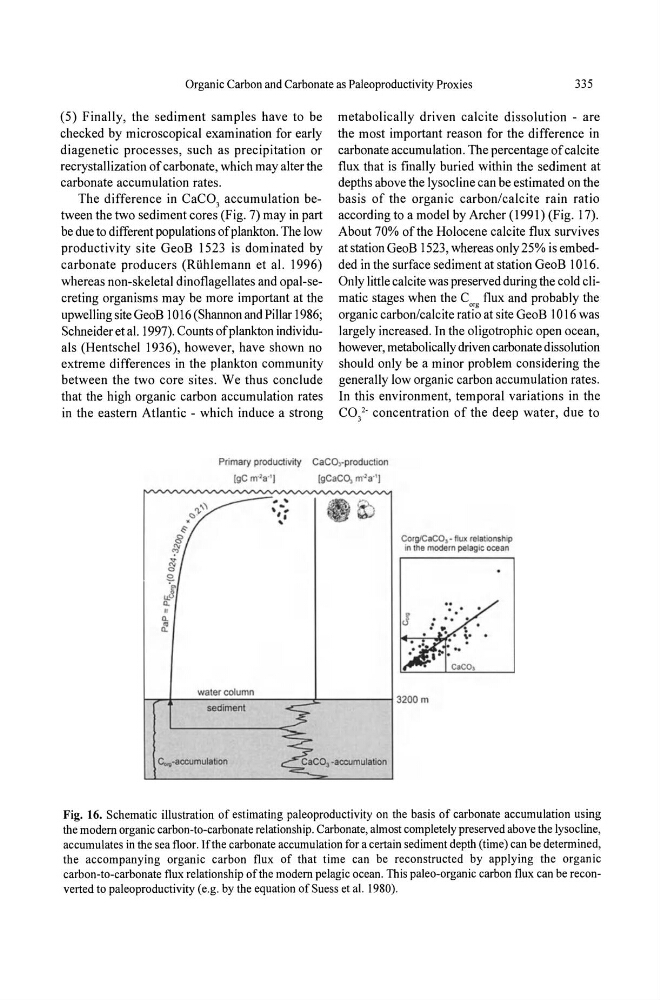
Fig. 16. Schematic illustration of estimating paleoproductivity on the basis of carbonate accumulation using
the modem organic carbon-to-carbonate relationship. Carbonate, almost completely preserved above the lysocline,
accumulates in the sea floor. If the carbonate accumulation for a certain sediment depth (time) can be determined,
the accompanying organic carbon flux of that time can be reconstructed by applying the organic
carbon-to-carbonate flux relationship of the modem pelagic ocean. This paleo-organic carbon flux can be reconverted to paleoproductivity (e.g. by the equation of Suess et al. 1980).
335
(5) Finally, the sediment samples have to be
checked by microscopical examination for early
diagenetic processes, such as precipitation or
recrystallization of carbonate, which may alter the
carbonate accumulation rates.
The difference in CaC0 3 accumulation between the two sediment cores (Fig. 7) may in part
be due to different populations of plankton. The low
productivity site GeoB 1523 is dominated by
carbonate producers (Riihlemann et al. 1996)
whereas non-skeletal dinoflagellates and opal-secreting organisms may be more important at the
upwelling site GeoB 1016 (Shannon and Pillar 1986;
Schneider et al. 1997). Counts of plankton individuals (Hentschel 1936), however, have shown no
extreme differences in the plankton community
between the two core sites. We thus conclude
that the high organic carbon accumulation rates
in the eastern Atlantic - which induce a strong
metabolically driven calcite dissolution - are
the most important reason for the difference in
carbonate accumulation. The percentage of calcite
flux that is finally buried within the sediment at
depths above the lysocline can be estimated on the
basis of the organic carbon/calcite rain ratio
according to a model by Archer (1991) (Fig. 17).
About 70% of the Holocene calcite flux survives
at station GeoB 1523, whereas only 25% is embedded in the surface sediment at station GeoB 1016.
Only little calcite was preserved during the cold climatic stages when the C org flux and probably the
organic carbon/calcite ratio at site GeoB 1016 was
largely increased. In the oligotrophic open ocean,
however, metabolically driven carbonate dissolution
should only be a minor problem considering the
generally low organic carbon accumulation rates.
In this environment, temporal variations in the
CO/· concentration of the deep water, due to
Primary produdivity CaCO,.production
'\.~\
.<>'
(;
~
'"
~
2J
0.
"
0.
~
IgC m" a" )
[gCaCo, m" a" )
CorgICaCO, · f l
ux relationship
in the modern pelagic ocean
~~~~ w ~ a~ te ~r~Co ~lu ~m ~n ~ ______ ~ ________ ~ 3200m
sediment
c..,,-accumulabon
Fig. 16. Schematic illustration of estimating paleoproductivity on the basis of carbonate accumulation using
the modem organic carbon-to-carbonate relationship. Carbonate, almost completely preserved above the lysocline,
accumulates in the sea floor. If the carbonate accumulation for a certain sediment depth (time) can be determined,
the accompanying organic carbon flux of that time can be reconstructed by applying the organic
carbon-to-carbonate flux relationship of the modem pelagic ocean. This paleo-organic carbon flux can be reconverted to paleoproductivity (e.g. by the equation of Suess et al. 1980).