

Organic Carbon and Carbonate as Paleoproductivity Proxies
323
200
E
.s. 150
..c
C.
Q)
"0
c
~ 100
~
Q)
c
Q)
a.
0 50
0
0.00
•
,
,
. \\~ . " .. -------_I! ___ -________ .. _______ ..
0.05
0.10
0.15
Organic carbon content [g cm- 3 ]
0.20
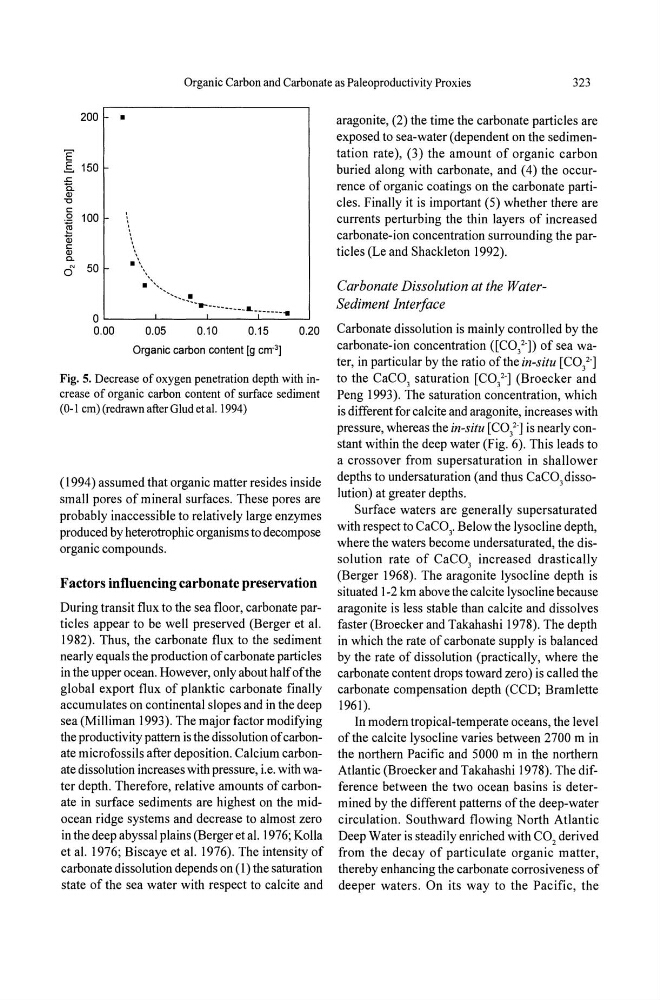
Fig. 5. Decrease of oxygen penetration depth with increase of organic carbon content of surface sediment
(0-1 cm)(redrawnafterGludetal.I994)
(1994) assumed that organic matter resides inside
small pores of mineral surfaces. These pores are
probably inaccessible to relatively large enzymes
produced by heterotrophic organisms to decompose
organic compounds.
Factors influencing carbonate preservation
During transit flux to the sea floor, carbonate particles appear to be well preserved (Berger et al.
1982). Thus, the carbonate flux to the sediment
nearly equals the production of carbonate particles
in the upper ocean. However, only about half of the
global export flux of planktic carbonate finally
accumulates on continental slopes and in the deep
sea (Milliman 1993). The major factor modifying
the productivity pattern is the dissolution of carbonate microfossils after deposition. Calcium carbonate dissolution increases with pressure, i.e. with water depth. Therefore, relative amounts of carbonate in surface sediments are highest on the midocean ridge systems and decrease to almost zero
in the deep abyssal plains (Bergeret al. 1976; Kolla
et al. 1976; Biscaye et al. 1976). The intensity of
carbonate dissolution depends on (1) the saturation
state of the sea water with respect to calcite and
aragonite, (2) the time the carbonate particles are
exposed to sea-water (dependent on the sedimentation rate), (3) the amount of organic carbon
buried along with carbonate, and (4) the occurrence of organic coatings on the carbonate particles. Finally it is important (5) whether there are
currents perturbing the thin layers of increased
carbonate-ion concentration surrounding the particles (Le and Shackleton 1992).
Carbonate Dissolution at the WaterSediment Interface
Carbonate dissolution is mainly controlled by the
carbonate-ion concentration ([COt]) of sea water, in particular by the ratio ofthe in-situ [CO/oJ
to the CaC0 3 saturation [C0 3 2-J (Broecker and
Peng 1993). The saturation concentration, which
is different for calcite and aragonite, increases with
pressure, whereas the in-situ [CO/oJ is nearly constant within the deep water (Fig. 6). This leads to
a crossover from supersaturation in shallower
depths to undersaturation (and thus CaCO,dissolution) at greater depths.
Surface waters are generally supersaturated
with respect to CaCO,. Below the lysocline depth,
where the waters become undersaturated, the dissolution rate of CaC0 3 increased drastically
(Berger 1968). The aragonite lysocline depth is
situated 1-2 km above the calcite lysocline because
aragonite is less stable than calcite and dissolves
faster (Broecker and Takahashi 1978). The depth
in which the rate of carbonate supply is balanced
by the rate of dissolution (practically, where the
carbonate content drops toward zero) is called the
carbonate compensation depth (CCD; Bramlette
1961).
In modem tropical-temperate oceans, the level
of the calcite lysocline varies between 2700 m in
the northern Pacific and 5000 m in the northern
Atlantic (Broecker and Takahashi 1978). The difference between the two ocean basins is determined by the different patterns of the deep-water
circulation. Southward flowing North Atlantic
Deep Water is steadily enriched with CO 2 derived
from the decay of particulate organic matter,
thereby enhancing the carbonate corrosiveness of
deeper waters. On its way to the Pacific, the
323
200
E
.s. 150
..c
C.
Q)
"0
c
~ 100
~
Q)
c
Q)
a.
0 50
0
0.00
•
,
,
. \\~ . " .. -------_I! ___ -________ .. _______ ..
0.05
0.10
0.15
Organic carbon content [g cm- 3 ]
0.20
Fig. 5. Decrease of oxygen penetration depth with increase of organic carbon content of surface sediment
(0-1 cm)(redrawnafterGludetal.I994)
(1994) assumed that organic matter resides inside
small pores of mineral surfaces. These pores are
probably inaccessible to relatively large enzymes
produced by heterotrophic organisms to decompose
organic compounds.
Factors influencing carbonate preservation
During transit flux to the sea floor, carbonate particles appear to be well preserved (Berger et al.
1982). Thus, the carbonate flux to the sediment
nearly equals the production of carbonate particles
in the upper ocean. However, only about half of the
global export flux of planktic carbonate finally
accumulates on continental slopes and in the deep
sea (Milliman 1993). The major factor modifying
the productivity pattern is the dissolution of carbonate microfossils after deposition. Calcium carbonate dissolution increases with pressure, i.e. with water depth. Therefore, relative amounts of carbonate in surface sediments are highest on the midocean ridge systems and decrease to almost zero
in the deep abyssal plains (Bergeret al. 1976; Kolla
et al. 1976; Biscaye et al. 1976). The intensity of
carbonate dissolution depends on (1) the saturation
state of the sea water with respect to calcite and
aragonite, (2) the time the carbonate particles are
exposed to sea-water (dependent on the sedimentation rate), (3) the amount of organic carbon
buried along with carbonate, and (4) the occurrence of organic coatings on the carbonate particles. Finally it is important (5) whether there are
currents perturbing the thin layers of increased
carbonate-ion concentration surrounding the particles (Le and Shackleton 1992).
Carbonate Dissolution at the WaterSediment Interface
Carbonate dissolution is mainly controlled by the
carbonate-ion concentration ([COt]) of sea water, in particular by the ratio ofthe in-situ [CO/oJ
to the CaC0 3 saturation [C0 3 2-J (Broecker and
Peng 1993). The saturation concentration, which
is different for calcite and aragonite, increases with
pressure, whereas the in-situ [CO/oJ is nearly constant within the deep water (Fig. 6). This leads to
a crossover from supersaturation in shallower
depths to undersaturation (and thus CaCO,dissolution) at greater depths.
Surface waters are generally supersaturated
with respect to CaCO,. Below the lysocline depth,
where the waters become undersaturated, the dissolution rate of CaC0 3 increased drastically
(Berger 1968). The aragonite lysocline depth is
situated 1-2 km above the calcite lysocline because
aragonite is less stable than calcite and dissolves
faster (Broecker and Takahashi 1978). The depth
in which the rate of carbonate supply is balanced
by the rate of dissolution (practically, where the
carbonate content drops toward zero) is called the
carbonate compensation depth (CCD; Bramlette
1961).
In modem tropical-temperate oceans, the level
of the calcite lysocline varies between 2700 m in
the northern Pacific and 5000 m in the northern
Atlantic (Broecker and Takahashi 1978). The difference between the two ocean basins is determined by the different patterns of the deep-water
circulation. Southward flowing North Atlantic
Deep Water is steadily enriched with CO 2 derived
from the decay of particulate organic matter,
thereby enhancing the carbonate corrosiveness of
deeper waters. On its way to the Pacific, the