

Carbonate Dissolution in the Deep-Sea
265
AOU (I'mollkgl
SO
100
150
200
250
300
·50
~
•
NADW
oxygen depleted and nutrient enriched water mass
of low C0 3 ,. and high CO, contents (Reid 1989;
Boyle 1988). Today ' s mixing zone between
AABW and NADW in the South Atlantic is close
to the 90 llmoVkg CO/· isoline (Fig. 5; Bainbridge
1981). The carbonate ion content ofGEOSECS
station 48 ranges from 235 llmol/kg at 11 m to 77
llmol/kg at 5,075 m with a distinct minimum of69
J.lmol/kg at 5 12 m water depth. According to equation (2), values for calcite saturation increase from
4811moVkg at 11 m to 107 JlmoVkg at 5,075 m water
depth. The carbonate ion content curve intersects
the calcite saturation at about 4,150 m. At these
points ~CO/· becomes zero. The carbonate ion
content of GEOSECS station 103 ranges from 219
llmollkg at 5 m to 84 llmollkg at 4,572 m with a
distinct minimum of 63 llmollkg at 613 m water
depth. The carbonate ion content curve intersects
the calcite saturation at about 4,000 m. It has been
known since the studies of Wtist (1935) that the
water characteristics of the corrosive AABW are
responsible for the pronounced abyssal calcium
carbonate dissolution. Furthermore, the asymmetry in deep-water distribution is responsible for the
• }:CO [l'molJkg)
2
.It.
AOU [I'mollkgj
+
AOW[ %j
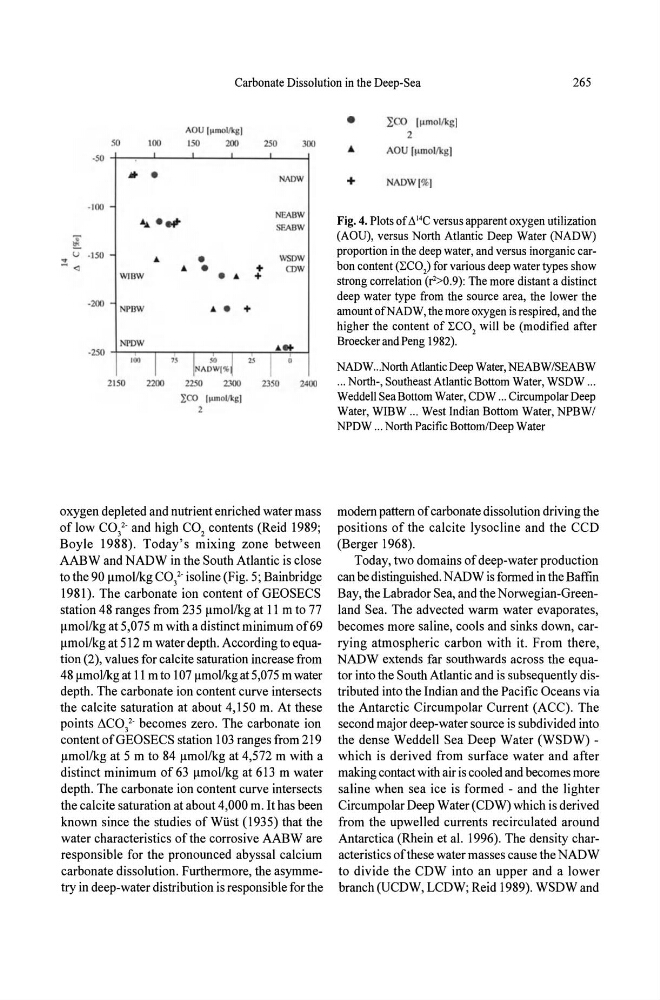
Fig. 4. Plots of /'; 14 C versus apparent oxygen utilization
(AOU), versus North Atlantic Deep Water (NADW)
proportion in the deep water, and versus inorganic carbon content (rCO,) for various deep water types show
strong correlation (r'>0.9): The more distant a distinct
deep water type from the source area, the lower the
amount ofNADW, the more oxygen is respired, and the
higher the content of rco, will be (modified after
Broecker and Peng 1982).
NADW ... North Atlantic Deep Water, NEABW/SEABW
... North-, Southeast Atlantic Bottom Water, WSDW ...
Weddell Sea Bottom Water, CDW ... Circumpolar Deep
Water, WIBW ... West Indian Bottom Water, NPBW/
NPDW ... North Pacific Bottom/Deep Water
modem pattern of carbonate dissolution driving the
positions of the calcite lysocline and the CCD
(Berger 1968).
Today, two domains of deep-water production
can be distinguished. NADW is formed in the Baffin
Bay, the Labrador Sea, and the Norwegian-Greenland Sea. The advected warm water evaporates,
becomes more saline, cools and sinks down, carrying atmospheric carbon with it. From there,
NADW extends far southwards across the equator into the South Atlantic and is subsequently distributed into the Indian and the Pacific Oceans via
the Antarctic Circumpolar Current (ACC). The
second major deep-water source is subdivided into
the dense Weddell Sea Deep Water (WSDW) -
which is derived from surface water and after
making contact with air is cooled and becomes more
saline when sea ice is formed - and the lighter
Circumpolar Deep Water (CDW) which is derived
from the upwelled currents recirculated around
Antarctica (Rhein et al. 1996). The density characteristics ofthese water masses cause the NADW
to divide the CDW into an upper and a lower
branch (UCDW, LCDW; Reid 1989). WSDW and
265
AOU (I'mollkgl
SO
100
150
200
250
300
·50
~
•
NADW
oxygen depleted and nutrient enriched water mass
of low C0 3 ,. and high CO, contents (Reid 1989;
Boyle 1988). Today ' s mixing zone between
AABW and NADW in the South Atlantic is close
to the 90 llmoVkg CO/· isoline (Fig. 5; Bainbridge
1981). The carbonate ion content ofGEOSECS
station 48 ranges from 235 llmol/kg at 11 m to 77
llmol/kg at 5,075 m with a distinct minimum of69
J.lmol/kg at 5 12 m water depth. According to equation (2), values for calcite saturation increase from
4811moVkg at 11 m to 107 JlmoVkg at 5,075 m water
depth. The carbonate ion content curve intersects
the calcite saturation at about 4,150 m. At these
points ~CO/· becomes zero. The carbonate ion
content of GEOSECS station 103 ranges from 219
llmollkg at 5 m to 84 llmollkg at 4,572 m with a
distinct minimum of 63 llmollkg at 613 m water
depth. The carbonate ion content curve intersects
the calcite saturation at about 4,000 m. It has been
known since the studies of Wtist (1935) that the
water characteristics of the corrosive AABW are
responsible for the pronounced abyssal calcium
carbonate dissolution. Furthermore, the asymmetry in deep-water distribution is responsible for the
• }:CO [l'molJkg)
2
.It.
AOU [I'mollkgj
+
AOW[ %j
Fig. 4. Plots of /'; 14 C versus apparent oxygen utilization
(AOU), versus North Atlantic Deep Water (NADW)
proportion in the deep water, and versus inorganic carbon content (rCO,) for various deep water types show
strong correlation (r'>0.9): The more distant a distinct
deep water type from the source area, the lower the
amount ofNADW, the more oxygen is respired, and the
higher the content of rco, will be (modified after
Broecker and Peng 1982).
NADW ... North Atlantic Deep Water, NEABW/SEABW
... North-, Southeast Atlantic Bottom Water, WSDW ...
Weddell Sea Bottom Water, CDW ... Circumpolar Deep
Water, WIBW ... West Indian Bottom Water, NPBW/
NPDW ... North Pacific Bottom/Deep Water
modem pattern of carbonate dissolution driving the
positions of the calcite lysocline and the CCD
(Berger 1968).
Today, two domains of deep-water production
can be distinguished. NADW is formed in the Baffin
Bay, the Labrador Sea, and the Norwegian-Greenland Sea. The advected warm water evaporates,
becomes more saline, cools and sinks down, carrying atmospheric carbon with it. From there,
NADW extends far southwards across the equator into the South Atlantic and is subsequently distributed into the Indian and the Pacific Oceans via
the Antarctic Circumpolar Current (ACC). The
second major deep-water source is subdivided into
the dense Weddell Sea Deep Water (WSDW) -
which is derived from surface water and after
making contact with air is cooled and becomes more
saline when sea ice is formed - and the lighter
Circumpolar Deep Water (CDW) which is derived
from the upwelled currents recirculated around
Antarctica (Rhein et al. 1996). The density characteristics ofthese water masses cause the NADW
to divide the CDW into an upper and a lower
branch (UCDW, LCDW; Reid 1989). WSDW and