

Calcareous Dinoflagellate Cysts as Paleo-Environmental Tools
159
80.--------------,------------~
S. tUberOla O. gmlfero
lector relaed vaiaion
TOC
17 %
60
40 -
20
TCC
·20 +-------,--------+-------,-----_
-100
·50
50
100
RDA ads 1
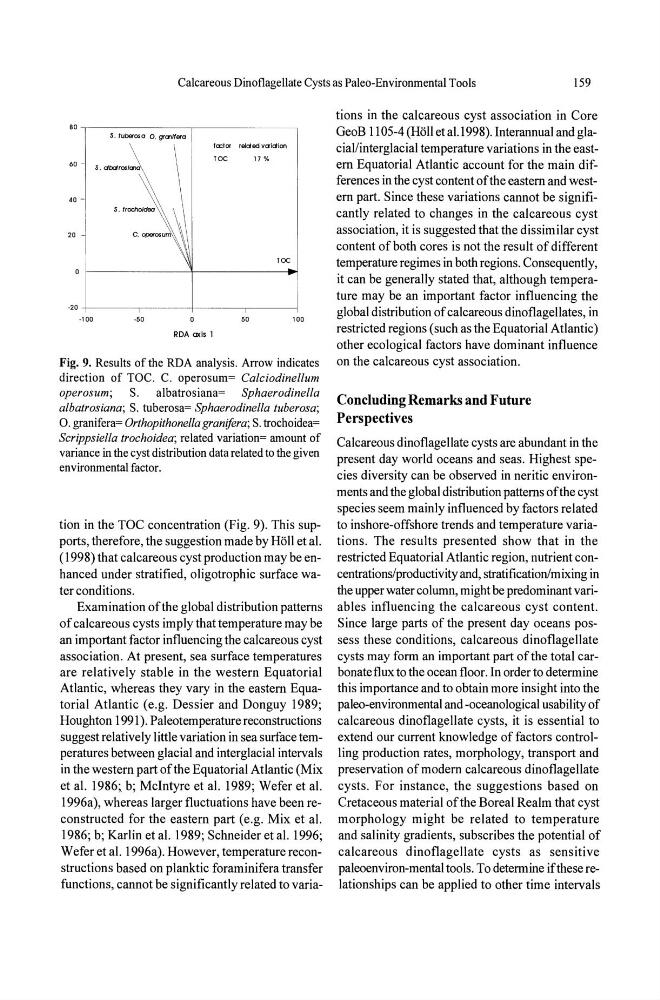
Fig. 9. Results of the RDA analysis. Arrow indicates
direction of TOC. C. operosum= Calciodinellum
operosum; S. albatrosiana= Sphaerodinella
albatrosiana; S. tuberosa= Sphaerodinella tuberosa;
O. granifera= Orthopithonella granifera; S. trochoidea=
Scrippsiella trochoidea; related variation= amount of
variance in the cyst distribution data related to the given
environmental factor.
tion in the TOC concentration (Fig. 9). This supports, therefore, the suggestion made by Holl et al.
(1998) that calcareous cyst production may be enhanced under stratified, oligotrophic surface water conditions.
Examination ofthe global distribution patterns
of calcareous cysts imply that temperature may be
an important factor influencing the calcareous cyst
association. At present, sea surface temperatures
are relatively stable in the western Equatorial
Atlantic, whereas they vary in the eastern Equatorial Atlantic (e.g. Dessier and Donguy 1989;
Houghton 1991). Paleotemperature reconstructions
suggest relatively little variation in sea surface temperatures between glacial and interglacial intervals
in the western part of the Equatorial Atlantic (Mix
et al. 1986;. b; McIntyre et al. 1989; Wefer et al.
1996a), whereas larger fluctuations have been reconstructed for the eastern part (e.g. Mix et al.
1986; b; Karlin et al. 1989; Schneider et al. 1996;
Wefer et al. 1996a). However, temperature reconstructions based on planktic foraminifera transfer
functions, cannot be significantly related to variations in the calcareous cyst association in Core
GeoB 1105-4 (Holl et al. 1998). Interarmual and glacial/interglacial temperature variations in the eastern Equatorial Atlantic account for the main differences in the cyst content of the eastern and western part. Since these variations cannot be significantly related to changes in the calcareous cyst
association, it is suggested that the dissimilar cyst
content of both cores is not the result of different
temperature regimes in both regions. Consequently,
it can be generally stated that, although temperature may be an important factor influencing the
global distribution of calcareous dinoflagellates, in
restricted regions (such as the Equatorial Atlantic)
other ecological factors have dominant influence
on the calcareous cyst association.
Concluding Remarks and Future
Perspectives
Calcareous dinoflagellate cysts are abundant in the
present day world oceans and seas. Highest species diversity can be observed in neritic environments and the global distribution patterns of the cyst
species seem mainly influenced by factors related
to inshore-offshore trends and temperature variations. The results presented show that in the
restricted Equatorial Atlantic region, nutrient concentrations/productivity and, stratification/mixing in
the upper water column, might be predominant variables influencing the calcareous cyst content.
Since large parts of the present day oceans possess these conditions, calcareous dinoflagellate
cysts may form an important part of the total carbonate flux to the ocean floor. In order to determine
this importance and to obtain more insight into the
paleo-environmental and -oceanological usability of
calcareous dinoflagellate cysts, it is essential to
extend our current knowledge of factors controlling production rates, morphology, transport and
preservation of modern calcareous dinoflagellate
cysts. For instance, the suggestions based on
Cretaceous material ofthe Boreal Realm that cyst
morphology might be related to temperature
and salinity gradients, subscribes the potential of
calcareous dinoflagellate cysts as sensitive
paleoenviron-mental tools. To determine if these relationships can be applied to other time intervals
159
80.--------------,------------~
S. tUberOla O. gmlfero
lector relaed vaiaion
TOC
17 %
60
40 -
20
TCC
·20 +-------,--------+-------,-----_
-100
·50
50
100
RDA ads 1
Fig. 9. Results of the RDA analysis. Arrow indicates
direction of TOC. C. operosum= Calciodinellum
operosum; S. albatrosiana= Sphaerodinella
albatrosiana; S. tuberosa= Sphaerodinella tuberosa;
O. granifera= Orthopithonella granifera; S. trochoidea=
Scrippsiella trochoidea; related variation= amount of
variance in the cyst distribution data related to the given
environmental factor.
tion in the TOC concentration (Fig. 9). This supports, therefore, the suggestion made by Holl et al.
(1998) that calcareous cyst production may be enhanced under stratified, oligotrophic surface water conditions.
Examination ofthe global distribution patterns
of calcareous cysts imply that temperature may be
an important factor influencing the calcareous cyst
association. At present, sea surface temperatures
are relatively stable in the western Equatorial
Atlantic, whereas they vary in the eastern Equatorial Atlantic (e.g. Dessier and Donguy 1989;
Houghton 1991). Paleotemperature reconstructions
suggest relatively little variation in sea surface temperatures between glacial and interglacial intervals
in the western part of the Equatorial Atlantic (Mix
et al. 1986;. b; McIntyre et al. 1989; Wefer et al.
1996a), whereas larger fluctuations have been reconstructed for the eastern part (e.g. Mix et al.
1986; b; Karlin et al. 1989; Schneider et al. 1996;
Wefer et al. 1996a). However, temperature reconstructions based on planktic foraminifera transfer
functions, cannot be significantly related to variations in the calcareous cyst association in Core
GeoB 1105-4 (Holl et al. 1998). Interarmual and glacial/interglacial temperature variations in the eastern Equatorial Atlantic account for the main differences in the cyst content of the eastern and western part. Since these variations cannot be significantly related to changes in the calcareous cyst
association, it is suggested that the dissimilar cyst
content of both cores is not the result of different
temperature regimes in both regions. Consequently,
it can be generally stated that, although temperature may be an important factor influencing the
global distribution of calcareous dinoflagellates, in
restricted regions (such as the Equatorial Atlantic)
other ecological factors have dominant influence
on the calcareous cyst association.
Concluding Remarks and Future
Perspectives
Calcareous dinoflagellate cysts are abundant in the
present day world oceans and seas. Highest species diversity can be observed in neritic environments and the global distribution patterns of the cyst
species seem mainly influenced by factors related
to inshore-offshore trends and temperature variations. The results presented show that in the
restricted Equatorial Atlantic region, nutrient concentrations/productivity and, stratification/mixing in
the upper water column, might be predominant variables influencing the calcareous cyst content.
Since large parts of the present day oceans possess these conditions, calcareous dinoflagellate
cysts may form an important part of the total carbonate flux to the ocean floor. In order to determine
this importance and to obtain more insight into the
paleo-environmental and -oceanological usability of
calcareous dinoflagellate cysts, it is essential to
extend our current knowledge of factors controlling production rates, morphology, transport and
preservation of modern calcareous dinoflagellate
cysts. For instance, the suggestions based on
Cretaceous material ofthe Boreal Realm that cyst
morphology might be related to temperature
and salinity gradients, subscribes the potential of
calcareous dinoflagellate cysts as sensitive
paleoenviron-mental tools. To determine if these relationships can be applied to other time intervals