

Coccolithophores as Indicators of Ocean Water Masses
127
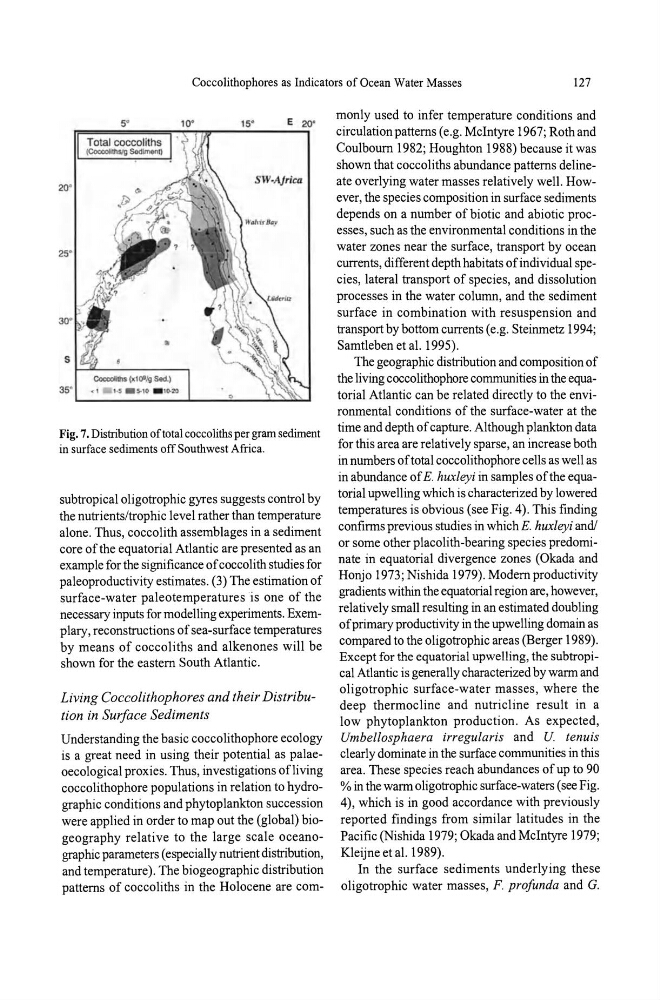
Fig. 7. Distribution of total coccoliths per gram sediment
in surface sediments off Southwest Africa.
subtropical oligotrophic gyres suggests control by
the nutrients/trophic level rather than temperature
alone. Thus, coccolith assemblages in a sediment
core of the equatorial Atlantic are presented as an
example for the significance of coccolith studies for
paleoproductivity estimates. (3) The estimation of
surface-water paleotemperatures is one of the
necessary inputs for modelling experiments. Exemplary, reconstructions of sea-surface temperatures
by means of coccoliths and alkenones will be
shown for the eastern South Atlantic.
Living Coccolithophores and their Distribution in Surface Sediments
Understanding the basic coccolithophore ecology
is a great need in using their potential as palaeoecological proxies. Thus, investigations ofliving
coccolithophore populations in relation to hydrographic conditions and phytoplankton succession
were applied in order to map out the (global) biogeography relative to the large scale oceanographic parameters (especially nutrient distribution,
and temperature). The biogeographic distribution
patterns of coccoliths in the Holocene are commonly used to infer temperature conditions and
circulation patterns (e.g. McIntyre 1967; Roth and
Coulbourn 1982; Houghton 1988) because it was
shown that coccoliths abundance patterns delineate overlying water masses relatively well. However, the species composition in surface sediments
depends on a number of biotic and abiotic processes, such as the environmental conditions in the
water zones near the surface, transport by ocean
currents, different depth habitats of individual species, lateral transport of species, and dissolution
processes in the water column, and the sediment
surface in combination with resuspension and
transport by bottom currents (e.g. Steinmetz 1994;
Samtleben et al. 1995).
The geographic distribution and composition of
the living coccolithophore communities in the equatorial Atlantic can be related directly to the environmental conditions of the surface-water at the
time and depth of capture. Although plankton data
for this area are relatively sparse, an increase both
in numbers of total coccolithophore cells as well as
in abundance of E. huxleyi in samples of the equatorial upwelling which is characterized by lowered
temperatures is obvious (see Fig. 4). This finding
confirms previous studies in which E. huxleyi and!
or some other placolith-bearing species predominate in equatorial divergence zones (Okada and
Honjo 1973; Nishida 1979). Modem productivity
gradients within the equatorial region are, however,
relatively small resulting in an estimated doubling
of primary productivity in the upwelling domain as
compared to the oligotrophic areas (Berger 1989).
Except for the equatorial upwelling, the subtropical Atlantic is generally characterized by warm and
oligotrophic surface-water masses, where the
deep thermocline and nutricline result in a
low phytoplankton production. As expected,
Umbellosphaera irregularis and U. tenuis
clearly dominate in the surface communities in this
area. These species reach abundances of up to 90
% in the warm oligotrophic surface-waters (see Fig.
4), which is in good accordance with previously
reported findings from similar latitudes in the
Pacific (Nishida 1979; Okada and McIntyre 1979;
Kleijne et al. 1989).
In the surface sediments underlying these
oligotrophic water masses, F. profunda and G.
127
Fig. 7. Distribution of total coccoliths per gram sediment
in surface sediments off Southwest Africa.
subtropical oligotrophic gyres suggests control by
the nutrients/trophic level rather than temperature
alone. Thus, coccolith assemblages in a sediment
core of the equatorial Atlantic are presented as an
example for the significance of coccolith studies for
paleoproductivity estimates. (3) The estimation of
surface-water paleotemperatures is one of the
necessary inputs for modelling experiments. Exemplary, reconstructions of sea-surface temperatures
by means of coccoliths and alkenones will be
shown for the eastern South Atlantic.
Living Coccolithophores and their Distribution in Surface Sediments
Understanding the basic coccolithophore ecology
is a great need in using their potential as palaeoecological proxies. Thus, investigations ofliving
coccolithophore populations in relation to hydrographic conditions and phytoplankton succession
were applied in order to map out the (global) biogeography relative to the large scale oceanographic parameters (especially nutrient distribution,
and temperature). The biogeographic distribution
patterns of coccoliths in the Holocene are commonly used to infer temperature conditions and
circulation patterns (e.g. McIntyre 1967; Roth and
Coulbourn 1982; Houghton 1988) because it was
shown that coccoliths abundance patterns delineate overlying water masses relatively well. However, the species composition in surface sediments
depends on a number of biotic and abiotic processes, such as the environmental conditions in the
water zones near the surface, transport by ocean
currents, different depth habitats of individual species, lateral transport of species, and dissolution
processes in the water column, and the sediment
surface in combination with resuspension and
transport by bottom currents (e.g. Steinmetz 1994;
Samtleben et al. 1995).
The geographic distribution and composition of
the living coccolithophore communities in the equatorial Atlantic can be related directly to the environmental conditions of the surface-water at the
time and depth of capture. Although plankton data
for this area are relatively sparse, an increase both
in numbers of total coccolithophore cells as well as
in abundance of E. huxleyi in samples of the equatorial upwelling which is characterized by lowered
temperatures is obvious (see Fig. 4). This finding
confirms previous studies in which E. huxleyi and!
or some other placolith-bearing species predominate in equatorial divergence zones (Okada and
Honjo 1973; Nishida 1979). Modem productivity
gradients within the equatorial region are, however,
relatively small resulting in an estimated doubling
of primary productivity in the upwelling domain as
compared to the oligotrophic areas (Berger 1989).
Except for the equatorial upwelling, the subtropical Atlantic is generally characterized by warm and
oligotrophic surface-water masses, where the
deep thermocline and nutricline result in a
low phytoplankton production. As expected,
Umbellosphaera irregularis and U. tenuis
clearly dominate in the surface communities in this
area. These species reach abundances of up to 90
% in the warm oligotrophic surface-waters (see Fig.
4), which is in good accordance with previously
reported findings from similar latitudes in the
Pacific (Nishida 1979; Okada and McIntyre 1979;
Kleijne et al. 1989).
In the surface sediments underlying these
oligotrophic water masses, F. profunda and G.