

110
Kemle-von Miicke and Oberhansli
Station GeoB 1404
Depth(m) 8 18O (SMOW) Temperature (DC)
Salinity (%0)
50
20.61
36.1
100
0.31
15.13
35.48
300
10.05
34.9
500
-0.02
6.8
34.58
Station GeoB 1405
Depth (m) 8 18O (SMOW) Temperature (DC)
Salinity (0/00)
50
0.61
20.6
34.56
100
0.53
14.77
34.6
300
0.25
10.3
34.6
500
0.15
7.18
35.51
Station GeoB 1406
Depth (m) 8 18O (SMOW) Temperature (DC)
Salinity (%0)
50
0.48
16.70
35.63
100
0.47
14.91
35.51
300
0.27
10.50
34.91
500
0.01
6.99
34.62
Station GeoB 1407
Depth (m) 8 18O (SMOW) Temperature (DC)
Salinity (%0)
50
20.38
35.85
100
0.79
13.52
35.35
300
10.25
34.96
500
0.18
7.45
34.64
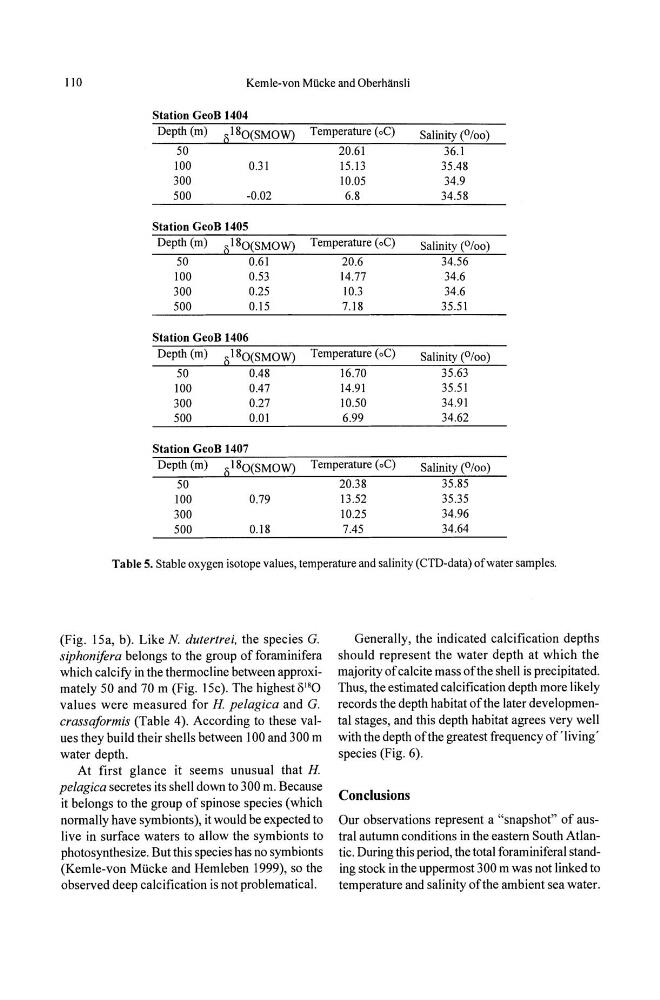
Table 5. Stable oxygen isotope values, temperature and salinity (CTD-data) of water samples.
(Fig. 15a, b). Like N. dutertrei, the species G.
siphonifera belongs to the group of foraminifera
which calcify in the thermocline between approximately 50 and 70 m (Fig. 15c). The highest 8 18 0
values were measured for H. pelagica and G.
crassaformis (Table 4). According to these values they build their shells between 100 and 300 m
water depth.
At first glance it seems unusual that H.
pelagica secretes its shell down to 300 m. Because
it belongs to the group of spinose species (which
normally have symbionts), it would be expected to
live in surface waters to allow the symbionts to
photosynthesize. But this species has no symbionts
(Kemle-von Miicke and Hemleben 1999), so the
observed deep calcification is not problematical.
Generally, the indicated calcification depths
should represent the water depth at which the
majority of calcite mass ofthe shell is precipitated.
Thus, the estimated calcification depth more likely
records the depth habitat ofthe later developmental stages, and this depth habitat agrees very well
with the depth ofthe greatest frequency of 'living'
species (Fig. 6).
Conclusions
Our observations represent a "snapshot" of austral autumn conditions in the eastern South Atlantic. During this period, the total foraminiferal standing stock in the uppermost 300 m was not linked to
temperature and salinity ofthe ambient sea water.
Kemle-von Miicke and Oberhansli
Station GeoB 1404
Depth(m) 8 18O (SMOW) Temperature (DC)
Salinity (%0)
50
20.61
36.1
100
0.31
15.13
35.48
300
10.05
34.9
500
-0.02
6.8
34.58
Station GeoB 1405
Depth (m) 8 18O (SMOW) Temperature (DC)
Salinity (0/00)
50
0.61
20.6
34.56
100
0.53
14.77
34.6
300
0.25
10.3
34.6
500
0.15
7.18
35.51
Station GeoB 1406
Depth (m) 8 18O (SMOW) Temperature (DC)
Salinity (%0)
50
0.48
16.70
35.63
100
0.47
14.91
35.51
300
0.27
10.50
34.91
500
0.01
6.99
34.62
Station GeoB 1407
Depth (m) 8 18O (SMOW) Temperature (DC)
Salinity (%0)
50
20.38
35.85
100
0.79
13.52
35.35
300
10.25
34.96
500
0.18
7.45
34.64
Table 5. Stable oxygen isotope values, temperature and salinity (CTD-data) of water samples.
(Fig. 15a, b). Like N. dutertrei, the species G.
siphonifera belongs to the group of foraminifera
which calcify in the thermocline between approximately 50 and 70 m (Fig. 15c). The highest 8 18 0
values were measured for H. pelagica and G.
crassaformis (Table 4). According to these values they build their shells between 100 and 300 m
water depth.
At first glance it seems unusual that H.
pelagica secretes its shell down to 300 m. Because
it belongs to the group of spinose species (which
normally have symbionts), it would be expected to
live in surface waters to allow the symbionts to
photosynthesize. But this species has no symbionts
(Kemle-von Miicke and Hemleben 1999), so the
observed deep calcification is not problematical.
Generally, the indicated calcification depths
should represent the water depth at which the
majority of calcite mass ofthe shell is precipitated.
Thus, the estimated calcification depth more likely
records the depth habitat ofthe later developmental stages, and this depth habitat agrees very well
with the depth ofthe greatest frequency of 'living'
species (Fig. 6).
Conclusions
Our observations represent a "snapshot" of austral autumn conditions in the eastern South Atlantic. During this period, the total foraminiferal standing stock in the uppermost 300 m was not linked to
temperature and salinity ofthe ambient sea water.