

The Distribution of Living Planktic Foraminifera in Relation to Southeast Atlantic Oceanography
95
of key species can be evaluated. The concentrations of planktic foraminifers in the studied area
ranged from a few to several hundred individuals!
m 3 (Oberhiinsli et al. 1992, Kemle-von Miicke
1994). Concentrations decreased generally with
tow depth and in near shore samples (Figs. 3-5).
The distribution patterns of herbivore and/or
omnivore (non spinose) versus preferentially carnivore (spinose) foraminifera (Spindler et al. 1984)
which are at the lower end of the grazing food
chain, are highly dependent on factors which influence the food web. For example, the yield of
planktic foraminifers in the nets towed off Angola
(tow station 1021, 1022) was extremely low (0-20
individuals!m 3 , Fig. 4). This was most pronounced
along the transect at 17 0 S which, according to
Hagen et al. (1981) lies within an area of perm anent coastal upwelling. Diatom abundances are
Station
Date
Longitude
GeoB 1016
Feb. 25, 1988
11.41 E
GeoB 1018
Feb. 26, 1988
8.54E
GeoB 1021
Feb. 28, 1988
11.23 E
GeoB 1022
Feb. 28, 1988
11.17E
GeoB 1024
Feb. 29, 1988
10.43 E
GeoB 1026
Feb. 29, 1988
8.54E
GeoB 1034
March 4,1988
5.25 E
GeoB 1036
March 5, 1988
3.19 E
GeoB 1037
March 7, 1988
0.8E
GeoB 1038
March 9, 1988
0.12 E
GeoB 1039
March 10, 1988
0.52W
GeoB 1041
March 12, 1988
7.36 W
GeoB 1042
March 12, 1988
8.54 W
GeoB 1043
March 13, 1988
9.57W
GeoB 1044
March 14, 1988
9.4 W
GeoB 1046
March 17, 1988
20.28 W
GeoB 1402
April 4, 1991
10.04 W
GeoB 1404
April 6, 1991
10.45 W
GeoB 1405
April7, 1991
11.08 W
GeoB 1406
April 8, 1991
11.14W
GeoB 1407
April 11, 1991
10.15 W
GeoB 2012
Feb. 10, 1993
3.21 E
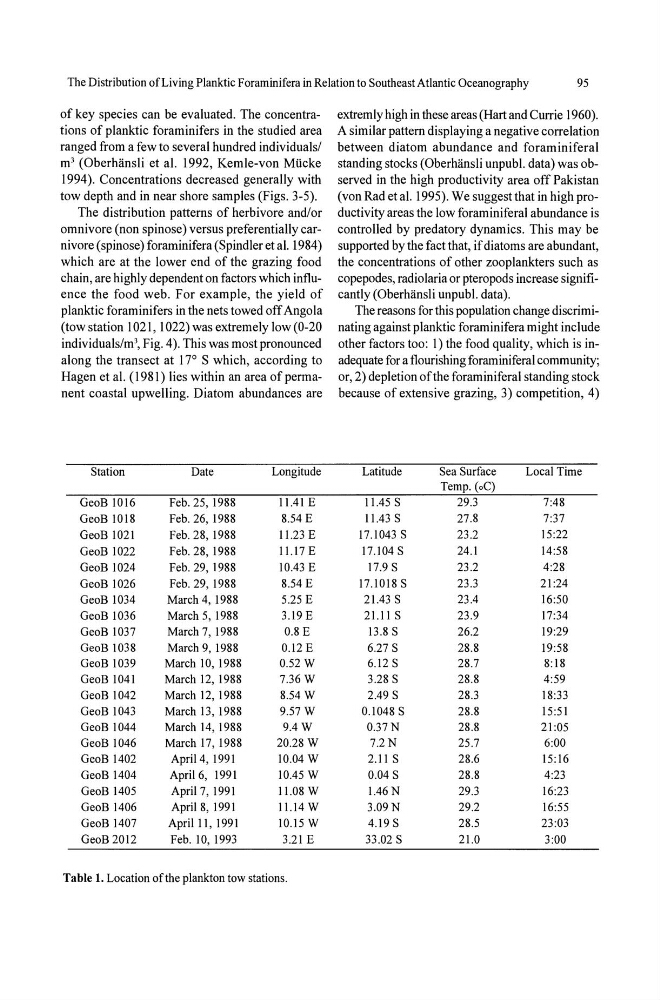
Table 1. Location of the plankton tow stations.
extremly high in these areas (Hart and Currie 1960).
A similar pattern displaying a negative correlation
between diatom abundance and foraminiferal
standing stocks (Oberhansli unpubl. data) was observed in the high productivity area off Pakistan
(von Rad etal. 1995). We suggest that in high productivity areas the low foraminiferal abundance is
controlled by predatory dynamics. This may be
supported by the fact that, if diatoms are abundant,
the concentrations of other zooplankters such as
copepodes, radiolaria or pteropods increase significantly (Oberhansli unpubl. data).
The reasons for this population change discriminating against planktic foraminifera might include
other factors too: 1) the food quality, which is inadequate for a flourishing foraminiferal community;
or, 2) depletion of the foraminiferal standing stock
because of extensive grazing, 3) competition, 4)
Latitude
Sea Surface
Local Time
Temp. (oe)
11.45 S
29.3
7:48
11.43 S
27.8
7:37
17.1043S
23.2
15:22
17.104 S
24.1
14:58
17.9 S
23.2
4:28
17.1018 S
23.3
21:24
21.43 S
23.4
16:50
21.11 S
23.9
17:34
13.8 S
26.2
19:29
6.27 S
28.8
19:58
6.12 S
28.7
8:18
3.28 S
28.8
4:59
2.49 S
28.3
18:33
0.1048 S
28.8
15:51
0.37N
28.8
21:05
7.2N
25.7
6:00
2.11 S
28.6
15:16
0.04 S
28.8
4:23
1.46N
29.3
16:23
3.09N
29.2
16:55
4.19 S
28.5
23:03
33.02 S
21.0
3:00
95
of key species can be evaluated. The concentrations of planktic foraminifers in the studied area
ranged from a few to several hundred individuals!
m 3 (Oberhiinsli et al. 1992, Kemle-von Miicke
1994). Concentrations decreased generally with
tow depth and in near shore samples (Figs. 3-5).
The distribution patterns of herbivore and/or
omnivore (non spinose) versus preferentially carnivore (spinose) foraminifera (Spindler et al. 1984)
which are at the lower end of the grazing food
chain, are highly dependent on factors which influence the food web. For example, the yield of
planktic foraminifers in the nets towed off Angola
(tow station 1021, 1022) was extremely low (0-20
individuals!m 3 , Fig. 4). This was most pronounced
along the transect at 17 0 S which, according to
Hagen et al. (1981) lies within an area of perm anent coastal upwelling. Diatom abundances are
Station
Date
Longitude
GeoB 1016
Feb. 25, 1988
11.41 E
GeoB 1018
Feb. 26, 1988
8.54E
GeoB 1021
Feb. 28, 1988
11.23 E
GeoB 1022
Feb. 28, 1988
11.17E
GeoB 1024
Feb. 29, 1988
10.43 E
GeoB 1026
Feb. 29, 1988
8.54E
GeoB 1034
March 4,1988
5.25 E
GeoB 1036
March 5, 1988
3.19 E
GeoB 1037
March 7, 1988
0.8E
GeoB 1038
March 9, 1988
0.12 E
GeoB 1039
March 10, 1988
0.52W
GeoB 1041
March 12, 1988
7.36 W
GeoB 1042
March 12, 1988
8.54 W
GeoB 1043
March 13, 1988
9.57W
GeoB 1044
March 14, 1988
9.4 W
GeoB 1046
March 17, 1988
20.28 W
GeoB 1402
April 4, 1991
10.04 W
GeoB 1404
April 6, 1991
10.45 W
GeoB 1405
April7, 1991
11.08 W
GeoB 1406
April 8, 1991
11.14W
GeoB 1407
April 11, 1991
10.15 W
GeoB 2012
Feb. 10, 1993
3.21 E
Table 1. Location of the plankton tow stations.
extremly high in these areas (Hart and Currie 1960).
A similar pattern displaying a negative correlation
between diatom abundance and foraminiferal
standing stocks (Oberhansli unpubl. data) was observed in the high productivity area off Pakistan
(von Rad etal. 1995). We suggest that in high productivity areas the low foraminiferal abundance is
controlled by predatory dynamics. This may be
supported by the fact that, if diatoms are abundant,
the concentrations of other zooplankters such as
copepodes, radiolaria or pteropods increase significantly (Oberhansli unpubl. data).
The reasons for this population change discriminating against planktic foraminifera might include
other factors too: 1) the food quality, which is inadequate for a flourishing foraminiferal community;
or, 2) depletion of the foraminiferal standing stock
because of extensive grazing, 3) competition, 4)
Latitude
Sea Surface
Local Time
Temp. (oe)
11.45 S
29.3
7:48
11.43 S
27.8
7:37
17.1043S
23.2
15:22
17.104 S
24.1
14:58
17.9 S
23.2
4:28
17.1018 S
23.3
21:24
21.43 S
23.4
16:50
21.11 S
23.9
17:34
13.8 S
26.2
19:29
6.27 S
28.8
19:58
6.12 S
28.7
8:18
3.28 S
28.8
4:59
2.49 S
28.3
18:33
0.1048 S
28.8
15:51
0.37N
28.8
21:05
7.2N
25.7
6:00
2.11 S
28.6
15:16
0.04 S
28.8
4:23
1.46N
29.3
16:23
3.09N
29.2
16:55
4.19 S
28.5
23:03
33.02 S
21.0
3:00