

Part A | 3.2
54 Part A Fundamentals
In the northern hemisphere, wind-driven currents
are particularly strong on the right-hand side of a hurricane track. There, the current rotation due to Coriolis
is often close to resonance with the turning of the wind
stress as the hurricane passes, so near-surface currents
can exceed 2 m s
1 . Figure 3.3 shows an example from
Hurricane Gloria in 1985 [3.26]. At the time of the
measurements, the hurricane center was at 28:75
ı N,
74:98
ı W and moving toward the north-northwest. The
closed arrow heads show measurements made with
air-dropped expendable current profilers and the open
arrow heads show results from a one-dimensional (1-D)
numerical model that used the turbulence closure model
of Kantha and Clayson [3.27].
08/27
08/28
08/29
08/30
08/31
09/01
09/02
Surface
09/03
cm/s
250
200
150
100
50
0
08/27
08/28
08/29
08/30
08/31
09/01
09/02
40 meters
09/03
cm/s
250
200
150
100
50
0
08/27
08/28
08/29
08/30
08/31
09/01
09/02
65 meters
09/03
cm/s
250
200
150
100
50
0
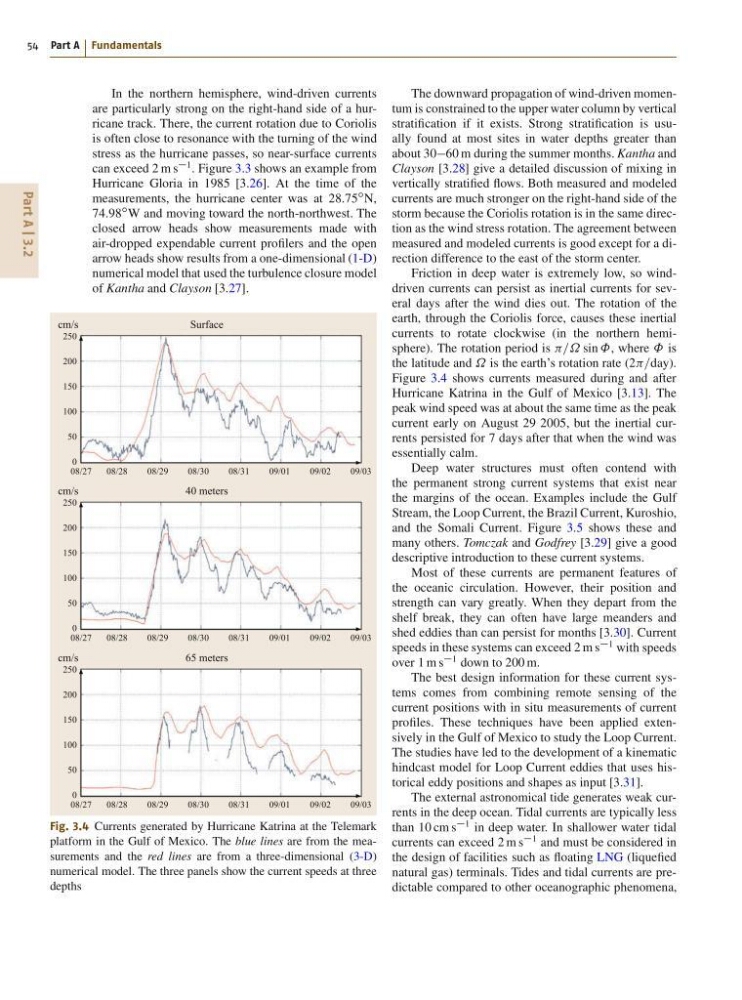
Fig. 3.4 Currents generated by Hurricane Katrina at the Telemark
platform in the Gulf of Mexico. The blue lines are from the measurements and the red lines are from a three-dimensional (3-D)
numerical model. The three panels show the current speeds at three
depths
The downward propagation of wind-driven momentum is constrained to the upper water column by vertical
stratification if it exists. Strong stratification is usually found at most sites in water depths greater than
about 3060 m during the summer months. Kantha and
Clayson [3.28] give a detailed discussion of mixing in
vertically stratified flows. Both measured and modeled
currents are much stronger on the right-hand side of the
storm because the Coriolis rotation is in the same direction as the wind stress rotation. The agreement between
measured and modeled currents is good except for a direction difference to the east of the storm center.
Friction in deep water is extremely low, so winddriven currents can persist as inertial currents for several days after the wind dies out. The rotation of the
earth, through the Coriolis force, causes these inertial
currents to rotate clockwise (in the northern hemisphere). The rotation period is =˝ sin ˚, where ˚ is
the latitude and ˝ is the earth’s rotation rate (2=day).
Figure 3.4 shows currents measured during and after
Hurricane Katrina in the Gulf of Mexico [3.13]. The
peak wind speed was at about the same time as the peak
current early on August 29 2005, but the inertial currents persisted for 7 days after that when the wind was
essentially calm.
Deep water structures must often contend with
the permanent strong current systems that exist near
the margins of the ocean. Examples include the Gulf
Stream, the Loop Current, the Brazil Current, Kuroshio,
and the Somali Current. Figure 3.5 shows these and
many others. Tomczak and Godfrey [3.29] give a good
descriptive introduction to these current systems.
Most of these currents are permanent features of
the oceanic circulation. However, their position and
strength can vary greatly. When they depart from the
shelf break, they can often have large meanders and
shed eddies than can persist for months [3.30]. Current
speeds in these systems can exceed 2 m s
1 with speeds
over 1 m s
1 down to 200 m.
The best design information for these current systems comes from combining remote sensing of the
current positions with in situ measurements of current
profiles. These techniques have been applied extensively in the Gulf of Mexico to study the Loop Current.
The studies have led to the development of a kinematic
hindcast model for Loop Current eddies that uses historical eddy positions and shapes as input [3.31].
The external astronomical tide generates weak currents in the deep ocean. Tidal currents are typically less
than 10 cm s
1 in deep water. In shallower water tidal
currents can exceed 2 m s
1 and must be considered in
the design of facilities such as floating LNG (liquefied
natural gas) terminals. Tides and tidal currents are predictable compared to other oceanographic phenomena,
54 Part A Fundamentals
In the northern hemisphere, wind-driven currents
are particularly strong on the right-hand side of a hurricane track. There, the current rotation due to Coriolis
is often close to resonance with the turning of the wind
stress as the hurricane passes, so near-surface currents
can exceed 2 m s
1 . Figure 3.3 shows an example from
Hurricane Gloria in 1985 [3.26]. At the time of the
measurements, the hurricane center was at 28:75
ı N,
74:98
ı W and moving toward the north-northwest. The
closed arrow heads show measurements made with
air-dropped expendable current profilers and the open
arrow heads show results from a one-dimensional (1-D)
numerical model that used the turbulence closure model
of Kantha and Clayson [3.27].
08/27
08/28
08/29
08/30
08/31
09/01
09/02
Surface
09/03
cm/s
250
200
150
100
50
0
08/27
08/28
08/29
08/30
08/31
09/01
09/02
40 meters
09/03
cm/s
250
200
150
100
50
0
08/27
08/28
08/29
08/30
08/31
09/01
09/02
65 meters
09/03
cm/s
250
200
150
100
50
0
Fig. 3.4 Currents generated by Hurricane Katrina at the Telemark
platform in the Gulf of Mexico. The blue lines are from the measurements and the red lines are from a three-dimensional (3-D)
numerical model. The three panels show the current speeds at three
depths
The downward propagation of wind-driven momentum is constrained to the upper water column by vertical
stratification if it exists. Strong stratification is usually found at most sites in water depths greater than
about 3060 m during the summer months. Kantha and
Clayson [3.28] give a detailed discussion of mixing in
vertically stratified flows. Both measured and modeled
currents are much stronger on the right-hand side of the
storm because the Coriolis rotation is in the same direction as the wind stress rotation. The agreement between
measured and modeled currents is good except for a direction difference to the east of the storm center.
Friction in deep water is extremely low, so winddriven currents can persist as inertial currents for several days after the wind dies out. The rotation of the
earth, through the Coriolis force, causes these inertial
currents to rotate clockwise (in the northern hemisphere). The rotation period is =˝ sin ˚, where ˚ is
the latitude and ˝ is the earth’s rotation rate (2=day).
Figure 3.4 shows currents measured during and after
Hurricane Katrina in the Gulf of Mexico [3.13]. The
peak wind speed was at about the same time as the peak
current early on August 29 2005, but the inertial currents persisted for 7 days after that when the wind was
essentially calm.
Deep water structures must often contend with
the permanent strong current systems that exist near
the margins of the ocean. Examples include the Gulf
Stream, the Loop Current, the Brazil Current, Kuroshio,
and the Somali Current. Figure 3.5 shows these and
many others. Tomczak and Godfrey [3.29] give a good
descriptive introduction to these current systems.
Most of these currents are permanent features of
the oceanic circulation. However, their position and
strength can vary greatly. When they depart from the
shelf break, they can often have large meanders and
shed eddies than can persist for months [3.30]. Current
speeds in these systems can exceed 2 m s
1 with speeds
over 1 m s
1 down to 200 m.
The best design information for these current systems comes from combining remote sensing of the
current positions with in situ measurements of current
profiles. These techniques have been applied extensively in the Gulf of Mexico to study the Loop Current.
The studies have led to the development of a kinematic
hindcast model for Loop Current eddies that uses historical eddy positions and shapes as input [3.31].
The external astronomical tide generates weak currents in the deep ocean. Tidal currents are typically less
than 10 cm s
1 in deep water. In shallower water tidal
currents can exceed 2 m s
1 and must be considered in
the design of facilities such as floating LNG (liquefied
natural gas) terminals. Tides and tidal currents are predictable compared to other oceanographic phenomena,