

Part C | 31.2
692 Part C Coastal Design
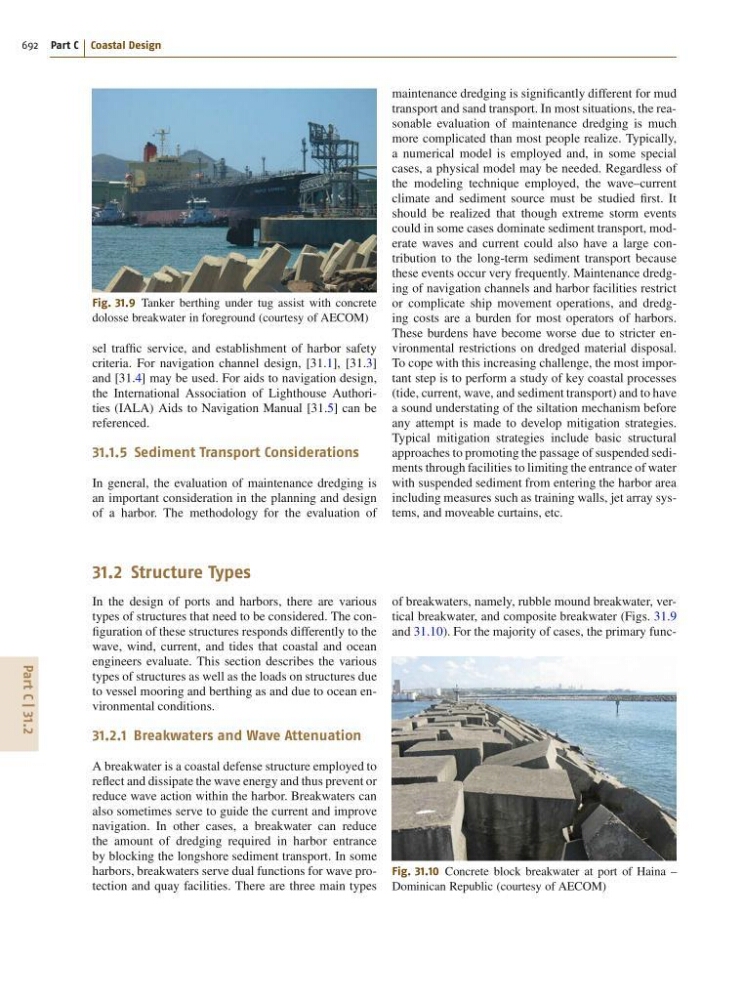
Fig. 31.9 Tanker berthing under tug assist with concrete
dolosse breakwater in foreground (courtesy of AECOM)
sel traffic service, and establishment of harbor safety
criteria. For navigation channel design, [31.1], [31.3]
and [31.4] may be used. For aids to navigation design,
the International Association of Lighthouse Authorities (IALA) Aids to Navigation Manual [31.5] can be
referenced.
31.1.5 Sediment Transport Considerations
In general, the evaluation of maintenance dredging is
an important consideration in the planning and design
of a harbor. The methodology for the evaluation of
maintenance dredging is significantly different for mud
transport and sand transport. In most situations, the reasonable evaluation of maintenance dredging is much
more complicated than most people realize. Typically,
a numerical model is employed and, in some special
cases, a physical model may be needed. Regardless of
the modeling technique employed, the wave–current
climate and sediment source must be studied first. It
should be realized that though extreme storm events
could in some cases dominate sediment transport, moderate waves and current could also have a large contribution to the long-term sediment transport because
these events occur very frequently. Maintenance dredging of navigation channels and harbor facilities restrict
or complicate ship movement operations, and dredging costs are a burden for most operators of harbors.
These burdens have become worse due to stricter environmental restrictions on dredged material disposal.
To cope with this increasing challenge, the most important step is to perform a study of key coastal processes
(tide, current, wave, and sediment transport) and to have
a sound understating of the siltation mechanism before
any attempt is made to develop mitigation strategies.
Typical mitigation strategies include basic structural
approaches to promoting the passage of suspended sediments through facilities to limiting the entrance of water
with suspended sediment from entering the harbor area
including measures such as training walls, jet array systems, and moveable curtains, etc.
31.2 Structure Types
In the design of ports and harbors, there are various
types of structures that need to be considered. The configuration of these structures responds differently to the
wave, wind, current, and tides that coastal and ocean
engineers evaluate. This section describes the various
types of structures as well as the loads on structures due
to vessel mooring and berthing as and due to ocean environmental conditions.
31.2.1 Breakwaters and Wave Attenuation
A breakwater is a coastal defense structure employed to
reflect and dissipate the wave energy and thus prevent or
reduce wave action within the harbor. Breakwaters can
also sometimes serve to guide the current and improve
navigation. In other cases, a breakwater can reduce
the amount of dredging required in harbor entrance
by blocking the longshore sediment transport. In some
harbors, breakwaters serve dual functions for wave protection and quay facilities. There are three main types
of breakwaters, namely, rubble mound breakwater, vertical breakwater, and composite breakwater (Figs. 31.9
and 31.10). For the majority of cases, the primary funcFig. 31.10 Concrete block breakwater at port of Haina –
Dominican Republic (courtesy of AECOM)