

Part C | 30.2
662 Part C Coastal Design
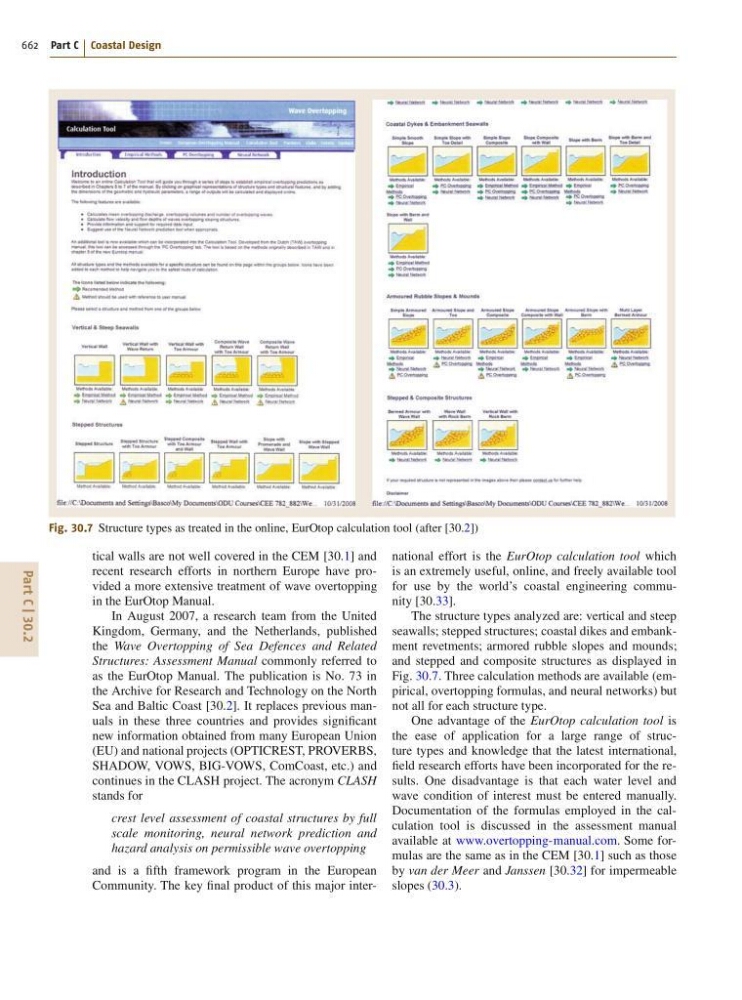
Fig. 30.7 Structure types as treated in the online, EurOtop calculation tool (after [30.2])
tical walls are not well covered in the CEM [30.1] and
recent research efforts in northern Europe have provided a more extensive treatment of wave overtopping
in the EurOtop Manual.
In August 2007, a research team from the United
Kingdom, Germany, and the Netherlands, published
the Wave Overtopping of Sea Defences and Related
Structures: Assessment Manual commonly referred to
as the EurOtop Manual. The publication is No. 73 in
the Archive for Research and Technology on the North
Sea and Baltic Coast [30.2]. It replaces previous manuals in these three countries and provides significant
new information obtained from many European Union
(EU) and national projects (OPTICREST, PROVERBS,
SHADOW, VOWS, BIG-VOWS, ComCoast, etc.) and
continues in the CLASH project. The acronym CLASH
stands for
crest level assessment of coastal structures by full
scale monitoring, neural network prediction and
hazard analysis on permissible wave overtopping
and is a fifth framework program in the European
Community. The key final product of this major international effort is the EurOtop calculation tool which
is an extremely useful, online, and freely available tool
for use by the world’s coastal engineering community [30.33].
The structure types analyzed are: vertical and steep
seawalls; stepped structures; coastal dikes and embankment revetments; armored rubble slopes and mounds;
and stepped and composite structures as displayed in
Fig. 30.7. Three calculation methods are available (empirical, overtopping formulas, and neural networks) but
not all for each structure type.
One advantage of the EurOtop calculation tool is
the ease of application for a large range of structure types and knowledge that the latest international,
field research efforts have been incorporated for the results. One disadvantage is that each water level and
wave condition of interest must be entered manually.
Documentation of the formulas employed in the calculation tool is discussed in the assessment manual
available at www.overtopping-manual.com. Some formulas are the same as in the CEM [30.1] such as those
by van der Meer and Janssen [30.32] for impermeable
slopes (30.3).