

Part C | 29.4
640 Part C Coastal Design
Soalu
J
u
p
it
e
r
I
s
la
n
d
St. Luc ie Inle t
500 m
0
N
1970
Added in 1981
South terminal
structure
(added in 1981)
Hutchinson
Island
1950
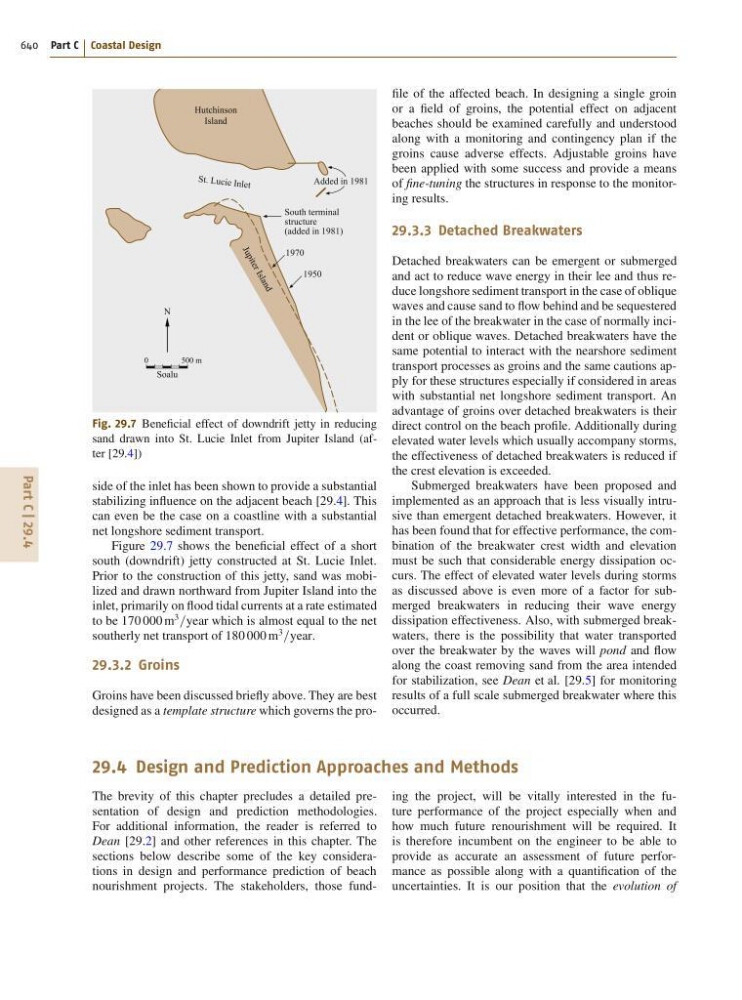
Fig. 29.7 Beneficial effect of downdrift jetty in reducing
sand drawn into St. Lucie Inlet from Jupiter Island (after [29.4])
side of the inlet has been shown to provide a substantial
stabilizing influence on the adjacent beach [29.4]. This
can even be the case on a coastline with a substantial
net longshore sediment transport.
Figure 29.7 shows the beneficial effect of a short
south (downdrift) jetty constructed at St. Lucie Inlet.
Prior to the construction of this jetty, sand was mobilized and drawn northward from Jupiter Island into the
inlet, primarily on flood tidal currents at a rate estimated
to be 170 000 m
3
=year which is almost equal to the net
southerly net transport of 180 000 m
3
=year.
29.3.2 Groins
Groins have been discussed briefly above. They are best
designed as a template structure which governs the profile of the affected beach. In designing a single groin
or a field of groins, the potential effect on adjacent
beaches should be examined carefully and understood
along with a monitoring and contingency plan if the
groins cause adverse effects. Adjustable groins have
been applied with some success and provide a means
of fine-tuning the structures in response to the monitoring results.
29.3.3 Detached Breakwaters
Detached breakwaters can be emergent or submerged
and act to reduce wave energy in their lee and thus reduce longshore sediment transport in the case of oblique
waves and cause sand to flow behind and be sequestered
in the lee of the breakwater in the case of normally incident or oblique waves. Detached breakwaters have the
same potential to interact with the nearshore sediment
transport processes as groins and the same cautions apply for these structures especially if considered in areas
with substantial net longshore sediment transport. An
advantage of groins over detached breakwaters is their
direct control on the beach profile. Additionally during
elevated water levels which usually accompany storms,
the effectiveness of detached breakwaters is reduced if
the crest elevation is exceeded.
Submerged breakwaters have been proposed and
implemented as an approach that is less visually intrusive than emergent detached breakwaters. However, it
has been found that for effective performance, the combination of the breakwater crest width and elevation
must be such that considerable energy dissipation occurs. The effect of elevated water levels during storms
as discussed above is even more of a factor for submerged breakwaters in reducing their wave energy
dissipation effectiveness. Also, with submerged breakwaters, there is the possibility that water transported
over the breakwater by the waves will pond and flow
along the coast removing sand from the area intended
for stabilization, see Dean et al. [29.5] for monitoring
results of a full scale submerged breakwater where this
occurred.
29.4 Design and Prediction Approaches and Methods
The brevity of this chapter precludes a detailed presentation of design and prediction methodologies.
For additional information, the reader is referred to
Dean [29.2] and other references in this chapter. The
sections below describe some of the key considerations in design and performance prediction of beach
nourishment projects. The stakeholders, those funding the project, will be vitally interested in the future performance of the project especially when and
how much future renourishment will be required. It
is therefore incumbent on the engineer to be able to
provide as accurate an assessment of future performance as possible along with a quantification of the
uncertainties. It is our position that the evolution of