

Elements of Physical Oceanography 2.5 Wind-Forced Ocean Processes 31
Part A | 2.5
The strength of hurricanes is measured by the
Saffir–Simpson scale (Table 2.4), which uses minimum
sustained wind speeds to categorize storms from Category 1, a minimal hurricane, to Category 5, the most
intense hurricane. A list of the most intense US hurricanes appears in Table 2.5.
Hurricane trajectories are also influenced by larger
scale meteorological forces – hence the uncertainty.
Katrina
Wind speed
5
4
3
2
1
≥ 156 Mph
≥ 131 Mph
≥ 111 Mph
≥ 96 Mph
≥ 74 Mph
> 39 Mph
> 0 Mph
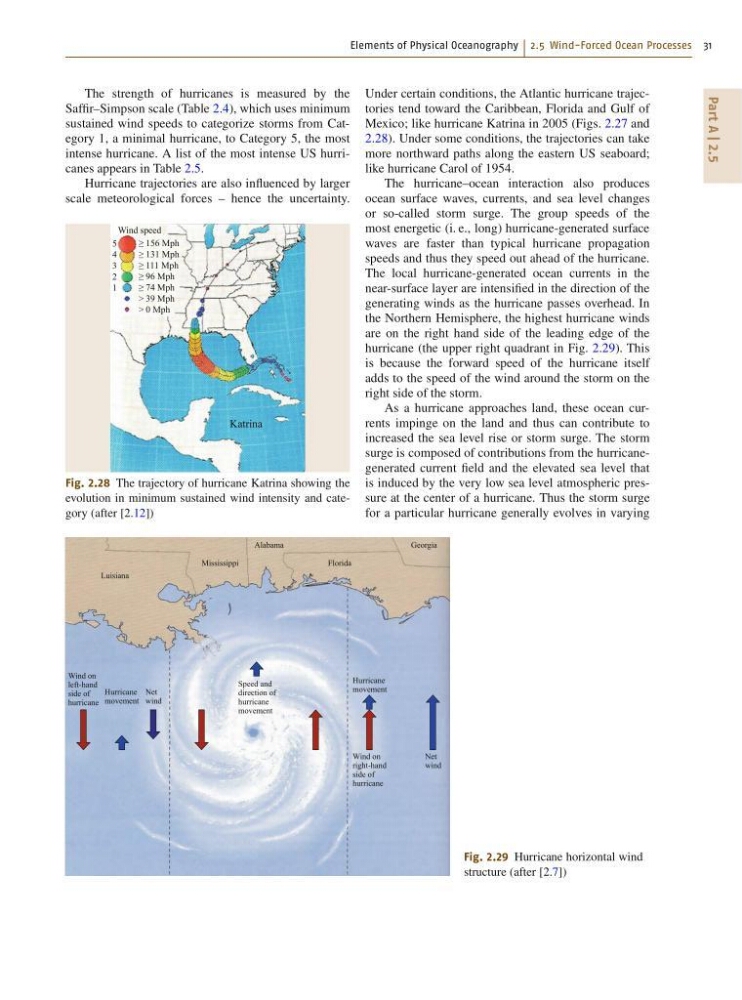
Fig. 2.28 The trajectory of hurricane Katrina showing the
evolution in minimum sustained wind intensity and category (after [2.12])
Speed and
direction of
hurricane
movement
Hurricane
movement
Hurricane
movement
Luisiana
Mississippi
Alabama
Florida
Georgia
Wind on
right-hand
side of
hurricane
Wind on
left-hand
side of
hurricane
Net
wind
Net
wind
Fig. 2.29 Hurricane horizontal wind
structure (after [2.7])
Under certain conditions, the Atlantic hurricane trajectories tend toward the Caribbean, Florida and Gulf of
Mexico; like hurricane Katrina in 2005 (Figs. 2.27 and
2.28). Under some conditions, the trajectories can take
more northward paths along the eastern US seaboard;
like hurricane Carol of 1954.
The hurricane–ocean interaction also produces
ocean surface waves, currents, and sea level changes
or so-called storm surge. The group speeds of the
most energetic (i. e., long) hurricane-generated surface
waves are faster than typical hurricane propagation
speeds and thus they speed out ahead of the hurricane.
The local hurricane-generated ocean currents in the
near-surface layer are intensified in the direction of the
generating winds as the hurricane passes overhead. In
the Northern Hemisphere, the highest hurricane winds
are on the right hand side of the leading edge of the
hurricane (the upper right quadrant in Fig. 2.29). This
is because the forward speed of the hurricane itself
adds to the speed of the wind around the storm on the
right side of the storm.
As a hurricane approaches land, these ocean currents impinge on the land and thus can contribute to
increased the sea level rise or storm surge. The storm
surge is composed of contributions from the hurricanegenerated current field and the elevated sea level that
is induced by the very low sea level atmospheric pressure at the center of a hurricane. Thus the storm surge
for a particular hurricane generally evolves in varying
Part A | 2.5
The strength of hurricanes is measured by the
Saffir–Simpson scale (Table 2.4), which uses minimum
sustained wind speeds to categorize storms from Category 1, a minimal hurricane, to Category 5, the most
intense hurricane. A list of the most intense US hurricanes appears in Table 2.5.
Hurricane trajectories are also influenced by larger
scale meteorological forces – hence the uncertainty.
Katrina
Wind speed
5
4
3
2
1
≥ 156 Mph
≥ 131 Mph
≥ 111 Mph
≥ 96 Mph
≥ 74 Mph
> 39 Mph
> 0 Mph
Fig. 2.28 The trajectory of hurricane Katrina showing the
evolution in minimum sustained wind intensity and category (after [2.12])
Speed and
direction of
hurricane
movement
Hurricane
movement
Hurricane
movement
Luisiana
Mississippi
Alabama
Florida
Georgia
Wind on
right-hand
side of
hurricane
Wind on
left-hand
side of
hurricane
Net
wind
Net
wind
Fig. 2.29 Hurricane horizontal wind
structure (after [2.7])
Under certain conditions, the Atlantic hurricane trajectories tend toward the Caribbean, Florida and Gulf of
Mexico; like hurricane Katrina in 2005 (Figs. 2.27 and
2.28). Under some conditions, the trajectories can take
more northward paths along the eastern US seaboard;
like hurricane Carol of 1954.
The hurricane–ocean interaction also produces
ocean surface waves, currents, and sea level changes
or so-called storm surge. The group speeds of the
most energetic (i. e., long) hurricane-generated surface
waves are faster than typical hurricane propagation
speeds and thus they speed out ahead of the hurricane.
The local hurricane-generated ocean currents in the
near-surface layer are intensified in the direction of the
generating winds as the hurricane passes overhead. In
the Northern Hemisphere, the highest hurricane winds
are on the right hand side of the leading edge of the
hurricane (the upper right quadrant in Fig. 2.29). This
is because the forward speed of the hurricane itself
adds to the speed of the wind around the storm on the
right side of the storm.
As a hurricane approaches land, these ocean currents impinge on the land and thus can contribute to
increased the sea level rise or storm surge. The storm
surge is composed of contributions from the hurricanegenerated current field and the elevated sea level that
is induced by the very low sea level atmospheric pressure at the center of a hurricane. Thus the storm surge
for a particular hurricane generally evolves in varying