

Statistical Characterization of Hazards and Risk in Coastal Areas 26.3 Historical Perspective 581
Part C | 26.3
study analyzed central pressures from a 70-year interval
for the west coast of Florida. Since surges are related
more to tropical cyclones which make a landfall than
to exiting tropical cyclones, they stratified their storm
sample to include only storms with a general west to
east motion in a latitude-longitude box with boundaries
at 81
ı W and 85
ı W longitude and 25
ı N and 30
ı N latitude. Additionally, to eliminate very weak storms which
might behave differently to well-organized storms, they
further limited the storms included within their sample
to those with central pressures less than 990 mb within
the selected geographic area. Using the most recent
reanalysis data available from NCDC (National Climate Data Center), it was determined that most storms
before about 1940 did not report central pressures;
consequently, the analysis was limited to the interval
19402009.
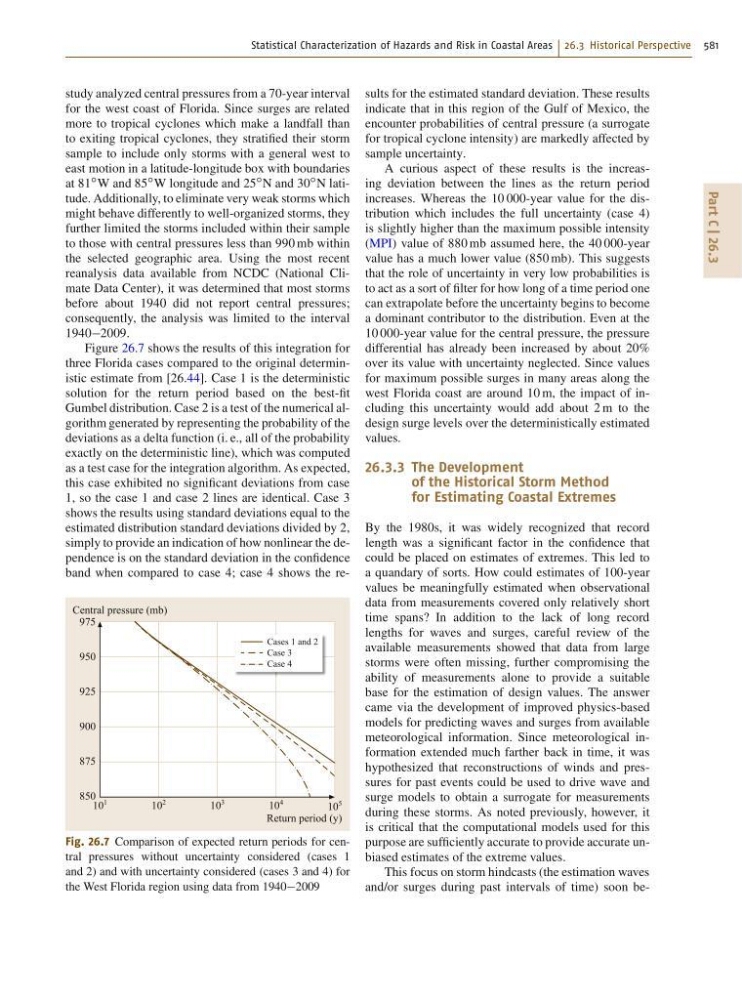
Figure 26.7 shows the results of this integration for
three Florida cases compared to the original deterministic estimate from [26.44]. Case 1 is the deterministic
solution for the return period based on the best-fit
Gumbel distribution. Case 2 is a test of the numerical algorithm generated by representing the probability of the
deviations as a delta function (i. e., all of the probability
exactly on the deterministic line), which was computed
as a test case for the integration algorithm. As expected,
this case exhibited no significant deviations from case
1, so the case 1 and case 2 lines are identical. Case 3
shows the results using standard deviations equal to the
estimated distribution standard deviations divided by 2,
simply to provide an indication of how nonlinear the dependence is on the standard deviation in the confidence
band when compared to case 4; case 4 shows the reCases 1 and 2
Case 3
Case 4
10
1
10
2
10
3
10
4
10
5
Central pressure (mb)
Return period (y)
975
950
925
900
875
850
Fig. 26.7 Comparison of expected return periods for central pressures without uncertainty considered (cases 1
and 2) and with uncertainty considered (cases 3 and 4) for
the West Florida region using data from 19402009
sults for the estimated standard deviation. These results
indicate that in this region of the Gulf of Mexico, the
encounter probabilities of central pressure (a surrogate
for tropical cyclone intensity) are markedly affected by
sample uncertainty.
A curious aspect of these results is the increasing deviation between the lines as the return period
increases. Whereas the 10 000-year value for the distribution which includes the full uncertainty (case 4)
is slightly higher than the maximum possible intensity
(MPI) value of 880 mb assumed here, the 40 000-year
value has a much lower value (850 mb). This suggests
that the role of uncertainty in very low probabilities is
to act as a sort of filter for how long of a time period one
can extrapolate before the uncertainty begins to become
a dominant contributor to the distribution. Even at the
10 000-year value for the central pressure, the pressure
differential has already been increased by about 20%
over its value with uncertainty neglected. Since values
for maximum possible surges in many areas along the
west Florida coast are around 10 m, the impact of including this uncertainty would add about 2 m to the
design surge levels over the deterministically estimated
values.
26.3.3 The Development
of the Historical Storm Method
for Estimating Coastal Extremes
By the 1980s, it was widely recognized that record
length was a significant factor in the confidence that
could be placed on estimates of extremes. This led to
a quandary of sorts. How could estimates of 100-year
values be meaningfully estimated when observational
data from measurements covered only relatively short
time spans? In addition to the lack of long record
lengths for waves and surges, careful review of the
available measurements showed that data from large
storms were often missing, further compromising the
ability of measurements alone to provide a suitable
base for the estimation of design values. The answer
came via the development of improved physics-based
models for predicting waves and surges from available
meteorological information. Since meteorological information extended much farther back in time, it was
hypothesized that reconstructions of winds and pressures for past events could be used to drive wave and
surge models to obtain a surrogate for measurements
during these storms. As noted previously, however, it
is critical that the computational models used for this
purpose are sufficiently accurate to provide accurate unbiased estimates of the extreme values.
This focus on storm hindcasts (the estimation waves
and/or surges during past intervals of time) soon be-