

Part B | 23.3
520 Part B Autonomous Ocean Vehicles, Subsystems and Control
0
a)
c)
b)
Moving hazard
B
B –A
B –A
B
USV
USV
v B
v A
v B
USV
Avoid the obstacle
while seeing it
on the right
Dilated moving hazard
(dilated more in its
velocity direction)
Decision in velocity space
Safe
Finite time-to-collision
COLREG violation
Safety buffer
Next
waypoint
Cut in front
(violate COLREGS)
Moving traffic boats
Avoid the obstacle
while seeing it
on the left
VO
A
B(v
– B)
v 2
v 3
v 1
WVO
A
B(vB)
USV moves away from
the obstacle
USV
v A –v B
0
Fig. 23.3a–c A graphical representation of velocity obstacles (a) showing
how the relative velocities of the
unmanned surface vehicle (USV)
and a moving hazard predict collision and define heading and speed
combinations that allow safe passage.
Combining the VO approach with
COLREGS further constrains the
problem, generating safe maneuvering
projections that satisfy the COLREGS
requirements (b). Image (c) depicts
a simulation run where the USV is
encountering a potential collision
and optimal COLREGS compliant
trajectory is determined based on the
VO and COLREGS restrictions (courtesy of Jet Propulsion Laboratory,
California Institute of Technology)
Sensors
Stereo
Behaviors
Actuators
Hazard
avoidance
Inhibit
Go to
waypoint
Rudder/throttle
GPS
IMU
Fig. 23.4 An example of the subsumption approach as used in autonomous decision making,
where certain behaviors are given higher priority
a)
b)
Traffic
boat
Traffic
boat
USV obeys
crossing-from-right
COLREGs
USV obeys
head-on
COLREGs
USV
USV
c)
d)
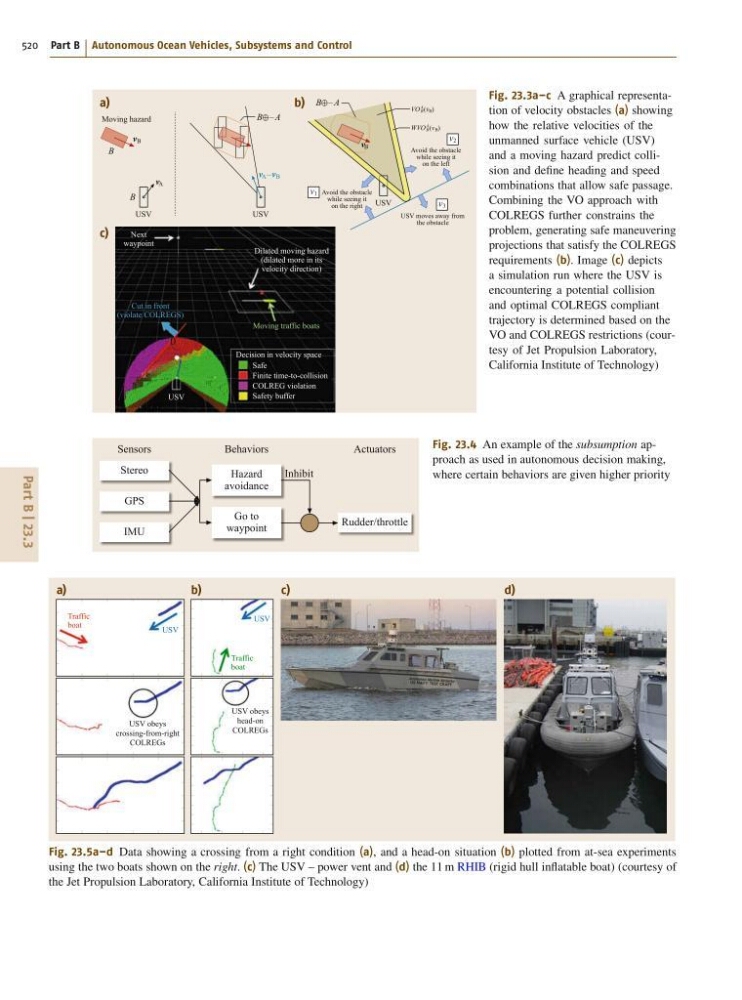
Fig. 23.5a–d Data showing a crossing from a right condition (a), and a head-on situation (b) plotted from at-sea experiments
using the two boats shown on the right. (c) The USV – power vent and (d) the 11 m RHIB (rigid hull inflatable boat) (courtesy of
the Jet Propulsion Laboratory, California Institute of Technology)
520 Part B Autonomous Ocean Vehicles, Subsystems and Control
0
a)
c)
b)
Moving hazard
B
B –A
B –A
B
USV
USV
v B
v A
v B
USV
Avoid the obstacle
while seeing it
on the right
Dilated moving hazard
(dilated more in its
velocity direction)
Decision in velocity space
Safe
Finite time-to-collision
COLREG violation
Safety buffer
Next
waypoint
Cut in front
(violate COLREGS)
Moving traffic boats
Avoid the obstacle
while seeing it
on the left
VO
A
B(v
– B)
v 2
v 3
v 1
WVO
A
B(vB)
USV moves away from
the obstacle
USV
v A –v B
0
Fig. 23.3a–c A graphical representation of velocity obstacles (a) showing
how the relative velocities of the
unmanned surface vehicle (USV)
and a moving hazard predict collision and define heading and speed
combinations that allow safe passage.
Combining the VO approach with
COLREGS further constrains the
problem, generating safe maneuvering
projections that satisfy the COLREGS
requirements (b). Image (c) depicts
a simulation run where the USV is
encountering a potential collision
and optimal COLREGS compliant
trajectory is determined based on the
VO and COLREGS restrictions (courtesy of Jet Propulsion Laboratory,
California Institute of Technology)
Sensors
Stereo
Behaviors
Actuators
Hazard
avoidance
Inhibit
Go to
waypoint
Rudder/throttle
GPS
IMU
Fig. 23.4 An example of the subsumption approach as used in autonomous decision making,
where certain behaviors are given higher priority
a)
b)
Traffic
boat
Traffic
boat
USV obeys
crossing-from-right
COLREGs
USV obeys
head-on
COLREGs
USV
USV
c)
d)
Fig. 23.5a–d Data showing a crossing from a right condition (a), and a head-on situation (b) plotted from at-sea experiments
using the two boats shown on the right. (c) The USV – power vent and (d) the 11 m RHIB (rigid hull inflatable boat) (courtesy of
the Jet Propulsion Laboratory, California Institute of Technology)