

Rules of the Road for Unmanned Marine Vehicles 23.3 Proper Behaviors Yield Compliance 519
Part B | 23.3
a real-world environment and to do so in a way that
appears human-like, this perceived world must contain
information that maps closely to that perceived by a human observer.
Sensors along with complex computer algorithms
that fuse the raw sensor data are used to produce a representation of the surrounding environment much the
same way the human eye and brain interact to create
a picture of the surroundings. Relative to the evolution
of the human eye, robot perception today is primitive.
The perceived environment with all of its misperceptions and uncertainties is integrated into the robot’s
autonomy engine in order to facilitate safe mobilization.
Huntsberger [23.2, 3] provides a good example of this
process, as shown in Fig. 23.1, where a forward looking
stereo system and a 360
ı sensor head are used to give
full situational awareness around the UMV [23.2, 4].
Significant progress has been made within the past
decade in the area of robot exteroception (perception
of the world around the robot), including advances in
the technology associated with improved sensors and
evolution in the software associated with processing
the information obtained by these sensors. Through an
array of sensors, each sensitive to a limited spectral
window (radar, laser, infrared, etc.), fused into a single contact report, the UMV assimilates information
about its immediate environment. In general, the higher
the fidelity of the fused data, the better the probability that the behavior algorithm will operate the robot
with clearly defined (deliberate) movements. This will
ultimately instill a high degree of trust of UMVs operating in crowded marine environments. It is not the
focus of this paper to discuss the details of sensing the
world around the UMV, but rather to discuss the impact
that this capability has on advancing the functionality of
the UMV and the potential for integration into the human/robot world in which these machines will operate.
As sensory capability and autonomy behaviors continue to evolve, marine robots will continue to become
more and more capable of effectively discriminating between stationary and moving objects, sailing and motor
driven vessels, channel markers, bridge pilings, and so
on. Clutter rejection, false positives, lights on shorelines and other unwanted signal noise will be properly
rejected, and complex artificial vision systems will produce reliable contact reports with a high degree of
accuracy and confidence to the UMV autonomy engine.
Eventually, humans operating in near proximity to these
UMVs will have a difficult time distinguishing between
human and machine operators.
23.3 Proper Behaviors Yield Compliance
Competent mobile marine vehicles generally operate
with deliberate intentions (following a prescribed waypoint path) until a reactive behavior is necessary to
avoid collision with a newly detected obstacle or vessel
while underway. Various techniques for blending reactive and deliberate actions are practiced by many different groups engaged in programming mobile robots.
For example, Kuwata et al. [23.5, 6] demonstrate velocity obstacles (VO) in conjunction with a subsumption approach [23.3] to meet COLREGS requirements
with UMVs. Benjamin et al. [23.7] employ a mathematical methodology, termed interval programming
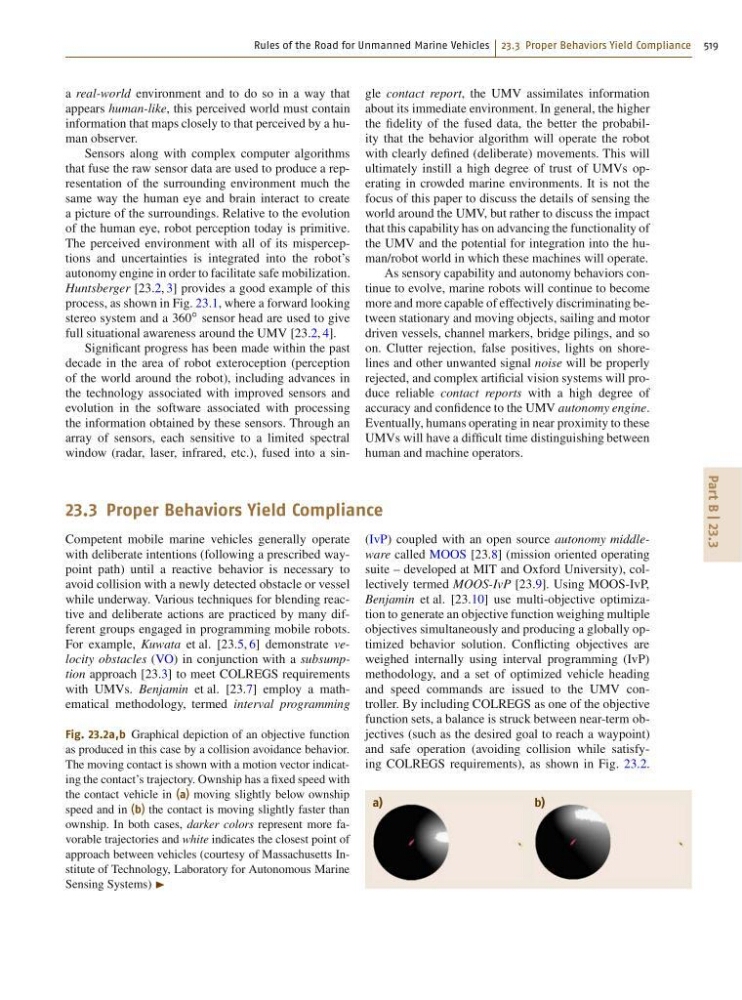
Fig. 23.2a,b Graphical depiction of an objective function
as produced in this case by a collision avoidance behavior.
The moving contact is shown with a motion vector indicating the contact’s trajectory. Ownship has a fixed speed with
the contact vehicle in (a) moving slightly below ownship
speed and in (b) the contact is moving slightly faster than
ownship. In both cases, darker colors represent more favorable trajectories and white indicates the closest point of
approach between vehicles (courtesy of Massachusetts Institute of Technology, Laboratory for Autonomous Marine
Sensing Systems) I
(IvP) coupled with an open source autonomy middleware called MOOS [23.8] (mission oriented operating
suite – developed at MIT and Oxford University), collectively termed MOOS-IvP [23.9]. Using MOOS-IvP,
Benjamin et al. [23.10] use multi-objective optimization to generate an objective function weighing multiple
objectives simultaneously and producing a globally optimized behavior solution. Conflicting objectives are
weighed internally using interval programming (IvP)
methodology, and a set of optimized vehicle heading
and speed commands are issued to the UMV controller. By including COLREGS as one of the objective
function sets, a balance is struck between near-term objectives (such as the desired goal to reach a waypoint)
and safe operation (avoiding collision while satisfying COLREGS requirements), as shown in Fig. 23.2.
a)
b)
Part B | 23.3
a real-world environment and to do so in a way that
appears human-like, this perceived world must contain
information that maps closely to that perceived by a human observer.
Sensors along with complex computer algorithms
that fuse the raw sensor data are used to produce a representation of the surrounding environment much the
same way the human eye and brain interact to create
a picture of the surroundings. Relative to the evolution
of the human eye, robot perception today is primitive.
The perceived environment with all of its misperceptions and uncertainties is integrated into the robot’s
autonomy engine in order to facilitate safe mobilization.
Huntsberger [23.2, 3] provides a good example of this
process, as shown in Fig. 23.1, where a forward looking
stereo system and a 360
ı sensor head are used to give
full situational awareness around the UMV [23.2, 4].
Significant progress has been made within the past
decade in the area of robot exteroception (perception
of the world around the robot), including advances in
the technology associated with improved sensors and
evolution in the software associated with processing
the information obtained by these sensors. Through an
array of sensors, each sensitive to a limited spectral
window (radar, laser, infrared, etc.), fused into a single contact report, the UMV assimilates information
about its immediate environment. In general, the higher
the fidelity of the fused data, the better the probability that the behavior algorithm will operate the robot
with clearly defined (deliberate) movements. This will
ultimately instill a high degree of trust of UMVs operating in crowded marine environments. It is not the
focus of this paper to discuss the details of sensing the
world around the UMV, but rather to discuss the impact
that this capability has on advancing the functionality of
the UMV and the potential for integration into the human/robot world in which these machines will operate.
As sensory capability and autonomy behaviors continue to evolve, marine robots will continue to become
more and more capable of effectively discriminating between stationary and moving objects, sailing and motor
driven vessels, channel markers, bridge pilings, and so
on. Clutter rejection, false positives, lights on shorelines and other unwanted signal noise will be properly
rejected, and complex artificial vision systems will produce reliable contact reports with a high degree of
accuracy and confidence to the UMV autonomy engine.
Eventually, humans operating in near proximity to these
UMVs will have a difficult time distinguishing between
human and machine operators.
23.3 Proper Behaviors Yield Compliance
Competent mobile marine vehicles generally operate
with deliberate intentions (following a prescribed waypoint path) until a reactive behavior is necessary to
avoid collision with a newly detected obstacle or vessel
while underway. Various techniques for blending reactive and deliberate actions are practiced by many different groups engaged in programming mobile robots.
For example, Kuwata et al. [23.5, 6] demonstrate velocity obstacles (VO) in conjunction with a subsumption approach [23.3] to meet COLREGS requirements
with UMVs. Benjamin et al. [23.7] employ a mathematical methodology, termed interval programming
Fig. 23.2a,b Graphical depiction of an objective function
as produced in this case by a collision avoidance behavior.
The moving contact is shown with a motion vector indicating the contact’s trajectory. Ownship has a fixed speed with
the contact vehicle in (a) moving slightly below ownship
speed and in (b) the contact is moving slightly faster than
ownship. In both cases, darker colors represent more favorable trajectories and white indicates the closest point of
approach between vehicles (courtesy of Massachusetts Institute of Technology, Laboratory for Autonomous Marine
Sensing Systems) I
(IvP) coupled with an open source autonomy middleware called MOOS [23.8] (mission oriented operating
suite – developed at MIT and Oxford University), collectively termed MOOS-IvP [23.9]. Using MOOS-IvP,
Benjamin et al. [23.10] use multi-objective optimization to generate an objective function weighing multiple
objectives simultaneously and producing a globally optimized behavior solution. Conflicting objectives are
weighed internally using interval programming (IvP)
methodology, and a set of optimized vehicle heading
and speed commands are issued to the UMV controller. By including COLREGS as one of the objective
function sets, a balance is struck between near-term objectives (such as the desired goal to reach a waypoint)
and safe operation (avoiding collision while satisfying COLREGS requirements), as shown in Fig. 23.2.
a)
b)