

Part B | 22.3
506 Part B Autonomous Ocean Vehicles, Subsystems and Control
ter [22.54, 55], but can be solved [22.56]. A simple and
surprisingly well-performing approach in the signal and
contact processing for multistatic tracking is to sequentially process the incoming contacts. The motion model
inserted in the tracking algorithm (by Kalman filtering)
is implicitly concatenating the contacts together with
their uncertainties. Sequential handling of contacts has
less performance than a full fusion, but in many applications and simulations this procedure is adequate.
For multiple tracking platforms, the data fusion process increases track accuracy and track length, and
minimizes track latency. For long-range applications,
sequential target tracking can be used as a method for
data fusion [22.56]. If the sequential target tracking is
not feasible due to too low probability of detection, data
fusion before tracking or a multisensor track-beforedetect may be possible. [22.57, 58].
Multistatic sonar enables false alarm classification
by evaluating hypothesis on the existence or nonexistence of contacts in different source receiver geometries
depending on the size and structure of the objects or
larger underwater features. These geometric considerations lead to a very important feature of multistatic
sonar: It is antistealth, in the sense that the target has
less degrees of freedom in deciding what to do next
without being detected, which relates directly to a decrease in the number of internal mental states available
to the target. Multiple acoustic sources can be used
to localize autonomous receivers automatically [22.60],
Sensing
System
Entity
Property
Observation
Action
Event
Sensor
Stimulus
Process
Platform
Device
Sensor output
Sensor input
Operating
range
Physical
object
Designed
artifact
Sensing
device
Measurement
capability
Survival
range
Deployment-rel
ated process
Deployment
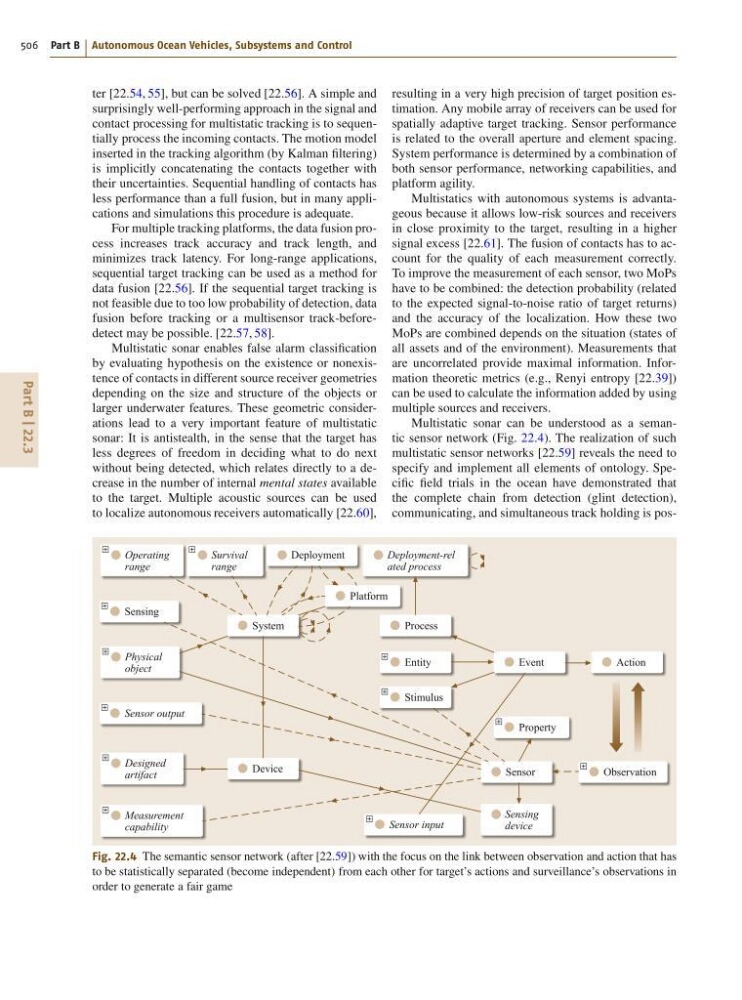
Fig. 22.4 The semantic sensor network (after [22.59]) with the focus on the link between observation and action that has
to be statistically separated (become independent) from each other for target’s actions and surveillance’s observations in
order to generate a fair game
resulting in a very high precision of target position estimation. Any mobile array of receivers can be used for
spatially adaptive target tracking. Sensor performance
is related to the overall aperture and element spacing.
System performance is determined by a combination of
both sensor performance, networking capabilities, and
platform agility.
Multistatics with autonomous systems is advantageous because it allows low-risk sources and receivers
in close proximity to the target, resulting in a higher
signal excess [22.61]. The fusion of contacts has to account for the quality of each measurement correctly.
To improve the measurement of each sensor, two MoPs
have to be combined: the detection probability (related
to the expected signal-to-noise ratio of target returns)
and the accuracy of the localization. How these two
MoPs are combined depends on the situation (states of
all assets and of the environment). Measurements that
are uncorrelated provide maximal information. Information theoretic metrics (e.g., Renyi entropy [22.39])
can be used to calculate the information added by using
multiple sources and receivers.
Multistatic sonar can be understood as a semantic sensor network (Fig. 22.4). The realization of such
multistatic sensor networks [22.59] reveals the need to
specify and implement all elements of ontology. Specific field trials in the ocean have demonstrated that
the complete chain from detection (glint detection),
communicating, and simultaneous track holding is pos-
506 Part B Autonomous Ocean Vehicles, Subsystems and Control
ter [22.54, 55], but can be solved [22.56]. A simple and
surprisingly well-performing approach in the signal and
contact processing for multistatic tracking is to sequentially process the incoming contacts. The motion model
inserted in the tracking algorithm (by Kalman filtering)
is implicitly concatenating the contacts together with
their uncertainties. Sequential handling of contacts has
less performance than a full fusion, but in many applications and simulations this procedure is adequate.
For multiple tracking platforms, the data fusion process increases track accuracy and track length, and
minimizes track latency. For long-range applications,
sequential target tracking can be used as a method for
data fusion [22.56]. If the sequential target tracking is
not feasible due to too low probability of detection, data
fusion before tracking or a multisensor track-beforedetect may be possible. [22.57, 58].
Multistatic sonar enables false alarm classification
by evaluating hypothesis on the existence or nonexistence of contacts in different source receiver geometries
depending on the size and structure of the objects or
larger underwater features. These geometric considerations lead to a very important feature of multistatic
sonar: It is antistealth, in the sense that the target has
less degrees of freedom in deciding what to do next
without being detected, which relates directly to a decrease in the number of internal mental states available
to the target. Multiple acoustic sources can be used
to localize autonomous receivers automatically [22.60],
Sensing
System
Entity
Property
Observation
Action
Event
Sensor
Stimulus
Process
Platform
Device
Sensor output
Sensor input
Operating
range
Physical
object
Designed
artifact
Sensing
device
Measurement
capability
Survival
range
Deployment-rel
ated process
Deployment
Fig. 22.4 The semantic sensor network (after [22.59]) with the focus on the link between observation and action that has
to be statistically separated (become independent) from each other for target’s actions and surveillance’s observations in
order to generate a fair game
resulting in a very high precision of target position estimation. Any mobile array of receivers can be used for
spatially adaptive target tracking. Sensor performance
is related to the overall aperture and element spacing.
System performance is determined by a combination of
both sensor performance, networking capabilities, and
platform agility.
Multistatics with autonomous systems is advantageous because it allows low-risk sources and receivers
in close proximity to the target, resulting in a higher
signal excess [22.61]. The fusion of contacts has to account for the quality of each measurement correctly.
To improve the measurement of each sensor, two MoPs
have to be combined: the detection probability (related
to the expected signal-to-noise ratio of target returns)
and the accuracy of the localization. How these two
MoPs are combined depends on the situation (states of
all assets and of the environment). Measurements that
are uncorrelated provide maximal information. Information theoretic metrics (e.g., Renyi entropy [22.39])
can be used to calculate the information added by using
multiple sources and receivers.
Multistatic sonar can be understood as a semantic sensor network (Fig. 22.4). The realization of such
multistatic sensor networks [22.59] reveals the need to
specify and implement all elements of ontology. Specific field trials in the ocean have demonstrated that
the complete chain from detection (glint detection),
communicating, and simultaneous track holding is pos-