

Nested Autonomy for Distributed Ocean Sensing 20.6 Application Examples 475
Part B | 20.6
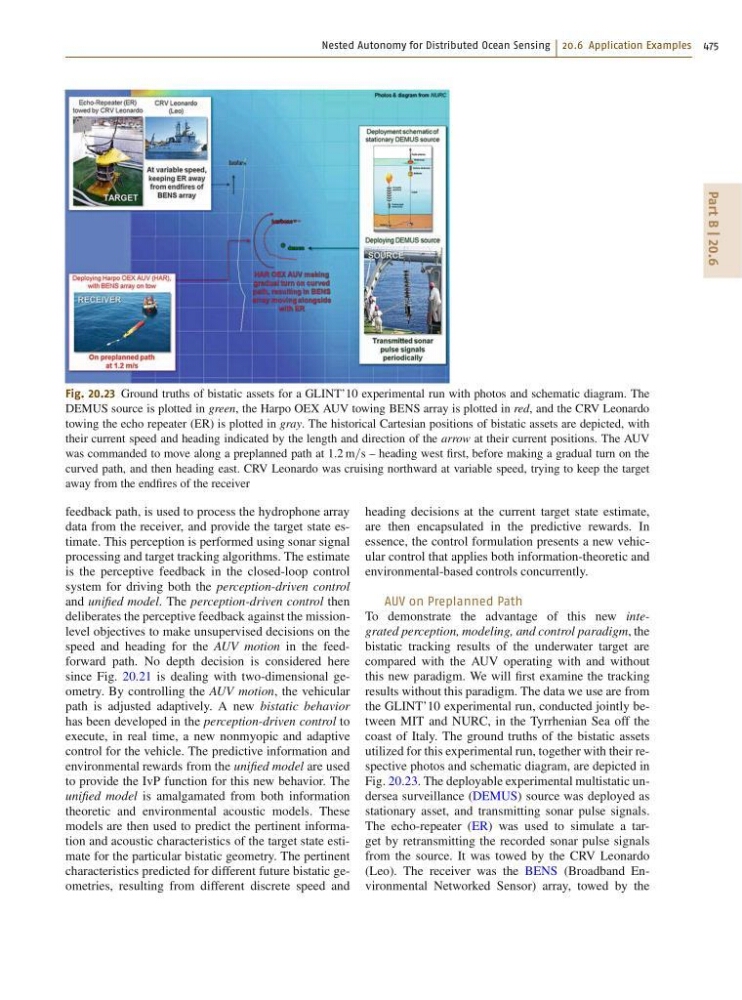
Fig. 20.23 Ground truths of bistatic assets for a GLINT’10 experimental run with photos and schematic diagram. The
DEMUS source is plotted in green, the Harpo OEX AUV towing BENS array is plotted in red, and the CRV Leonardo
towing the echo repeater (ER) is plotted in gray. The historical Cartesian positions of bistatic assets are depicted, with
their current speed and heading indicated by the length and direction of the arrow at their current positions. The AUV
was commanded to move along a preplanned path at 1:2 m=s – heading west first, before making a gradual turn on the
curved path, and then heading east. CRV Leonardo was cruising northward at variable speed, trying to keep the target
away from the endfires of the receiver
feedback path, is used to process the hydrophone array
data from the receiver, and provide the target state estimate. This perception is performed using sonar signal
processing and target tracking algorithms. The estimate
is the perceptive feedback in the closed-loop control
system for driving both the perception-driven control
and unified model. The perception-driven control then
deliberates the perceptive feedback against the missionlevel objectives to make unsupervised decisions on the
speed and heading for the AUV motion in the feedforward path. No depth decision is considered here
since Fig. 20.21 is dealing with two-dimensional geometry. By controlling the AUV motion, the vehicular
path is adjusted adaptively. A new bistatic behavior
has been developed in the perception-driven control to
execute, in real time, a new nonmyopic and adaptive
control for the vehicle. The predictive information and
environmental rewards from the unified model are used
to provide the IvP function for this new behavior. The
unified model is amalgamated from both information
theoretic and environmental acoustic models. These
models are then used to predict the pertinent information and acoustic characteristics of the target state estimate for the particular bistatic geometry. The pertinent
characteristics predicted for different future bistatic geometries, resulting from different discrete speed and
heading decisions at the current target state estimate,
are then encapsulated in the predictive rewards. In
essence, the control formulation presents a new vehicular control that applies both information-theoretic and
environmental-based controls concurrently.
AUV on Preplanned Path
To demonstrate the advantage of this new integrated perception, modeling, and control paradigm, the
bistatic tracking results of the underwater target are
compared with the AUV operating with and without
this new paradigm. We will first examine the tracking
results without this paradigm. The data we use are from
the GLINT’10 experimental run, conducted jointly between MIT and NURC, in the Tyrrhenian Sea off the
coast of Italy. The ground truths of the bistatic assets
utilized for this experimental run, together with their respective photos and schematic diagram, are depicted in
Fig. 20.23. The deployable experimental multistatic undersea surveillance (DEMUS) source was deployed as
stationary asset, and transmitting sonar pulse signals.
The echo-repeater (ER) was used to simulate a target by retransmitting the recorded sonar pulse signals
from the source. It was towed by the CRV Leonardo
(Leo). The receiver was the BENS (Broadband Environmental Networked Sensor) array, towed by the
Part B | 20.6
Fig. 20.23 Ground truths of bistatic assets for a GLINT’10 experimental run with photos and schematic diagram. The
DEMUS source is plotted in green, the Harpo OEX AUV towing BENS array is plotted in red, and the CRV Leonardo
towing the echo repeater (ER) is plotted in gray. The historical Cartesian positions of bistatic assets are depicted, with
their current speed and heading indicated by the length and direction of the arrow at their current positions. The AUV
was commanded to move along a preplanned path at 1:2 m=s – heading west first, before making a gradual turn on the
curved path, and then heading east. CRV Leonardo was cruising northward at variable speed, trying to keep the target
away from the endfires of the receiver
feedback path, is used to process the hydrophone array
data from the receiver, and provide the target state estimate. This perception is performed using sonar signal
processing and target tracking algorithms. The estimate
is the perceptive feedback in the closed-loop control
system for driving both the perception-driven control
and unified model. The perception-driven control then
deliberates the perceptive feedback against the missionlevel objectives to make unsupervised decisions on the
speed and heading for the AUV motion in the feedforward path. No depth decision is considered here
since Fig. 20.21 is dealing with two-dimensional geometry. By controlling the AUV motion, the vehicular
path is adjusted adaptively. A new bistatic behavior
has been developed in the perception-driven control to
execute, in real time, a new nonmyopic and adaptive
control for the vehicle. The predictive information and
environmental rewards from the unified model are used
to provide the IvP function for this new behavior. The
unified model is amalgamated from both information
theoretic and environmental acoustic models. These
models are then used to predict the pertinent information and acoustic characteristics of the target state estimate for the particular bistatic geometry. The pertinent
characteristics predicted for different future bistatic geometries, resulting from different discrete speed and
heading decisions at the current target state estimate,
are then encapsulated in the predictive rewards. In
essence, the control formulation presents a new vehicular control that applies both information-theoretic and
environmental-based controls concurrently.
AUV on Preplanned Path
To demonstrate the advantage of this new integrated perception, modeling, and control paradigm, the
bistatic tracking results of the underwater target are
compared with the AUV operating with and without
this new paradigm. We will first examine the tracking
results without this paradigm. The data we use are from
the GLINT’10 experimental run, conducted jointly between MIT and NURC, in the Tyrrhenian Sea off the
coast of Italy. The ground truths of the bistatic assets
utilized for this experimental run, together with their respective photos and schematic diagram, are depicted in
Fig. 20.23. The deployable experimental multistatic undersea surveillance (DEMUS) source was deployed as
stationary asset, and transmitting sonar pulse signals.
The echo-repeater (ER) was used to simulate a target by retransmitting the recorded sonar pulse signals
from the source. It was towed by the CRV Leonardo
(Leo). The receiver was the BENS (Broadband Environmental Networked Sensor) array, towed by the