

Part B | 13.5
338 Part B Autonomous Ocean Vehicles, Subsystems and Control
Quad-copter
SWATH ASUV
AUV
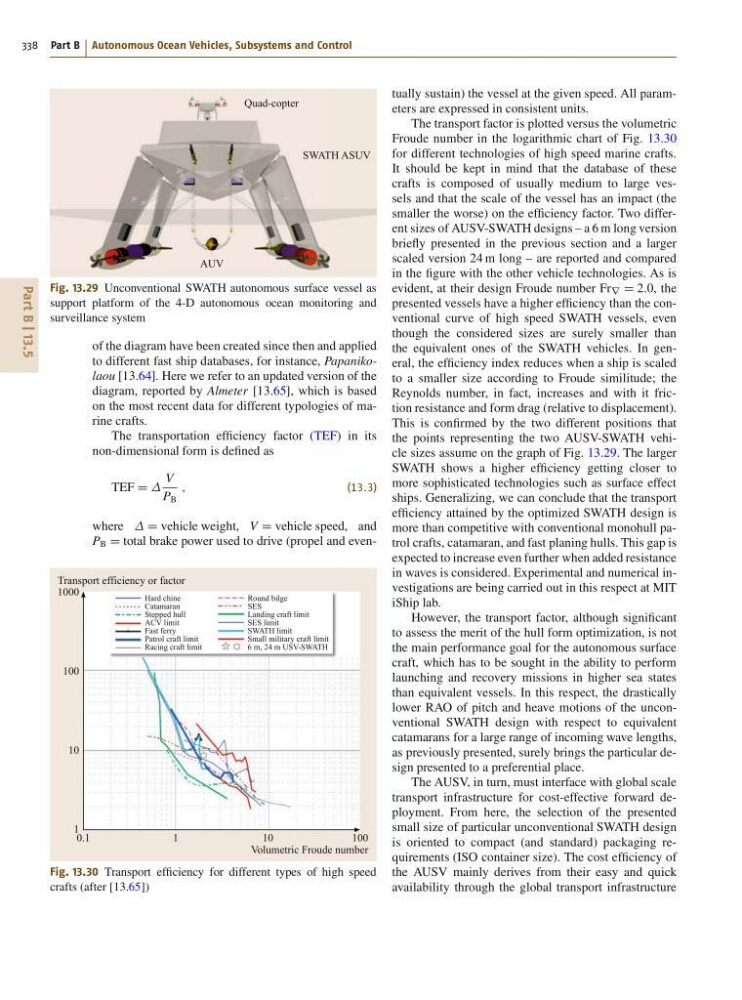
Fig. 13.29 Unconventional SWATH autonomous surface vessel as
support platform of the 4-D autonomous ocean monitoring and
surveillance system
of the diagram have been created since then and applied
to different fast ship databases, for instance, Papanikolaou [13.64]. Here we refer to an updated version of the
diagram, reported by Almeter [13.65], which is based
on the most recent data for different typologies of marine crafts.
The transportation efficiency factor (TEF) in its
non-dimensional form is defined as
TEF D
V
P B
;
(13.3)
where D vehicle weight, V D vehicle speed, and
P B D total brake power used to drive (propel and even0.1
1
10
100
Transport efficiency or factor
Volumetric Froude number
1000
100
10
1
Hard chine
Catamaran
Stepped hull
ACV limit
Fast ferry
Patrol craft limit
Racing craft limit
Round bilge
SES
Landing craft limit
SES limit
SWATH limit
Small military craft limit
6 m, 24 m USV-SWATH
Fig. 13.30 Transport efficiency for different types of high speed
crafts (after [13.65])
tually sustain) the vessel at the given speed. All parameters are expressed in consistent units.
The transport factor is plotted versus the volumetric
Froude number in the logarithmic chart of Fig. 13.30
for different technologies of high speed marine crafts.
It should be kept in mind that the database of these
crafts is composed of usually medium to large vessels and that the scale of the vessel has an impact (the
smaller the worse) on the efficiency factor. Two different sizes of AUSV-SWATH designs – a 6 m long version
briefly presented in the previous section and a larger
scaled version 24 m long – are reported and compared
in the figure with the other vehicle technologies. As is
evident, at their design Froude number Fr r D 2:0, the
presented vessels have a higher efficiency than the conventional curve of high speed SWATH vessels, even
though the considered sizes are surely smaller than
the equivalent ones of the SWATH vehicles. In general, the efficiency index reduces when a ship is scaled
to a smaller size according to Froude similitude; the
Reynolds number, in fact, increases and with it friction resistance and form drag (relative to displacement).
This is confirmed by the two different positions that
the points representing the two AUSV-SWATH vehicle sizes assume on the graph of Fig. 13.29. The larger
SWATH shows a higher efficiency getting closer to
more sophisticated technologies such as surface effect
ships. Generalizing, we can conclude that the transport
efficiency attained by the optimized SWATH design is
more than competitive with conventional monohull patrol crafts, catamaran, and fast planing hulls. This gap is
expected to increase even further when added resistance
in waves is considered. Experimental and numerical investigations are being carried out in this respect at MIT
iShip lab.
However, the transport factor, although significant
to assess the merit of the hull form optimization, is not
the main performance goal for the autonomous surface
craft, which has to be sought in the ability to perform
launching and recovery missions in higher sea states
than equivalent vessels. In this respect, the drastically
lower RAO of pitch and heave motions of the unconventional SWATH design with respect to equivalent
catamarans for a large range of incoming wave lengths,
as previously presented, surely brings the particular design presented to a preferential place.
The AUSV, in turn, must interface with global scale
transport infrastructure for cost-effective forward deployment. From here, the selection of the presented
small size of particular unconventional SWATH design
is oriented to compact (and standard) packaging requirements (ISO container size). The cost efficiency of
the AUSV mainly derives from their easy and quick
availability through the global transport infrastructure
338 Part B Autonomous Ocean Vehicles, Subsystems and Control
Quad-copter
SWATH ASUV
AUV
Fig. 13.29 Unconventional SWATH autonomous surface vessel as
support platform of the 4-D autonomous ocean monitoring and
surveillance system
of the diagram have been created since then and applied
to different fast ship databases, for instance, Papanikolaou [13.64]. Here we refer to an updated version of the
diagram, reported by Almeter [13.65], which is based
on the most recent data for different typologies of marine crafts.
The transportation efficiency factor (TEF) in its
non-dimensional form is defined as
TEF D
V
P B
;
(13.3)
where D vehicle weight, V D vehicle speed, and
P B D total brake power used to drive (propel and even0.1
1
10
100
Transport efficiency or factor
Volumetric Froude number
1000
100
10
1
Hard chine
Catamaran
Stepped hull
ACV limit
Fast ferry
Patrol craft limit
Racing craft limit
Round bilge
SES
Landing craft limit
SES limit
SWATH limit
Small military craft limit
6 m, 24 m USV-SWATH
Fig. 13.30 Transport efficiency for different types of high speed
crafts (after [13.65])
tually sustain) the vessel at the given speed. All parameters are expressed in consistent units.
The transport factor is plotted versus the volumetric
Froude number in the logarithmic chart of Fig. 13.30
for different technologies of high speed marine crafts.
It should be kept in mind that the database of these
crafts is composed of usually medium to large vessels and that the scale of the vessel has an impact (the
smaller the worse) on the efficiency factor. Two different sizes of AUSV-SWATH designs – a 6 m long version
briefly presented in the previous section and a larger
scaled version 24 m long – are reported and compared
in the figure with the other vehicle technologies. As is
evident, at their design Froude number Fr r D 2:0, the
presented vessels have a higher efficiency than the conventional curve of high speed SWATH vessels, even
though the considered sizes are surely smaller than
the equivalent ones of the SWATH vehicles. In general, the efficiency index reduces when a ship is scaled
to a smaller size according to Froude similitude; the
Reynolds number, in fact, increases and with it friction resistance and form drag (relative to displacement).
This is confirmed by the two different positions that
the points representing the two AUSV-SWATH vehicle sizes assume on the graph of Fig. 13.29. The larger
SWATH shows a higher efficiency getting closer to
more sophisticated technologies such as surface effect
ships. Generalizing, we can conclude that the transport
efficiency attained by the optimized SWATH design is
more than competitive with conventional monohull patrol crafts, catamaran, and fast planing hulls. This gap is
expected to increase even further when added resistance
in waves is considered. Experimental and numerical investigations are being carried out in this respect at MIT
iShip lab.
However, the transport factor, although significant
to assess the merit of the hull form optimization, is not
the main performance goal for the autonomous surface
craft, which has to be sought in the ability to perform
launching and recovery missions in higher sea states
than equivalent vessels. In this respect, the drastically
lower RAO of pitch and heave motions of the unconventional SWATH design with respect to equivalent
catamarans for a large range of incoming wave lengths,
as previously presented, surely brings the particular design presented to a preferential place.
The AUSV, in turn, must interface with global scale
transport infrastructure for cost-effective forward deployment. From here, the selection of the presented
small size of particular unconventional SWATH design
is oriented to compact (and standard) packaging requirements (ISO container size). The cost efficiency of
the AUSV mainly derives from their easy and quick
availability through the global transport infrastructure