

Part A | 6.4
116 Part A Fundamentals
0
2
4
Half-tide
Immersion
Long-term corrosion
loss trends
Panama Canal zone
low-carbon steel
Coastal atmosphere
Inland coastal
6
8
10
12
14
16
Average corrosion loss (mm)
Exposure period (years)
0.8
0.7
0.6
0.5
0.4
0.3
0.2
0.1
0
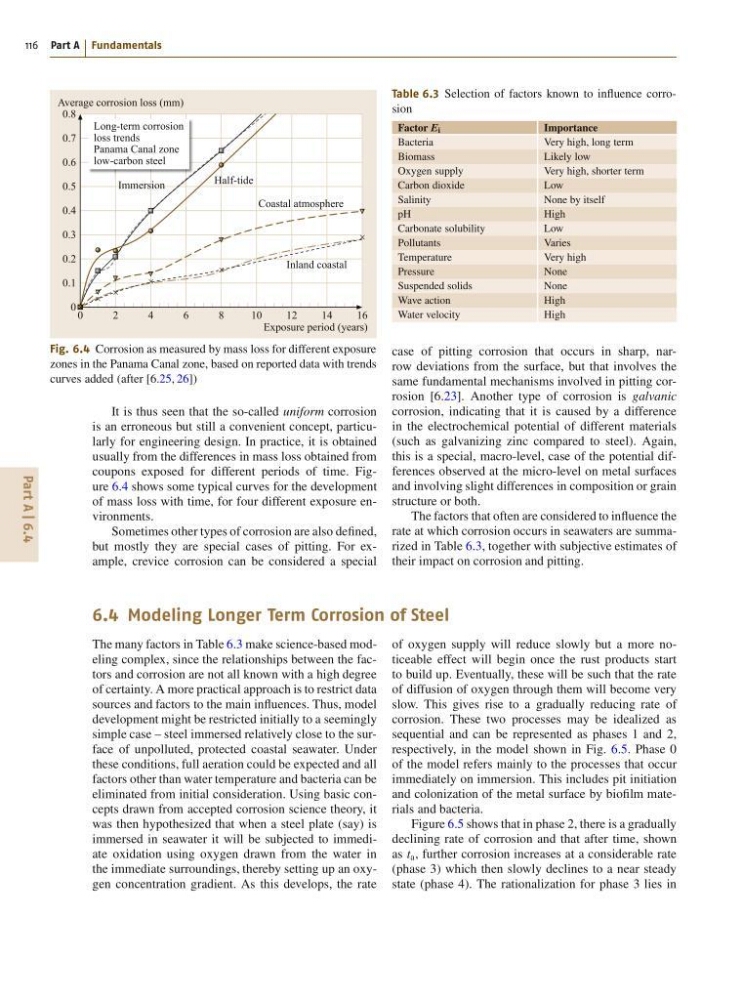
Fig. 6.4 Corrosion as measured by mass loss for different exposure
zones in the Panama Canal zone, based on reported data with trends
curves added (after [6.25, 26])
It is thus seen that the so-called uniform corrosion
is an erroneous but still a convenient concept, particularly for engineering design. In practice, it is obtained
usually from the differences in mass loss obtained from
coupons exposed for different periods of time. Figure 6.4 shows some typical curves for the development
of mass loss with time, for four different exposure environments.
Sometimes other types of corrosion are also defined,
but mostly they are special cases of pitting. For example, crevice corrosion can be considered a special
Table 6.3 Selection of factors known to influence corrosion
Factor E i
Importance
Bacteria
Very high, long term
Biomass
Likely low
Oxygen supply
Very high, shorter term
Carbon dioxide
Low
Salinity
None by itself
pH
High
Carbonate solubility
Low
Pollutants
Varies
Temperature
Very high
Pressure
None
Suspended solids
None
Wave action
High
Water velocity
High
case of pitting corrosion that occurs in sharp, narrow deviations from the surface, but that involves the
same fundamental mechanisms involved in pitting corrosion [6.23]. Another type of corrosion is galvanic
corrosion, indicating that it is caused by a difference
in the electrochemical potential of different materials
(such as galvanizing zinc compared to steel). Again,
this is a special, macro-level, case of the potential differences observed at the micro-level on metal surfaces
and involving slight differences in composition or grain
structure or both.
The factors that often are considered to influence the
rate at which corrosion occurs in seawaters are summarized in Table 6.3, together with subjective estimates of
their impact on corrosion and pitting.
6.4 Modeling Longer Term Corrosion of Steel
The many factors in Table 6.3 make science-based modeling complex, since the relationships between the factors and corrosion are not all known with a high degree
of certainty. A more practical approach is to restrict data
sources and factors to the main influences. Thus, model
development might be restricted initially to a seemingly
simple case – steel immersed relatively close to the surface of unpolluted, protected coastal seawater. Under
these conditions, full aeration could be expected and all
factors other than water temperature and bacteria can be
eliminated from initial consideration. Using basic concepts drawn from accepted corrosion science theory, it
was then hypothesized that when a steel plate (say) is
immersed in seawater it will be subjected to immediate oxidation using oxygen drawn from the water in
the immediate surroundings, thereby setting up an oxygen concentration gradient. As this develops, the rate
of oxygen supply will reduce slowly but a more noticeable effect will begin once the rust products start
to build up. Eventually, these will be such that the rate
of diffusion of oxygen through them will become very
slow. This gives rise to a gradually reducing rate of
corrosion. These two processes may be idealized as
sequential and can be represented as phases 1 and 2,
respectively, in the model shown in Fig. 6.5. Phase 0
of the model refers mainly to the processes that occur
immediately on immersion. This includes pit initiation
and colonization of the metal surface by biofilm materials and bacteria.
Figure 6.5 shows that in phase 2, there is a gradually
declining rate of corrosion and that after time, shown
as t a , further corrosion increases at a considerable rate
(phase 3) which then slowly declines to a near steady
state (phase 4). The rationalization for phase 3 lies in
116 Part A Fundamentals
0
2
4
Half-tide
Immersion
Long-term corrosion
loss trends
Panama Canal zone
low-carbon steel
Coastal atmosphere
Inland coastal
6
8
10
12
14
16
Average corrosion loss (mm)
Exposure period (years)
0.8
0.7
0.6
0.5
0.4
0.3
0.2
0.1
0
Fig. 6.4 Corrosion as measured by mass loss for different exposure
zones in the Panama Canal zone, based on reported data with trends
curves added (after [6.25, 26])
It is thus seen that the so-called uniform corrosion
is an erroneous but still a convenient concept, particularly for engineering design. In practice, it is obtained
usually from the differences in mass loss obtained from
coupons exposed for different periods of time. Figure 6.4 shows some typical curves for the development
of mass loss with time, for four different exposure environments.
Sometimes other types of corrosion are also defined,
but mostly they are special cases of pitting. For example, crevice corrosion can be considered a special
Table 6.3 Selection of factors known to influence corrosion
Factor E i
Importance
Bacteria
Very high, long term
Biomass
Likely low
Oxygen supply
Very high, shorter term
Carbon dioxide
Low
Salinity
None by itself
pH
High
Carbonate solubility
Low
Pollutants
Varies
Temperature
Very high
Pressure
None
Suspended solids
None
Wave action
High
Water velocity
High
case of pitting corrosion that occurs in sharp, narrow deviations from the surface, but that involves the
same fundamental mechanisms involved in pitting corrosion [6.23]. Another type of corrosion is galvanic
corrosion, indicating that it is caused by a difference
in the electrochemical potential of different materials
(such as galvanizing zinc compared to steel). Again,
this is a special, macro-level, case of the potential differences observed at the micro-level on metal surfaces
and involving slight differences in composition or grain
structure or both.
The factors that often are considered to influence the
rate at which corrosion occurs in seawaters are summarized in Table 6.3, together with subjective estimates of
their impact on corrosion and pitting.
6.4 Modeling Longer Term Corrosion of Steel
The many factors in Table 6.3 make science-based modeling complex, since the relationships between the factors and corrosion are not all known with a high degree
of certainty. A more practical approach is to restrict data
sources and factors to the main influences. Thus, model
development might be restricted initially to a seemingly
simple case – steel immersed relatively close to the surface of unpolluted, protected coastal seawater. Under
these conditions, full aeration could be expected and all
factors other than water temperature and bacteria can be
eliminated from initial consideration. Using basic concepts drawn from accepted corrosion science theory, it
was then hypothesized that when a steel plate (say) is
immersed in seawater it will be subjected to immediate oxidation using oxygen drawn from the water in
the immediate surroundings, thereby setting up an oxygen concentration gradient. As this develops, the rate
of oxygen supply will reduce slowly but a more noticeable effect will begin once the rust products start
to build up. Eventually, these will be such that the rate
of diffusion of oxygen through them will become very
slow. This gives rise to a gradually reducing rate of
corrosion. These two processes may be idealized as
sequential and can be represented as phases 1 and 2,
respectively, in the model shown in Fig. 6.5. Phase 0
of the model refers mainly to the processes that occur
immediately on immersion. This includes pit initiation
and colonization of the metal surface by biofilm materials and bacteria.
Figure 6.5 shows that in phase 2, there is a gradually
declining rate of corrosion and that after time, shown
as t a , further corrosion increases at a considerable rate
(phase 3) which then slowly declines to a near steady
state (phase 4). The rationalization for phase 3 lies in