

boundaries one year, and precipitation characteristic of wetter regions may make incursions into
an arid zone in the next year (Fig. 7.13). These
shifts in climate become critical in areas where
agriculture is carried out at the margins of
humidity. In semiarid areas like the Great Plains
of the United States the settlers have been
devastated, because these locations are sometimes desert, sometimes humid, and sometimes
a hybrid of the two.
The vegetation is steppe, sometimes called
shortgrass prairie, and semi-desert (Fig. 7.14).
Typical steppe vegetation consists of numerous
species of short grasses that usually grow in
sparsely distributed bunches. Many species of
grasses and other herbs occur. Buffalograss is
the typical grass of the American steppe. Other
typical plants are the sunflower and locoweed.
Scattered shrubs and low trees sometimes grow
in the steppe; all gradations of cover are present,
from semi-desert to woodland. Because ground
cover is generally sparse, much soil is exposed.
The semi-desert cover is xerophytic shrub vegetation accompanied by a poorly developed herbaceous layer. Trees are generally absent. An
example of semi-desert cover is the sagebrush
vegetation of the middle and southern Rocky
Mountain region and the Colorado Plateau in the
United States.
In this climatic regime, the dominant pedogenic process is calcification, with salinization
on poorly drained sites. Soils contain an excess
of precipitated calcium carbonate and are rich in
bases. Brown soils (Mollisols) are typical (see
Fig. 11.9, p. 108). The soils of the semi-desert
shrub are sierozems (Aridisols), with little
organic content, and (occasionally) clay
horizons, and (in some places) accumulations of
various salts. Humus content is small because the
vegetation is so sparse.
The grasslands are generally areas of plains
and tablelands. Few perennial streams originate
here, so that those streams which do exist have
their source in other more humid areas. Crossing
the grasslands, the streams lose their ability to
carry sediment as volume and velocity decline.
The result is considerable braiding of streams
during the dry season.
The dominant animals of grasslands are the
large herds of hoofed grazers, such as camels in
Asia, American bison, pronghorn antelope in the
United States, and several species of deer worldwide. In New Zealand and Australia, mammals
are replaced by large grazing birds, such as the
emu (Fig. 7.15). Much of the animal life in
grasslands is found underground. Rodents—
such as the prairie dog in America and hamsters
of Eurasia—retreat underground to escape
predators and the summer heat.
These steppes constitute the great sheep and
cattle ranges of the world. The steppes of central
Asia have for centuries supported nomadic
populations. Wheat and, to a lesser extent, oats,
rye, and barley, are dominant crops. The North
American Great Plains, the Ukraine, and parts of
north China are all within this region. Large areas
of steppe have disappeared, replaced by farmlands
(Fig. 7.16).
In the Occidental world, farmers cultivate
poorer land, supporting themselves on large
areas by using machinery. On the dry margins
they have managed to survive by allowing the
land to lie fallow for a year, so that enough
moisture might be stored up to permit crop production the following year.
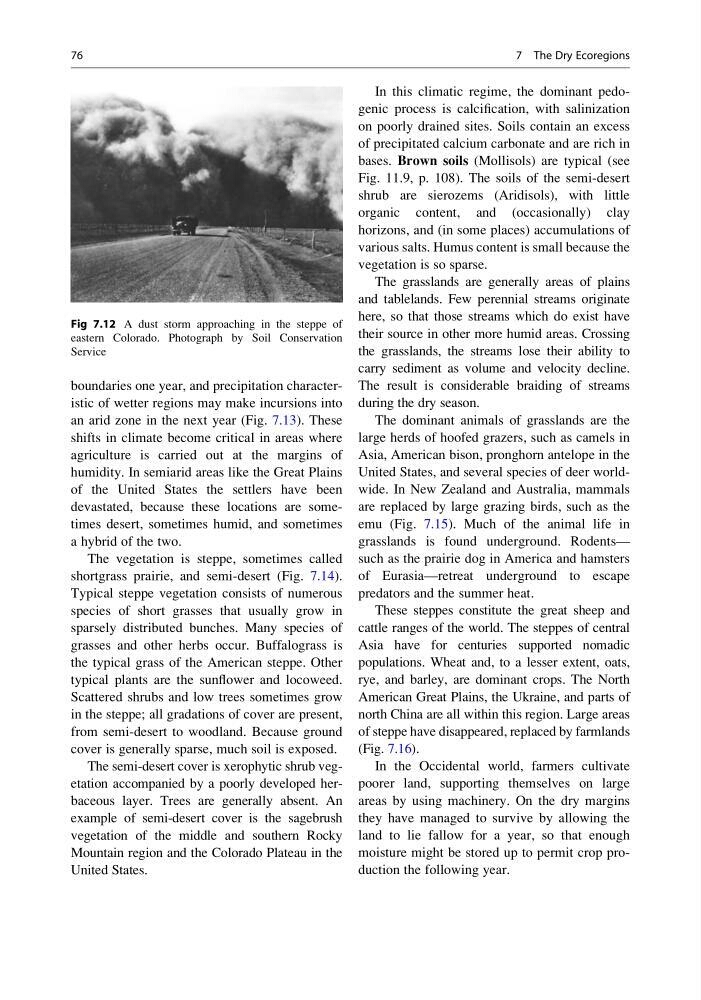
Fig 7.12 A dust storm approaching in the steppe of
eastern Colorado. Photograph by Soil Conservation
Service
76
7 The Dry Ecoregions
an arid zone in the next year (Fig. 7.13). These
shifts in climate become critical in areas where
agriculture is carried out at the margins of
humidity. In semiarid areas like the Great Plains
of the United States the settlers have been
devastated, because these locations are sometimes desert, sometimes humid, and sometimes
a hybrid of the two.
The vegetation is steppe, sometimes called
shortgrass prairie, and semi-desert (Fig. 7.14).
Typical steppe vegetation consists of numerous
species of short grasses that usually grow in
sparsely distributed bunches. Many species of
grasses and other herbs occur. Buffalograss is
the typical grass of the American steppe. Other
typical plants are the sunflower and locoweed.
Scattered shrubs and low trees sometimes grow
in the steppe; all gradations of cover are present,
from semi-desert to woodland. Because ground
cover is generally sparse, much soil is exposed.
The semi-desert cover is xerophytic shrub vegetation accompanied by a poorly developed herbaceous layer. Trees are generally absent. An
example of semi-desert cover is the sagebrush
vegetation of the middle and southern Rocky
Mountain region and the Colorado Plateau in the
United States.
In this climatic regime, the dominant pedogenic process is calcification, with salinization
on poorly drained sites. Soils contain an excess
of precipitated calcium carbonate and are rich in
bases. Brown soils (Mollisols) are typical (see
Fig. 11.9, p. 108). The soils of the semi-desert
shrub are sierozems (Aridisols), with little
organic content, and (occasionally) clay
horizons, and (in some places) accumulations of
various salts. Humus content is small because the
vegetation is so sparse.
The grasslands are generally areas of plains
and tablelands. Few perennial streams originate
here, so that those streams which do exist have
their source in other more humid areas. Crossing
the grasslands, the streams lose their ability to
carry sediment as volume and velocity decline.
The result is considerable braiding of streams
during the dry season.
The dominant animals of grasslands are the
large herds of hoofed grazers, such as camels in
Asia, American bison, pronghorn antelope in the
United States, and several species of deer worldwide. In New Zealand and Australia, mammals
are replaced by large grazing birds, such as the
emu (Fig. 7.15). Much of the animal life in
grasslands is found underground. Rodents—
such as the prairie dog in America and hamsters
of Eurasia—retreat underground to escape
predators and the summer heat.
These steppes constitute the great sheep and
cattle ranges of the world. The steppes of central
Asia have for centuries supported nomadic
populations. Wheat and, to a lesser extent, oats,
rye, and barley, are dominant crops. The North
American Great Plains, the Ukraine, and parts of
north China are all within this region. Large areas
of steppe have disappeared, replaced by farmlands
(Fig. 7.16).
In the Occidental world, farmers cultivate
poorer land, supporting themselves on large
areas by using machinery. On the dry margins
they have managed to survive by allowing the
land to lie fallow for a year, so that enough
moisture might be stored up to permit crop production the following year.
Fig 7.12 A dust storm approaching in the steppe of
eastern Colorado. Photograph by Soil Conservation
Service
76
7 The Dry Ecoregions