

surface. In northwestern Brazil, there is an area
once covered with thorny, scrubby deciduous
trees known as caatinga. Where brush is thicker
and mixed with trees it forms the scrub woodland
of the Chaco in Argentina. Scrub woodland also
forms a fringe around the desert in Australia
(Fig. 7.3).
Chestnut-brown soils and sierozems (Mollisols,
Aridisols) are associated with these tropical, semiarid climates.
In Africa, nomadic herding is one of the main
forms of agrarian uses, which is linked to the
alternation of the dry and rainy seasons. During
the dry season the herders move into highaltitude regions, which are generally wetter, and
during the rainy season they move down to the
lowlands again. In the deserts and semi-deserts,
the herds consist of camels, sheep, and goats,
while in the thorn savannas, cattle predominate.
Like the temperate steppe we describe below,
rainfall in these regions can be expected to vary
greatly and is subject to periods of drought
interspersed with periods of ample rainfall. In
several West African nations within the Sahelian
zone, recent droughts have depleted grasses for
grazing and devastated the annual grain crop.
Some five million cattle perished and many
thousands of people died of starvation and disease. Periodic droughts in the past are well
documented. In places, the land surface has
been changed into desert through a process called
desertification. Desertification in the African
steppes can be attributed to greatly increased
numbers of humans and their cattle.
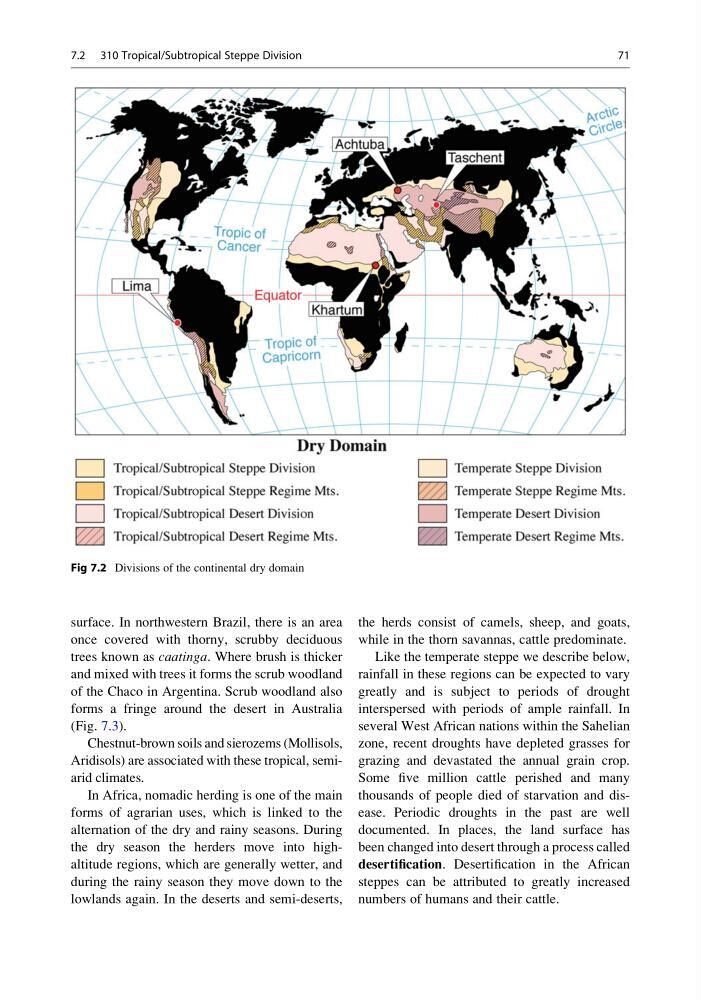
Fig 7.2 Divisions of the continental dry domain
7.2 310 Tropical/Subtropical Steppe Division
71
once covered with thorny, scrubby deciduous
trees known as caatinga. Where brush is thicker
and mixed with trees it forms the scrub woodland
of the Chaco in Argentina. Scrub woodland also
forms a fringe around the desert in Australia
(Fig. 7.3).
Chestnut-brown soils and sierozems (Mollisols,
Aridisols) are associated with these tropical, semiarid climates.
In Africa, nomadic herding is one of the main
forms of agrarian uses, which is linked to the
alternation of the dry and rainy seasons. During
the dry season the herders move into highaltitude regions, which are generally wetter, and
during the rainy season they move down to the
lowlands again. In the deserts and semi-deserts,
the herds consist of camels, sheep, and goats,
while in the thorn savannas, cattle predominate.
Like the temperate steppe we describe below,
rainfall in these regions can be expected to vary
greatly and is subject to periods of drought
interspersed with periods of ample rainfall. In
several West African nations within the Sahelian
zone, recent droughts have depleted grasses for
grazing and devastated the annual grain crop.
Some five million cattle perished and many
thousands of people died of starvation and disease. Periodic droughts in the past are well
documented. In places, the land surface has
been changed into desert through a process called
desertification. Desertification in the African
steppes can be attributed to greatly increased
numbers of humans and their cattle.
Fig 7.2 Divisions of the continental dry domain
7.2 310 Tropical/Subtropical Steppe Division
71