

Ba s al De b ri s. . . : . "
...... ~ . : ~. " . . . .. .
Lodgement till
beneath gnrded ice
.'"
Climatic Clues from Restricted Seas
201
Dropstones
I HI/ Ilil
Biogenic
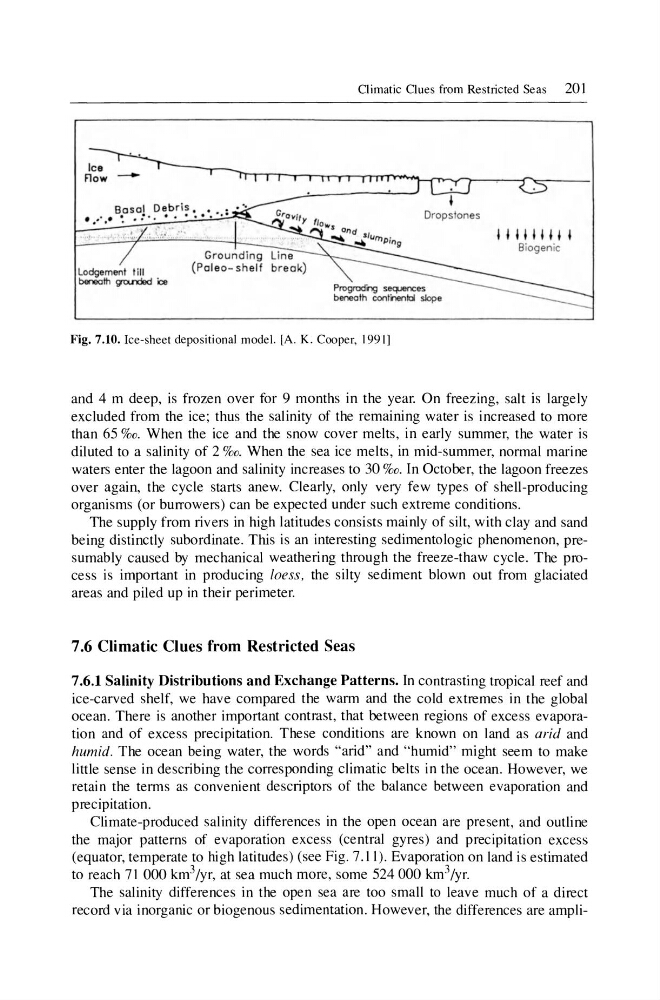
Fig. 7.10. Ice-sheet depositional model. lAo K. Cooper, 1991]
and 4 m deep, is frozen over for 9 months in the year. On freezing, salt is largely
excluded from the ice; thus the salinity of the remaining water is increased to more
than 65 %0. When the ice and the snow cover melts, in early summer, the water is
diluted to a salinity of 2 %0. When the sea ice melts , in mid-summer, normal marine
waters enter the lagoon and salinity increases to 30 %0. In October, the lagoon freezes
over again, the cycle starts anew. Clearly, only very few types of shell-producing
organisms (or burrowers) can be expected under such extreme conditions.
The supply from rivers in high latitudes consists mainly of silt, with clay and sand
being distinctly subordinate. This is an interesting sedimentologic phenomenon, presumably caused by mechanical weathering through the freeze-thaw cycle. The process is important in producing loess, the silty sediment blown out from glaciated
areas and piled up in their perimeter.
7.6 Climatic Clues from Restricted Seas
7.6.1 Salinity Distributions and Exchange Patterns. In contrasting tropical reef and
ice-carved shelf, we have compared the warm and the cold extremes in the global
ocean. There is another important contrast, that between regions of excess evaporation and of excess precipitation. These conditions are known on land as arid and
humid. The ocean being water, the words "arid" and "humid" might seem to make
little sense in describing the corresponding climatic belts in the ocean. However, we
retain the terms as convenient descriptors of the balance between evaporation and
precipitation.
Climate-produced salinity differences in the open ocean are present, and outline
the major patterns of evaporation excess (central gyres) and precipitation excess
(equator, temperate to high latitudes) (see Fig. 7.11). Evaporation on land is estimated
to reach 71 000 km 3 /yr, at sea much more, some 524 000 km 3 /yr.
The salinity differences in the open sea are too small to leave much of a direct
record via inorganic or biogenous sedimentation. However, the differences are ampli-
...... ~ . : ~. " . . . .. .
Lodgement till
beneath gnrded ice
.'"
Climatic Clues from Restricted Seas
201
Dropstones
I HI/ Ilil
Biogenic
Fig. 7.10. Ice-sheet depositional model. lAo K. Cooper, 1991]
and 4 m deep, is frozen over for 9 months in the year. On freezing, salt is largely
excluded from the ice; thus the salinity of the remaining water is increased to more
than 65 %0. When the ice and the snow cover melts, in early summer, the water is
diluted to a salinity of 2 %0. When the sea ice melts , in mid-summer, normal marine
waters enter the lagoon and salinity increases to 30 %0. In October, the lagoon freezes
over again, the cycle starts anew. Clearly, only very few types of shell-producing
organisms (or burrowers) can be expected under such extreme conditions.
The supply from rivers in high latitudes consists mainly of silt, with clay and sand
being distinctly subordinate. This is an interesting sedimentologic phenomenon, presumably caused by mechanical weathering through the freeze-thaw cycle. The process is important in producing loess, the silty sediment blown out from glaciated
areas and piled up in their perimeter.
7.6 Climatic Clues from Restricted Seas
7.6.1 Salinity Distributions and Exchange Patterns. In contrasting tropical reef and
ice-carved shelf, we have compared the warm and the cold extremes in the global
ocean. There is another important contrast, that between regions of excess evaporation and of excess precipitation. These conditions are known on land as arid and
humid. The ocean being water, the words "arid" and "humid" might seem to make
little sense in describing the corresponding climatic belts in the ocean. However, we
retain the terms as convenient descriptors of the balance between evaporation and
precipitation.
Climate-produced salinity differences in the open ocean are present, and outline
the major patterns of evaporation excess (central gyres) and precipitation excess
(equator, temperate to high latitudes) (see Fig. 7.11). Evaporation on land is estimated
to reach 71 000 km 3 /yr, at sea much more, some 524 000 km 3 /yr.
The salinity differences in the open sea are too small to leave much of a direct
record via inorganic or biogenous sedimentation. However, the differences are ampli-