

541
O 2
M n 2 +
F e 2 +
O 2
M n
2 +
F e 2 +
N H 4
+
N O 3
-
N H 4
+
N O 3
-
0
5 0
1 00 1 50 2 00 2 50
0
1 0
2 0
3 0
4 0
5 0
0
5 0
1 00 150 200 250
0
2
4
6
8
10
0
5 0
1 00
1 50
2 00
0
20
40
60
8 0 1 00
0
20
4 0
6 0
8 0 1 00
0
2 00
4 0 0
6 00
8 0 0
0
2
4
6
8
1 0
0
2
4
6
8
1 0
M n 2+ , F e 2+ [µ M ]
N O 3
- [µ M ]
N H 4
+ [µ M ]
Depth [cm]
M n 2+ , F e 2+ [µ M ]
O 2 [µ M ]
N H 4
+
N O 3
-
O 2
M n 2 +
F e 2 +
0
2
4
6
8
1 0
0
2
4
6
8
1 0
0
5 0
1 00 1 50 2 00 2 50
0
2
4
6
8
1 0
0
5 0 1 00 1 50 2 00 2 50
O 2 , F e 2+ , M n 2+ [µ M ]
N O 3
- [µ M ]
N H 4
+ [µ M ]
O 2 [µ M ]
N O 3
- [µ M ]
N H 4
+ [µ M ]
Depth [cm]
Depth [cm]
A
B
C
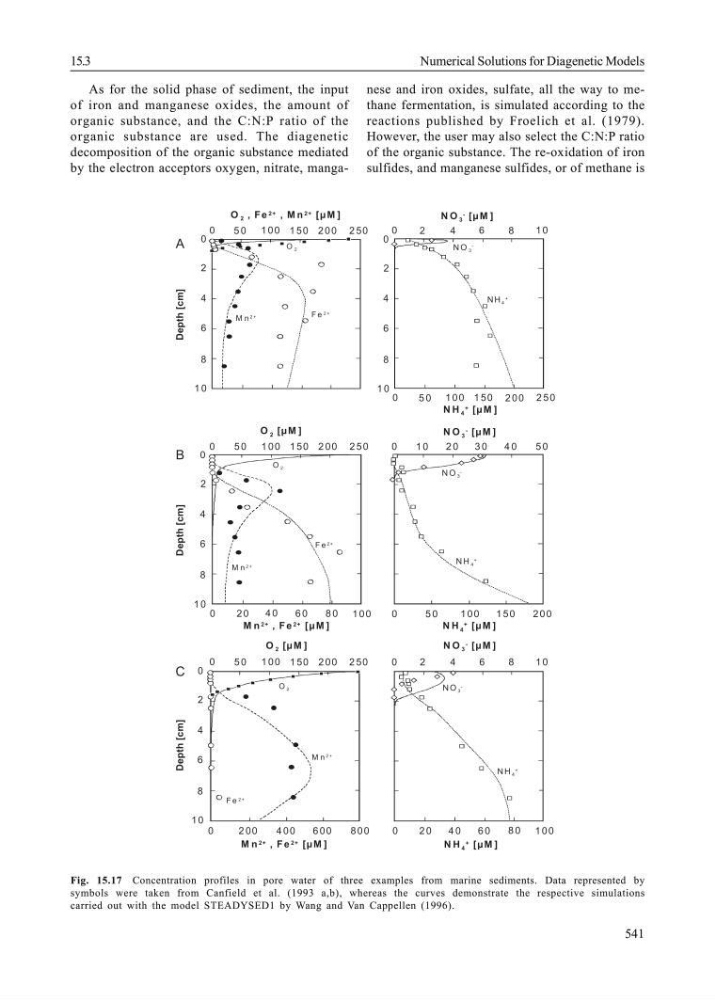
Fig. 15.17 Concentration profiles in pore water of three examples from marine sediments. Data represented by
symbols were taken from Canfield et al. (1993 a,b), whereas the curves demonstrate the respective simulations
carried out with the model STEADYSED1 by Wang and Van Cappellen (1996).
As for the solid phase of sediment, the input
of iron and manganese oxides, the amount of
organic substance, and the C:N:P ratio of the
organic substance are used. The diagenetic
decomposition of the organic substance mediated
by the electron acceptors oxygen, nitrate, manganese and iron oxides, sulfate, all the way to methane fermentation, is simulated according to the
reactions published by Froelich et al. (1979).
However, the user may also select the C:N:P ratio
of the organic substance. The re-oxidation of iron
sulfides, and manganese sulfides, or of methane is
15.3
Numerical Solutions for Diagenetic Models
O 2
M n 2 +
F e 2 +
O 2
M n
2 +
F e 2 +
N H 4
+
N O 3
-
N H 4
+
N O 3
-
0
5 0
1 00 1 50 2 00 2 50
0
1 0
2 0
3 0
4 0
5 0
0
5 0
1 00 150 200 250
0
2
4
6
8
10
0
5 0
1 00
1 50
2 00
0
20
40
60
8 0 1 00
0
20
4 0
6 0
8 0 1 00
0
2 00
4 0 0
6 00
8 0 0
0
2
4
6
8
1 0
0
2
4
6
8
1 0
M n 2+ , F e 2+ [µ M ]
N O 3
- [µ M ]
N H 4
+ [µ M ]
Depth [cm]
M n 2+ , F e 2+ [µ M ]
O 2 [µ M ]
N H 4
+
N O 3
-
O 2
M n 2 +
F e 2 +
0
2
4
6
8
1 0
0
2
4
6
8
1 0
0
5 0
1 00 1 50 2 00 2 50
0
2
4
6
8
1 0
0
5 0 1 00 1 50 2 00 2 50
O 2 , F e 2+ , M n 2+ [µ M ]
N O 3
- [µ M ]
N H 4
+ [µ M ]
O 2 [µ M ]
N O 3
- [µ M ]
N H 4
+ [µ M ]
Depth [cm]
Depth [cm]
A
B
C
Fig. 15.17 Concentration profiles in pore water of three examples from marine sediments. Data represented by
symbols were taken from Canfield et al. (1993 a,b), whereas the curves demonstrate the respective simulations
carried out with the model STEADYSED1 by Wang and Van Cappellen (1996).
As for the solid phase of sediment, the input
of iron and manganese oxides, the amount of
organic substance, and the C:N:P ratio of the
organic substance are used. The diagenetic
decomposition of the organic substance mediated
by the electron acceptors oxygen, nitrate, manganese and iron oxides, sulfate, all the way to methane fermentation, is simulated according to the
reactions published by Froelich et al. (1979).
However, the user may also select the C:N:P ratio
of the organic substance. The re-oxidation of iron
sulfides, and manganese sulfides, or of methane is
15.3
Numerical Solutions for Diagenetic Models