

14 Gas Hydrates in Marine Sediments
492
fracture the sediments and drive gas towards the
seafloor. This process has been postulated for
both passive (Flemings et al. 2003) and active
(Tréhu et al. 2004b) regions, where the volume
fraction of gas is ≥ 10% (Flemings et al. 2003).
In their analyses of past and future state of
the hydrate reservoir, Buffett and Archer (2004b),
suggest that if elevated gas pressures do occur
as a transient response to warming, a rapid
release of methane may be triggered by the
development of critical pressures in the gas
phase. Critical gas pressure below the base of the
gas hydrate stability zone can trigger vertical
migration of free gas to the seafloor.
14.3.5 Gas Hydrate Accumulation in
Sediments and Fabric of Natural
Gas Hydrates
Drilling of marine sediment cores as well as seafloor
sampling by research vessels confirmed the presence
of gas hydrate in sediments defined by the stability
field as described in section 14.3.1. Conventional
research vessels are only able to sample shallow
sediments close to the seafloor, thus drilling campaigns
are needed to investigate the distribution of gas
hydrates deeper within the stability field. Because gas
hydrates decompose rapidly when removed from the
high-pressure, deep-water environments in which they
form, the in situ distribution of gas hydrate must be
estimated using various proxy techniques, each of
which may have different sensitivity and spatial
resolution (Tréhu et al. 2004a). Leg 164 of the Ocean
Drilling Program (ODP) drilled several sites on the Blake
Ridge, in the first dedicated academic effort to
investigate naturally occurring gas hydrates in marine
sediments (Paull et al. 1996). Estimates made using
diverse gas-hydrate proxies revealed that gas hydrate
occupies ~ 1% to 10% of the pore space in the sediment
interval from 200 to ~450 mbsf. The hydrate occurs
dispersed within the pore-space of fine-grained
sediments or within fractures and faults (Paull et al.
1996). The distribution of fine grained gas hydrate
within the lithologically uniform drift sediments of the
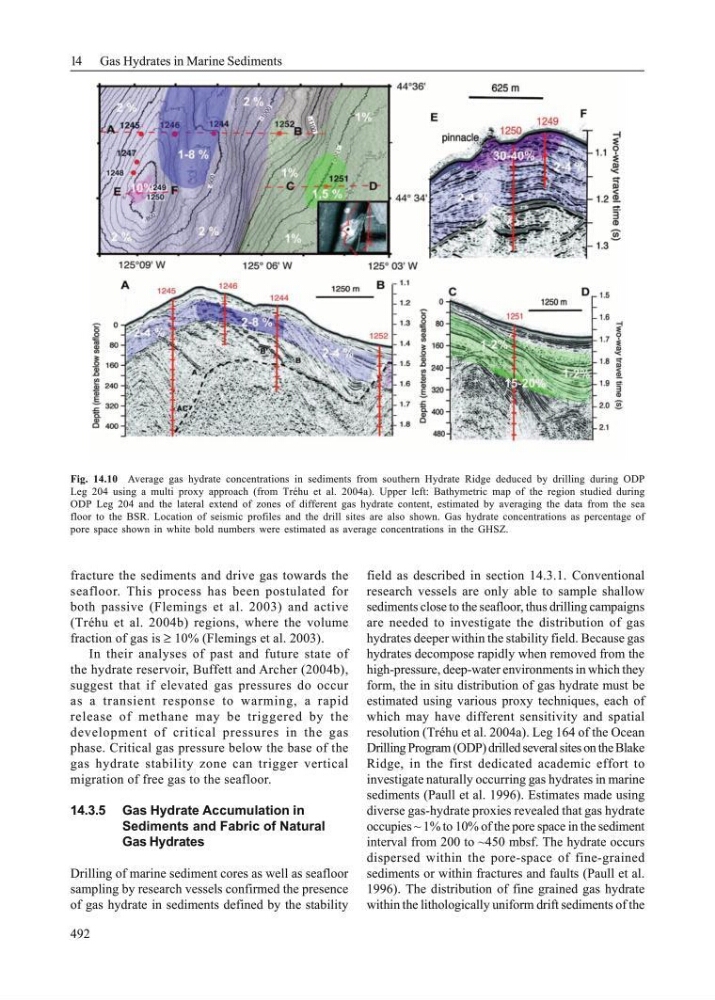
Fig. 14.10 Average gas hydrate concentrations in sediments from southern Hydrate Ridge deduced by drilling during ODP
Leg 204 using a multi proxy approach (from Tréhu et al. 2004a). Upper left: Bathymetric map of the region studied during
ODP Leg 204 and the lateral extend of zones of different gas hydrate content, estimated by averaging the data from the sea
floor to the BSR. Location of seismic profiles and the drill sites are also shown. Gas hydrate concentrations as percentage of
pore space shown in white bold numbers were estimated as average concentrations in the GHSZ.
492
fracture the sediments and drive gas towards the
seafloor. This process has been postulated for
both passive (Flemings et al. 2003) and active
(Tréhu et al. 2004b) regions, where the volume
fraction of gas is ≥ 10% (Flemings et al. 2003).
In their analyses of past and future state of
the hydrate reservoir, Buffett and Archer (2004b),
suggest that if elevated gas pressures do occur
as a transient response to warming, a rapid
release of methane may be triggered by the
development of critical pressures in the gas
phase. Critical gas pressure below the base of the
gas hydrate stability zone can trigger vertical
migration of free gas to the seafloor.
14.3.5 Gas Hydrate Accumulation in
Sediments and Fabric of Natural
Gas Hydrates
Drilling of marine sediment cores as well as seafloor
sampling by research vessels confirmed the presence
of gas hydrate in sediments defined by the stability
field as described in section 14.3.1. Conventional
research vessels are only able to sample shallow
sediments close to the seafloor, thus drilling campaigns
are needed to investigate the distribution of gas
hydrates deeper within the stability field. Because gas
hydrates decompose rapidly when removed from the
high-pressure, deep-water environments in which they
form, the in situ distribution of gas hydrate must be
estimated using various proxy techniques, each of
which may have different sensitivity and spatial
resolution (Tréhu et al. 2004a). Leg 164 of the Ocean
Drilling Program (ODP) drilled several sites on the Blake
Ridge, in the first dedicated academic effort to
investigate naturally occurring gas hydrates in marine
sediments (Paull et al. 1996). Estimates made using
diverse gas-hydrate proxies revealed that gas hydrate
occupies ~ 1% to 10% of the pore space in the sediment
interval from 200 to ~450 mbsf. The hydrate occurs
dispersed within the pore-space of fine-grained
sediments or within fractures and faults (Paull et al.
1996). The distribution of fine grained gas hydrate
within the lithologically uniform drift sediments of the
Fig. 14.10 Average gas hydrate concentrations in sediments from southern Hydrate Ridge deduced by drilling during ODP
Leg 204 using a multi proxy approach (from Tréhu et al. 2004a). Upper left: Bathymetric map of the region studied during
ODP Leg 204 and the lateral extend of zones of different gas hydrate content, estimated by averaging the data from the sea
floor to the BSR. Location of seismic profiles and the drill sites are also shown. Gas hydrate concentrations as percentage of
pore space shown in white bold numbers were estimated as average concentrations in the GHSZ.