

465
buted to the outer margins of the deposit. Sulfide
samples that have been recovered from the
interiors of hydrothermal mounds show signs of
extensive hydrothermal recrystallization and
annealing, especially when compared to the
delicate, fine-grained sulfides found in surface
precipitates (Hannington et al. 1998; Petersen et
al. 2000). As a result of the extensive hydrothermal
reworking in large sulfide mounds, it must be
considered that hydrothermal fluids arriving at the
seafloor are also likely to have been substantially
modified by interaction with pre-existing hydrothermal precipitates in their path (e.g., Janecky
and Shanks 1988), and caution should be used
when interpreting measurements made at the
surface of a large mound to infer processes related
solely to the direct venting of a high-temperature
end-member fluid.
13.4 Physical and Chemical
Characteristics of
Hydrothermal Vent Fluids
Most black smoker fluids are strongly buffered
close to equilibrium with pyrite-pyrrhotite-magnetite, although the proximity of the fluids to this
buffer assemblage is not necessarily a reflection
of the state of saturation of the minerals in
solution (Janecky and Seyfried 1984; Bowers et al.
1985; Tivey et al. 1995). Because of the high concentrations of reduced components such as
ferrous iron, H 2 and H 2 S, the fluids do not deviate
significantly from the pyrite-pyrrhotite redox
buffer, even after substantial mixing and cooling,
and the common occurrence of both pyrite and
pyrrhotite in many sulfide chimneys reflects conditions close to pyrite-pyrrhotite equilibrium
throughout their venting history. Janecky and
Seyfried (1984) note that mixing does not
significantly alter the strong f O2 buffering of the
fluids until relatively large amounts of seawater
have mixed with the end-member solutions, a
characteristic which reflects the abundance of
reducing agents in the vent fluids and the ineffective buffer capacity of seawater.
Because the vent fluid compositions are determined largely by fluid-rock interactions that
take place in the source region, the equilibrium
mineral assemblage that is precipitated during
mixing will depend to a large extent on the
chemistry of the source rocks. Fluids that are
buffered to lower f O2 and f S2 values produce a
pyrite- and pyrrhotite-dominated assemblage;
fluids at higher f O2 and f S2 values will precipitate
only pyrite. Whereas the buffer assemblage in
most volcanic rocks is close to pyrite-pyrrhotitemagnetite, fluids that have reacted extensively
with organic-rich sediments or ultramafic rocks
may have significantly more reduced compositions. As a result, seafloor spreading in areas of
high sedimentation near the continental margins
(e.g., Guaymas Basin) has given rise to a class of
deposits that are mineralogically quite different
13.4
Physical and Chemical Characteristics of Hydrothermal Vent Fluids
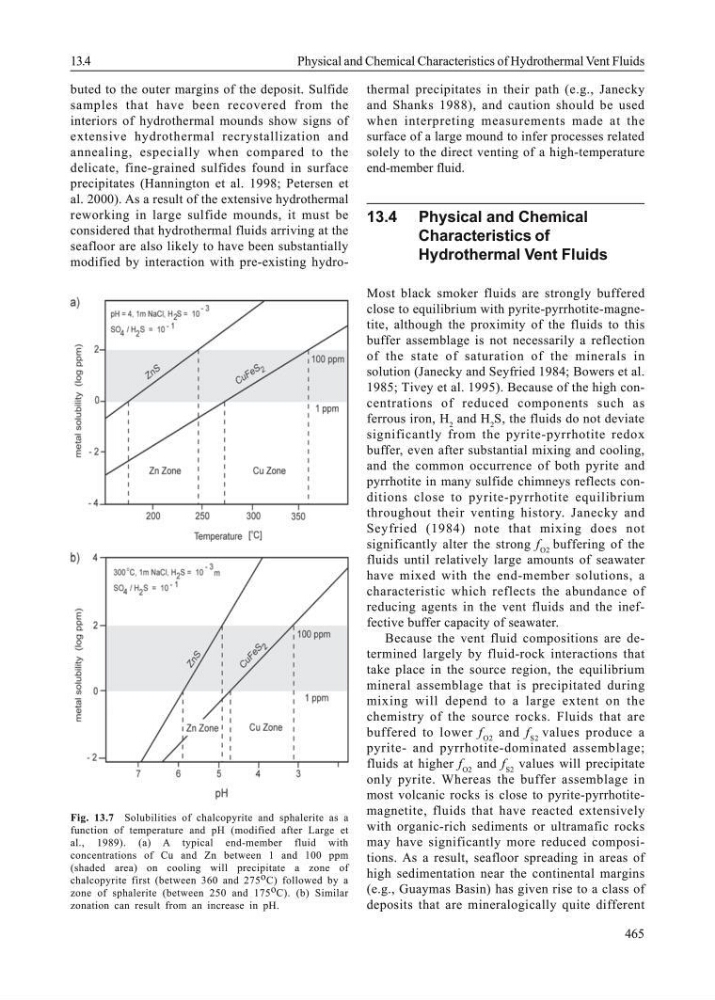
Fig. 13.7 Solubilities of chalcopyrite and sphalerite as a
function of temperature and pH (modified after Large et
al., 1989). (a) A typical end-member fluid with
concentrations of Cu and Zn between 1 and 100 ppm
(shaded area) on cooling will precipitate a zone of
chalcopyrite first (between 360 and 275 o C) followed by a
zone of sphalerite (between 250 and 175 o C). (b) Similar
zonation can result from an increase in pH.
buted to the outer margins of the deposit. Sulfide
samples that have been recovered from the
interiors of hydrothermal mounds show signs of
extensive hydrothermal recrystallization and
annealing, especially when compared to the
delicate, fine-grained sulfides found in surface
precipitates (Hannington et al. 1998; Petersen et
al. 2000). As a result of the extensive hydrothermal
reworking in large sulfide mounds, it must be
considered that hydrothermal fluids arriving at the
seafloor are also likely to have been substantially
modified by interaction with pre-existing hydrothermal precipitates in their path (e.g., Janecky
and Shanks 1988), and caution should be used
when interpreting measurements made at the
surface of a large mound to infer processes related
solely to the direct venting of a high-temperature
end-member fluid.
13.4 Physical and Chemical
Characteristics of
Hydrothermal Vent Fluids
Most black smoker fluids are strongly buffered
close to equilibrium with pyrite-pyrrhotite-magnetite, although the proximity of the fluids to this
buffer assemblage is not necessarily a reflection
of the state of saturation of the minerals in
solution (Janecky and Seyfried 1984; Bowers et al.
1985; Tivey et al. 1995). Because of the high concentrations of reduced components such as
ferrous iron, H 2 and H 2 S, the fluids do not deviate
significantly from the pyrite-pyrrhotite redox
buffer, even after substantial mixing and cooling,
and the common occurrence of both pyrite and
pyrrhotite in many sulfide chimneys reflects conditions close to pyrite-pyrrhotite equilibrium
throughout their venting history. Janecky and
Seyfried (1984) note that mixing does not
significantly alter the strong f O2 buffering of the
fluids until relatively large amounts of seawater
have mixed with the end-member solutions, a
characteristic which reflects the abundance of
reducing agents in the vent fluids and the ineffective buffer capacity of seawater.
Because the vent fluid compositions are determined largely by fluid-rock interactions that
take place in the source region, the equilibrium
mineral assemblage that is precipitated during
mixing will depend to a large extent on the
chemistry of the source rocks. Fluids that are
buffered to lower f O2 and f S2 values produce a
pyrite- and pyrrhotite-dominated assemblage;
fluids at higher f O2 and f S2 values will precipitate
only pyrite. Whereas the buffer assemblage in
most volcanic rocks is close to pyrite-pyrrhotitemagnetite, fluids that have reacted extensively
with organic-rich sediments or ultramafic rocks
may have significantly more reduced compositions. As a result, seafloor spreading in areas of
high sedimentation near the continental margins
(e.g., Guaymas Basin) has given rise to a class of
deposits that are mineralogically quite different
13.4
Physical and Chemical Characteristics of Hydrothermal Vent Fluids
Fig. 13.7 Solubilities of chalcopyrite and sphalerite as a
function of temperature and pH (modified after Large et
al., 1989). (a) A typical end-member fluid with
concentrations of Cu and Zn between 1 and 100 ppm
(shaded area) on cooling will precipitate a zone of
chalcopyrite first (between 360 and 275 o C) followed by a
zone of sphalerite (between 250 and 175 o C). (b) Similar
zonation can result from an increase in pH.