

12 Quantification and Regionalization of Benthic Reflux
438
of sedimentation processes. On the one hand, the
export production cannot be estimated directly
based on remote sensing data, because there is a
lack of essential empirical data. On the other hand,
results obtained from sediment trap experiments
have revealed that particulate matter is mostly not
transported exclusively vertical to the ocean floor.
Thus the pre-condition of a locally bound and
vertical projection of biochemical processes in
surface waters to the accumulation of biogenic
particles on the ocean floor is not absolutely
fulfilled. Other unknown factors are introduced by
the variable sedimentation velocities of different
particles and aggregates and by the varying
sampling-efficiencies of sediment traps. Furthermore, the time particles spend in the water column
effectively influences the rates of dissolution and
microbial decomposition reactions in the course of
the sedimentation process.
Despite these limitations, empirically determined transfer functions are frequently applied,
which predominately describe the relation
between water depth and particle flux (e.g. Suess
1980; Pace et al. 1987; Antia et al. 2001). Thus, the
flux of particulate organic carbon to ocean floor is
applied as the rate limiting control parameter
(Schlüter et al. 2000; Wenzhöfer and Glud 2002).
Although less precise the use of transfer functions
is also very helpful for the use in coupled benthicpelagic models (cf. Fig. 12.20). Some of these
mathematical equations are described in Chapter 6
(Fig. 6.3). Bishop (1989) compared the most
commonly used functions with results from sediment trap studies.
12.3.2 Vertical versus Lateral Input
of Particulate Matter
Ocean currents may cause a variable lateral drift of
settling particles on their way to the ocean floor.
This effect is particularly emphasized along continental margins, yet results from sediment traps
have shown that this is also a typical phenomenon in open ocean settings. Frequently, sediment traps deployed closer to the sea floor receive
higher particle fluxes than those some hundreds
or thousands of meters above. Similar discrepancies are obtained when particle flux rates from
sediment trap experiments are compared with
benthic reaction rates (e.g. Wenzhöfer and Glud
2002; Seiter et al. 2005).
Chapter 3 contains some examples on how the
amount of decomposed organic material can be
very easily calculated from pore water profiles or
the depletion of the corresponding electron
acceptors (O 2 , NO 3 , etc.). If the C org burial rate is
estimated from the depth profile of the C org
content one can simply add the decomposition
and preservation fluxes to obtain the original flux
to the sediment surface. A number of studies have
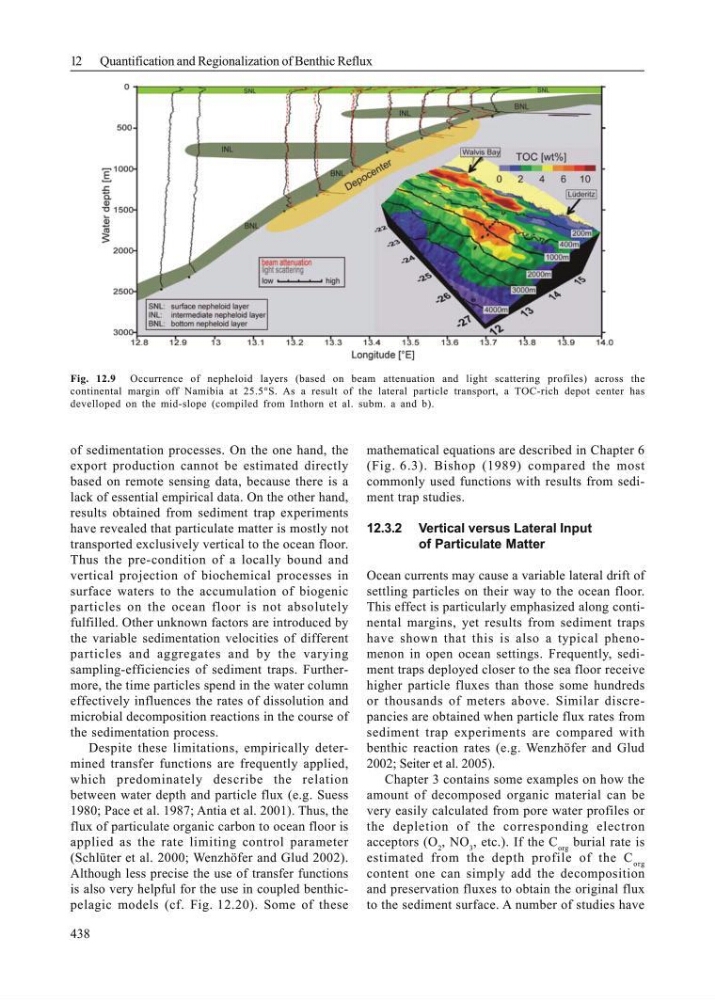
Fig. 12.9 Occurrence of nepheloid layers (based on beam attenuation and light scattering profiles) across the
continental margin off Namibia at 25.5°S. As a result of the lateral particle transport, a TOC-rich depot center has
develloped on the mid-slope (compiled from Inthorn et al. subm. a and b).
438
of sedimentation processes. On the one hand, the
export production cannot be estimated directly
based on remote sensing data, because there is a
lack of essential empirical data. On the other hand,
results obtained from sediment trap experiments
have revealed that particulate matter is mostly not
transported exclusively vertical to the ocean floor.
Thus the pre-condition of a locally bound and
vertical projection of biochemical processes in
surface waters to the accumulation of biogenic
particles on the ocean floor is not absolutely
fulfilled. Other unknown factors are introduced by
the variable sedimentation velocities of different
particles and aggregates and by the varying
sampling-efficiencies of sediment traps. Furthermore, the time particles spend in the water column
effectively influences the rates of dissolution and
microbial decomposition reactions in the course of
the sedimentation process.
Despite these limitations, empirically determined transfer functions are frequently applied,
which predominately describe the relation
between water depth and particle flux (e.g. Suess
1980; Pace et al. 1987; Antia et al. 2001). Thus, the
flux of particulate organic carbon to ocean floor is
applied as the rate limiting control parameter
(Schlüter et al. 2000; Wenzhöfer and Glud 2002).
Although less precise the use of transfer functions
is also very helpful for the use in coupled benthicpelagic models (cf. Fig. 12.20). Some of these
mathematical equations are described in Chapter 6
(Fig. 6.3). Bishop (1989) compared the most
commonly used functions with results from sediment trap studies.
12.3.2 Vertical versus Lateral Input
of Particulate Matter
Ocean currents may cause a variable lateral drift of
settling particles on their way to the ocean floor.
This effect is particularly emphasized along continental margins, yet results from sediment traps
have shown that this is also a typical phenomenon in open ocean settings. Frequently, sediment traps deployed closer to the sea floor receive
higher particle fluxes than those some hundreds
or thousands of meters above. Similar discrepancies are obtained when particle flux rates from
sediment trap experiments are compared with
benthic reaction rates (e.g. Wenzhöfer and Glud
2002; Seiter et al. 2005).
Chapter 3 contains some examples on how the
amount of decomposed organic material can be
very easily calculated from pore water profiles or
the depletion of the corresponding electron
acceptors (O 2 , NO 3 , etc.). If the C org burial rate is
estimated from the depth profile of the C org
content one can simply add the decomposition
and preservation fluxes to obtain the original flux
to the sediment surface. A number of studies have
Fig. 12.9 Occurrence of nepheloid layers (based on beam attenuation and light scattering profiles) across the
continental margin off Namibia at 25.5°S. As a result of the lateral particle transport, a TOC-rich depot center has
develloped on the mid-slope (compiled from Inthorn et al. subm. a and b).