

415
11.5
Problems
In addition, the rate of formation of marine
manganese deposits in the deep ocean is extremely
slow. The formation of these deposits therefore
takes place over long periods of time. Deposition of
manganese oxides in the deep oceans is also a
function of the degree of oxygenation of the oceans.
This in turn is controlled by the ventilation of the
deep ocean which varies according to the climate.
Deep-sea manganese nodules and Co-rich Mn crusts
therefore record variations in the degree of oxygenation and pattern of circulation of the deep
ocean. Mn crusts can therefore be considered to be
condensed stratigraphic sections which can be used
to elucidate variations in paleoceanographic conditions on timescales from Milankovitch cycles to
geological era on the basis of their isotopic ratios.
As a result, both deep-sea manganese nodules and
Co-rich manganese crusts may be thought of as
archives of paleoenvironmental data and therefore
important targets for paleoceanographic studies.
Because of their much longer period of formation,
Co-rich manganese crusts are more useful than deepsea manganese nodules in this respect.
Although the boom period of research into deepsea Mn nodules and Co-rich Mn crusts associated
with the drive to establish these deposits as an economic resource in the 1970s and 1980s is over, there remain
many interesting topics which have been neglected
over the last two decades. These include the study of
shallow-marine concretions, lake concretions, hydrothermal Mn crusts and fossil manganese deposits. Each
of these deposits has its own characteristic modes of
formation. In addition, much of the work on deep-sea
manganese nodules has focussed on areas of potential
economic interest. There remains considerable scope
for studying nodules from a much wider range of
settings than has previously been attempted, especially for investigating their internal characteristics in
much greater detail using modern instrumental
techniques.
The economic potential of marine manganese
deposits and the potential of these deposits as paleoenvironmental indicators are directly related to the
chemistry of manganese, its associated transition
metals and other key elements adsorbed on to the
surface of these deposits. It is this complex interplay
of these factors which makes the study of marine
manganese deposits so intriguing. Unfortunately,
research on deep-sea manganese nodules and crusts
has been held hostage to the economic potential of
these deposits. Time will tell if these deposits are to
become a major source of metals for the world as was
once thought.
11.5 Problems
Problem 1
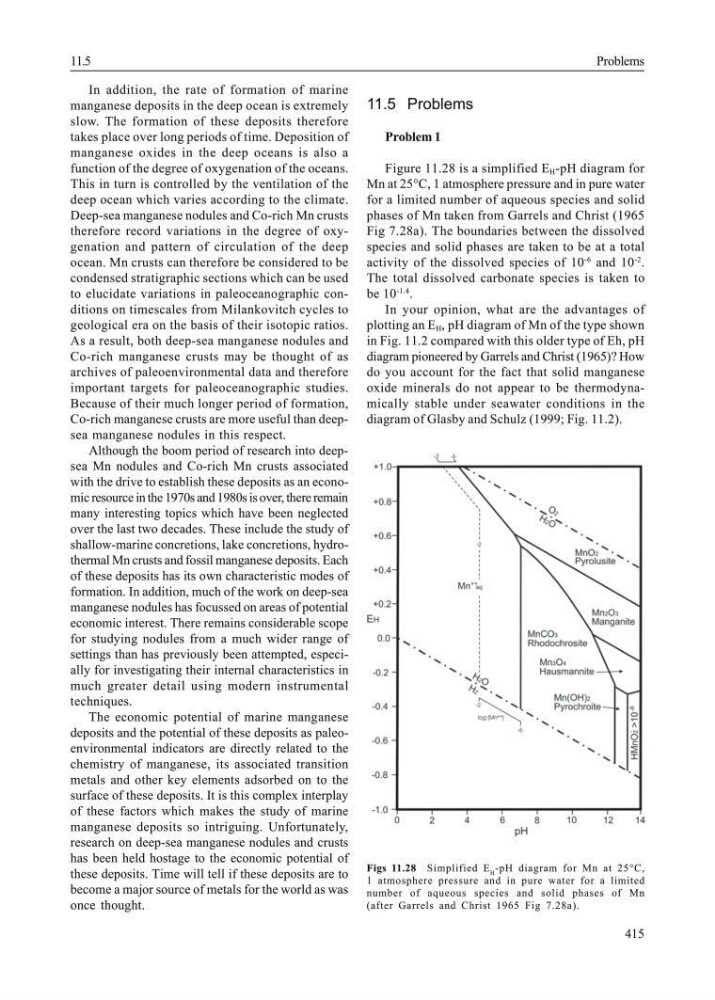
Figure 11.28 is a simplified E H -pH diagram for
Mn at 25°C, 1 atmosphere pressure and in pure water
for a limited number of aqueous species and solid
phases of Mn taken from Garrels and Christ (1965
Fig 7.28a). The boundaries between the dissolved
species and solid phases are taken to be at a total
activity of the dissolved species of 10
-6
and 10
-2
.
The total dissolved carbonate species is taken to
be 10
-1.4
.
In your opinion, what are the advantages of
plotting an E H , pH diagram of Mn of the type shown
in Fig. 11.2 compared with this older type of Eh, pH
diagram pioneered by Garrels and Christ (1965)? How
do you account for the fact that solid manganese
oxide minerals do not appear to be thermodynamically stable under seawater conditions in the
diagram of Glasby and Schulz (1999; Fig. 11.2).
Figs 11.28 Simplified E H -pH diagram for Mn at 25°C,
1 atmosphere pressure and in pure water for a limited
number of aqueous species and solid phases of Mn
(after Garrels and Christ 1965 Fig 7.28a).
11.5
Problems
In addition, the rate of formation of marine
manganese deposits in the deep ocean is extremely
slow. The formation of these deposits therefore
takes place over long periods of time. Deposition of
manganese oxides in the deep oceans is also a
function of the degree of oxygenation of the oceans.
This in turn is controlled by the ventilation of the
deep ocean which varies according to the climate.
Deep-sea manganese nodules and Co-rich Mn crusts
therefore record variations in the degree of oxygenation and pattern of circulation of the deep
ocean. Mn crusts can therefore be considered to be
condensed stratigraphic sections which can be used
to elucidate variations in paleoceanographic conditions on timescales from Milankovitch cycles to
geological era on the basis of their isotopic ratios.
As a result, both deep-sea manganese nodules and
Co-rich manganese crusts may be thought of as
archives of paleoenvironmental data and therefore
important targets for paleoceanographic studies.
Because of their much longer period of formation,
Co-rich manganese crusts are more useful than deepsea manganese nodules in this respect.
Although the boom period of research into deepsea Mn nodules and Co-rich Mn crusts associated
with the drive to establish these deposits as an economic resource in the 1970s and 1980s is over, there remain
many interesting topics which have been neglected
over the last two decades. These include the study of
shallow-marine concretions, lake concretions, hydrothermal Mn crusts and fossil manganese deposits. Each
of these deposits has its own characteristic modes of
formation. In addition, much of the work on deep-sea
manganese nodules has focussed on areas of potential
economic interest. There remains considerable scope
for studying nodules from a much wider range of
settings than has previously been attempted, especially for investigating their internal characteristics in
much greater detail using modern instrumental
techniques.
The economic potential of marine manganese
deposits and the potential of these deposits as paleoenvironmental indicators are directly related to the
chemistry of manganese, its associated transition
metals and other key elements adsorbed on to the
surface of these deposits. It is this complex interplay
of these factors which makes the study of marine
manganese deposits so intriguing. Unfortunately,
research on deep-sea manganese nodules and crusts
has been held hostage to the economic potential of
these deposits. Time will tell if these deposits are to
become a major source of metals for the world as was
once thought.
11.5 Problems
Problem 1
Figure 11.28 is a simplified E H -pH diagram for
Mn at 25°C, 1 atmosphere pressure and in pure water
for a limited number of aqueous species and solid
phases of Mn taken from Garrels and Christ (1965
Fig 7.28a). The boundaries between the dissolved
species and solid phases are taken to be at a total
activity of the dissolved species of 10
-6
and 10
-2
.
The total dissolved carbonate species is taken to
be 10
-1.4
.
In your opinion, what are the advantages of
plotting an E H , pH diagram of Mn of the type shown
in Fig. 11.2 compared with this older type of Eh, pH
diagram pioneered by Garrels and Christ (1965)? How
do you account for the fact that solid manganese
oxide minerals do not appear to be thermodynamically stable under seawater conditions in the
diagram of Glasby and Schulz (1999; Fig. 11.2).
Figs 11.28 Simplified E H -pH diagram for Mn at 25°C,
1 atmosphere pressure and in pure water for a limited
number of aqueous species and solid phases of Mn
(after Garrels and Christ 1965 Fig 7.28a).