

386
11 Manganese: Predominant Role of Nodules and Crusts
redox boundary. Strong bioturbation occurs throughout the region and helps maintain the nodules at the
sediment surface.
Peru Basin nodules are considered to be diagenetic
in origin with maximum Mn/Fe ratios of >50, corresponding to Ni+Cu in these samples of <1.4%. 10 Å
manganate as the principal Mn oxide phase and
growth rates of 100-200 mm Ma
-1
(Dymond et al. 1984).
Nodule compositional data for this assessment are
taken from Halbach et al. (1980) and Thijssen et al.
(1985) and nodule growth rates from Reyss et al. (1985)
and Bollhöffer et al. (1996, 1999). The influence of
suboxic diagenesis on nodule growth is the result of
higher sedimentation rates and higher inputs of organic
carbon into the sediments. Mn is strongly remobilized
by dissolution of Mn micronodules within the sediment
column. This leads to the high Mn/Fe ratios and low
Ni+Cu contents in the nodules. The nodules are
characterized by increasing substitution of Mn
2+
in
the interlayer spacings of 10 Å manganate.
11.4.2 Influence of Diagenesis on
Nodule Growth
Perhaps the most comprehensive explanation of the
role of hydrogenetic and diagenetic processes on manganese nodule accretion has been presented by
Dymond et al (1984). On their classification, hydrogenous deposition involves the direct precipitation or
accumulation of colloidal metals oxides from seawater.
Strictly, this involves deposition of manganese oxides
on surfaces in contact with seawater such as involved
in the formation of manganese crusts. In practice,
manganese nodules formed on red clays have characteristics very similar to those of manganese crusts and
are therefore considered to be hydrogenous in origin.
However, Aplin and Cronan (1985) have argued that
no nodules resting on or in marine sediments can be
considered entirely free of diagenetic influences.
Oxic diagenesis refers to processes occurring
within oxic sediments. Decomposition and oxidation
of labile organic matter and the dissolution of labile
biogenic components such as siliceous tests may
release biologically-bound metals into the sediment
pore waters which may ultimately be incorporated into
the nodules. Dissolution of siliceous tests may also
introduce silica into the sediment pore waters which
may react with amorphous ferromanganese oxides to
form nontronite (Dymond and Eklund 1978). This
process fixes silica and Fe in the sediment column and
releases transition elements such as Mn, Co, Ni, Cu
and Zn into the sediment pore waters for incorporation
into the nodules. Jung and Lee (1999) have suggested
that formation of manganese nodules may be episodic
under the influence of oxic diagenesis. Under these
conditions, manganese and associated transition
metals would be remobilised in oxygen-depleted
environments which develop as a result of the
decomposition of organic matter in burrows and
supplied episodically to nodule surfaces during
periods of intermittent bottom water flow strong
enough to stir up the bioturbated sediment.
Suboxic diagenesis involves the reduction of Mn
(IV) to Mn (II) within the sediment column and then
reoxidation of Mn (II) to Mn (IV) during the formation
of the nodules. These diagenetic processes are
controlled by redox processes within the sediment
column and are therefore dependent on depth in the
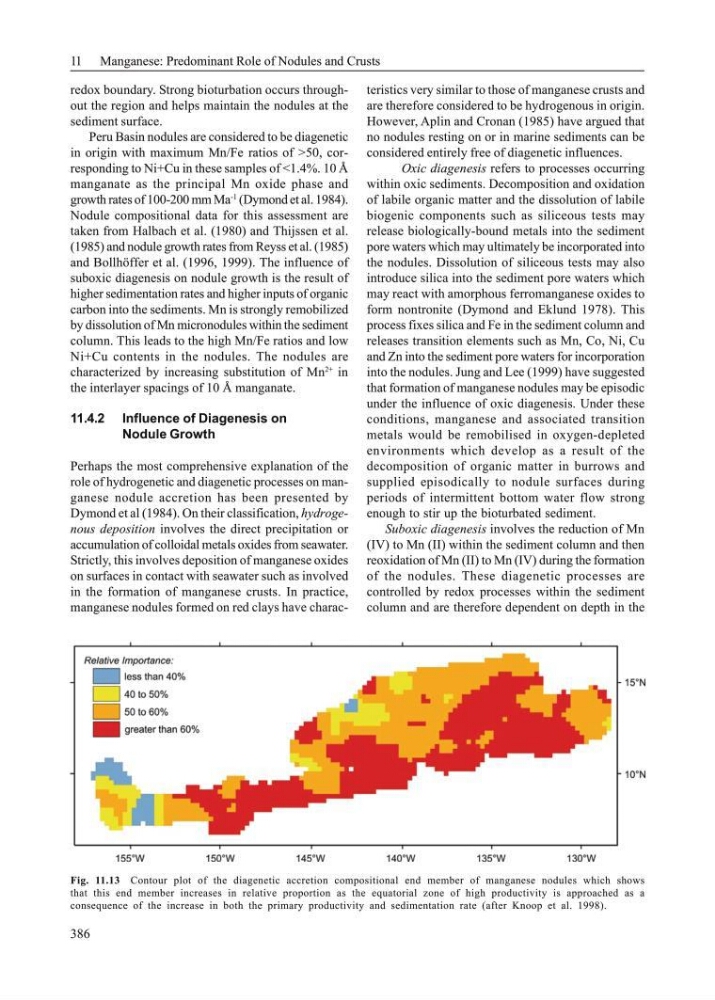
Fig. 11.13 Contour plot of the diagenetic accretion compositional end member of manganese nodules which shows
that this end member increases in relative proportion as the equatorial zone of high productivity is approached as a
consequence of the increase in both the primary productivity and sedimentation rate (after Knoop et al. 1998).
11 Manganese: Predominant Role of Nodules and Crusts
redox boundary. Strong bioturbation occurs throughout the region and helps maintain the nodules at the
sediment surface.
Peru Basin nodules are considered to be diagenetic
in origin with maximum Mn/Fe ratios of >50, corresponding to Ni+Cu in these samples of <1.4%. 10 Å
manganate as the principal Mn oxide phase and
growth rates of 100-200 mm Ma
-1
(Dymond et al. 1984).
Nodule compositional data for this assessment are
taken from Halbach et al. (1980) and Thijssen et al.
(1985) and nodule growth rates from Reyss et al. (1985)
and Bollhöffer et al. (1996, 1999). The influence of
suboxic diagenesis on nodule growth is the result of
higher sedimentation rates and higher inputs of organic
carbon into the sediments. Mn is strongly remobilized
by dissolution of Mn micronodules within the sediment
column. This leads to the high Mn/Fe ratios and low
Ni+Cu contents in the nodules. The nodules are
characterized by increasing substitution of Mn
2+
in
the interlayer spacings of 10 Å manganate.
11.4.2 Influence of Diagenesis on
Nodule Growth
Perhaps the most comprehensive explanation of the
role of hydrogenetic and diagenetic processes on manganese nodule accretion has been presented by
Dymond et al (1984). On their classification, hydrogenous deposition involves the direct precipitation or
accumulation of colloidal metals oxides from seawater.
Strictly, this involves deposition of manganese oxides
on surfaces in contact with seawater such as involved
in the formation of manganese crusts. In practice,
manganese nodules formed on red clays have characteristics very similar to those of manganese crusts and
are therefore considered to be hydrogenous in origin.
However, Aplin and Cronan (1985) have argued that
no nodules resting on or in marine sediments can be
considered entirely free of diagenetic influences.
Oxic diagenesis refers to processes occurring
within oxic sediments. Decomposition and oxidation
of labile organic matter and the dissolution of labile
biogenic components such as siliceous tests may
release biologically-bound metals into the sediment
pore waters which may ultimately be incorporated into
the nodules. Dissolution of siliceous tests may also
introduce silica into the sediment pore waters which
may react with amorphous ferromanganese oxides to
form nontronite (Dymond and Eklund 1978). This
process fixes silica and Fe in the sediment column and
releases transition elements such as Mn, Co, Ni, Cu
and Zn into the sediment pore waters for incorporation
into the nodules. Jung and Lee (1999) have suggested
that formation of manganese nodules may be episodic
under the influence of oxic diagenesis. Under these
conditions, manganese and associated transition
metals would be remobilised in oxygen-depleted
environments which develop as a result of the
decomposition of organic matter in burrows and
supplied episodically to nodule surfaces during
periods of intermittent bottom water flow strong
enough to stir up the bioturbated sediment.
Suboxic diagenesis involves the reduction of Mn
(IV) to Mn (II) within the sediment column and then
reoxidation of Mn (II) to Mn (IV) during the formation
of the nodules. These diagenetic processes are
controlled by redox processes within the sediment
column and are therefore dependent on depth in the
Fig. 11.13 Contour plot of the diagenetic accretion compositional end member of manganese nodules which shows
that this end member increases in relative proportion as the equatorial zone of high productivity is approached as a
consequence of the increase in both the primary productivity and sedimentation rate (after Knoop et al. 1998).