

379
In a comparison of pore water profiles of red clays
and hemipelagic sediments, Sawlan and Murray (1983)
showed that Mn and Fe are below the detection limit
in the pore waters of red clays, Ni is present in the
same concentation as in ocean bottom water and Cu
shows a pronounced maximum at the sediment-water
interface. In hemipelagic clays, denitrification becomes
important and remobilization of Mn and Fe takes place.
Ni correlates with Mn in the pore waters suggesting
that it is associated with the Mn oxides in the solid
phase. Cu is regenerated very rapidly at the sedimentwater interface. The diffusive flux of Mn in hemipelagic
sediments was determined to be in the range 2,20033,000 µg cm
-2
ka
-1
. More detailed studies of pore water
profiles in five different areas of the Californian
Borderland confirmed the importance of Mn recycling
in the surface sediments when the oxygen content of
the bottom waters exceeds 0.1 ml l
-1
(Shaw et al. 1990).
Co and Ni appeared to be scavenged by Mn oxides
and trapped in the surface sediments whereas the
accumulation of Cu appeared to be more closely related
to the flux of biogenic material to the sediment.
Based on a detailed study of pore water profiles in
sediment cores from the eastern equatorial Atlantic,
Froelich et al. (1979) were able to show that oxidants
are consumed in the order of decreasing energy
production per mole of organic carbon oxidized (O 2 >
Mn oxides ≈ nitrate > Fe oxides > sulfate). A schematic
representation of the profiles is shown in Figure 11.7.
From this diagram, it is seen that the reduction and
remobilization of Mn takes place in zone 4. This is
followed by the upward diffusion and reoxidation of
Mn in zone 3. This process enables Mn to be stripped
from the sediments as they accumulate and to be
redeposited as a discrete layer within the sediment
column. An example of this process is given in Figure
3.8. Of course, the depth at which these processes
take place is controlled by the influx of organic matter
to the sediments which governs the nature of the
diagenetic process occurring there. In regions of extremely high productivity characterized by organicrich hemi-pelagic sediments (such as found in the
Panama Basin), burrowing by macrofauna can markedly
increase the rate of recycling of Mn in the bioturbated
zone of these sediments (Aller 1990). In this situation,
Mn-oxide rich sediments and organic matter are mixed
into the anoxic layers of the sediment by bioturbation,
thereby permitting remobilization of Mn
2+
in the
sediment column (Thamdrup and Canfield 1996).
However, reduction of Mn oxides was shown to play
only a minor role in the oxidation of organic carbon in
continental margin sediments taken off Chile (Thamdrup and Canfield 1996) (see Chapter 7). The maintenance of high Mn oxide reduction rates therefore
depends on the continuous mixing of Mn oxides and
fresh organic matter into the sediments through
bioturbation or other mixing processes.
In addition to the above examples of steady state
diagenesis, non-steady state diagenesis may occur in
deep-sea sediments when turbidites are deposited in
abyssal plains (Thomson et al. 1987). A color difference
is often seen in the upper layers of the turbidite. This
is a consequence of the ‘oxidation front’ in which
oxygen from the overlying pelagic sediment, often
carbonate ooze, diffuses down into the underlying
turbidite sequence and oxidizes organic carbon there.
As a result, oxygen and nitrate are reduced to almost
zero below the front but Mn and Fe are mobilized in
the sediment. Mn migrate upwards and is immobilized
at the oxidation front. Ultimately, it may be fixed in the
sediment as a manganese carbonate. Within a long
sediment core, a number of turbidite sequences, and
therefore fossil oxidation fronts, may be seen. Other
examples of the non-steady state deposition of Mn in
deep-sea sediments have been recorded at the glacial/
interglacial boundary (Wallace et al. 1988; Gingele and
Kasten 1994).
80°W
90°W
100°W
20°S
10°S
0°
10°N
20°N
10
5
5
2
10
10
10
10
5
5
2
2
5
5
10
2
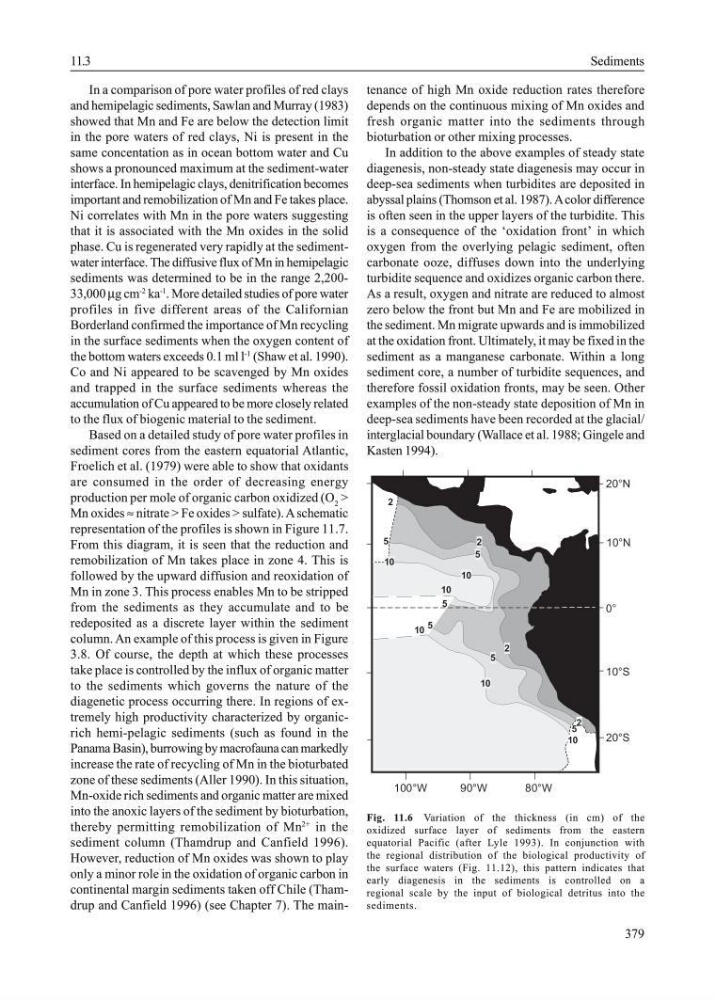
Fig. 11.6 Variation of the thickness (in cm) of the
oxidized surface layer of sediments from the eastern
equatorial Pacific (after Lyle 1993). In conjunction with
the regional distribution of the biological productivity of
the surface waters (Fig. 11.12), this pattern indicates that
early diagenesis in the sediments is controlled on a
regional scale by the input of biological detritus into the
sediments.
11.3
Sediments
In a comparison of pore water profiles of red clays
and hemipelagic sediments, Sawlan and Murray (1983)
showed that Mn and Fe are below the detection limit
in the pore waters of red clays, Ni is present in the
same concentation as in ocean bottom water and Cu
shows a pronounced maximum at the sediment-water
interface. In hemipelagic clays, denitrification becomes
important and remobilization of Mn and Fe takes place.
Ni correlates with Mn in the pore waters suggesting
that it is associated with the Mn oxides in the solid
phase. Cu is regenerated very rapidly at the sedimentwater interface. The diffusive flux of Mn in hemipelagic
sediments was determined to be in the range 2,20033,000 µg cm
-2
ka
-1
. More detailed studies of pore water
profiles in five different areas of the Californian
Borderland confirmed the importance of Mn recycling
in the surface sediments when the oxygen content of
the bottom waters exceeds 0.1 ml l
-1
(Shaw et al. 1990).
Co and Ni appeared to be scavenged by Mn oxides
and trapped in the surface sediments whereas the
accumulation of Cu appeared to be more closely related
to the flux of biogenic material to the sediment.
Based on a detailed study of pore water profiles in
sediment cores from the eastern equatorial Atlantic,
Froelich et al. (1979) were able to show that oxidants
are consumed in the order of decreasing energy
production per mole of organic carbon oxidized (O 2 >
Mn oxides ≈ nitrate > Fe oxides > sulfate). A schematic
representation of the profiles is shown in Figure 11.7.
From this diagram, it is seen that the reduction and
remobilization of Mn takes place in zone 4. This is
followed by the upward diffusion and reoxidation of
Mn in zone 3. This process enables Mn to be stripped
from the sediments as they accumulate and to be
redeposited as a discrete layer within the sediment
column. An example of this process is given in Figure
3.8. Of course, the depth at which these processes
take place is controlled by the influx of organic matter
to the sediments which governs the nature of the
diagenetic process occurring there. In regions of extremely high productivity characterized by organicrich hemi-pelagic sediments (such as found in the
Panama Basin), burrowing by macrofauna can markedly
increase the rate of recycling of Mn in the bioturbated
zone of these sediments (Aller 1990). In this situation,
Mn-oxide rich sediments and organic matter are mixed
into the anoxic layers of the sediment by bioturbation,
thereby permitting remobilization of Mn
2+
in the
sediment column (Thamdrup and Canfield 1996).
However, reduction of Mn oxides was shown to play
only a minor role in the oxidation of organic carbon in
continental margin sediments taken off Chile (Thamdrup and Canfield 1996) (see Chapter 7). The maintenance of high Mn oxide reduction rates therefore
depends on the continuous mixing of Mn oxides and
fresh organic matter into the sediments through
bioturbation or other mixing processes.
In addition to the above examples of steady state
diagenesis, non-steady state diagenesis may occur in
deep-sea sediments when turbidites are deposited in
abyssal plains (Thomson et al. 1987). A color difference
is often seen in the upper layers of the turbidite. This
is a consequence of the ‘oxidation front’ in which
oxygen from the overlying pelagic sediment, often
carbonate ooze, diffuses down into the underlying
turbidite sequence and oxidizes organic carbon there.
As a result, oxygen and nitrate are reduced to almost
zero below the front but Mn and Fe are mobilized in
the sediment. Mn migrate upwards and is immobilized
at the oxidation front. Ultimately, it may be fixed in the
sediment as a manganese carbonate. Within a long
sediment core, a number of turbidite sequences, and
therefore fossil oxidation fronts, may be seen. Other
examples of the non-steady state deposition of Mn in
deep-sea sediments have been recorded at the glacial/
interglacial boundary (Wallace et al. 1988; Gingele and
Kasten 1994).
80°W
90°W
100°W
20°S
10°S
0°
10°N
20°N
10
5
5
2
10
10
10
10
5
5
2
2
5
5
10
2
Fig. 11.6 Variation of the thickness (in cm) of the
oxidized surface layer of sediments from the eastern
equatorial Pacific (after Lyle 1993). In conjunction with
the regional distribution of the biological productivity of
the surface waters (Fig. 11.12), this pattern indicates that
early diagenesis in the sediments is controlled on a
regional scale by the input of biological detritus into the
sediments.
11.3
Sediments