

380
11 Manganese: Predominant Role of Nodules and Crusts
11.4 Manganese Nodules and
Crusts
There are three principal types of manganese deposits
in the marine environment. Manganese nodules
generally accumulate in deep water (>4,000 m) in
oceanic basins where the sedimentation rates are low.
They usually grow concentrically around a discrete
nucleus. Growth occurs mainly at sediment-water
interface. Manganese crusts accumulate on submarine
seamounts and plateaux at depths >1,000 m where
bottom currents prevent sediment accumulation. They
generally form on submarine outcrops. Ferromanganese concretions occur in shallow marine environments (e.g. the Baltic and Black Seas) and in temperatezone lakes. They grow much faster than deep-sea
nodules and are quite different in shape, mineralogy
and composition from them.
There are also three principal modes of formation
of these deposits. Hydrogenous deposits form directly
from seawater in an oxidizing environment. They are
characterized by slow growth (about 2 mm Ma
-1
).
Manganese nodules tend to form on red clays and
Co-rich manganese crusts on rock substrates. The high
Mn/Fe ratio in deep sea water compared to the earth’s
crust is mainly responsible for the formation of hydrogenous manganese deposits with Mn/Fe ratios of
about unity. Diagenetic deposits result from diagenetic
processes within the underlying sediments leading to
upward supply of elements from the sediment column.
These deposits are characterized by faster growth
rates (10-100 mm Ma
-1
) and are often found on siliceous
oozes. Hydrothermal deposits precipitate directly from
hydrothermal solutions in areas with high heat flow
such as mid-ocean ridges, back-arc basins and hot
spot volcanoes. They are characterized by high to
extremely high growth rates (>1,000 mm Ma
-1
) and low
to very low trace element contents. They tend to be
associated with hydrothermal sulfide deposits and iron
oxyhydroxide crusts.
11.4.1 Deep-Sea Manganese Nodules
Deep-sea manganese nodules occur mainly in deepocean basins characterized by low sedimentation rates
(i.e. <5 mm ka
-1
) where inputs of calcareous ooze,
Characteristic Reaction
Concentration
d 2 [Fe 2+ ]
dz 2
<
d 2 [Fe 2+ ]
dz 2
>
0
0
7.
6.
13
?
5.
> 0
12
d 2 [NO 3
- ]
dz 2
dz 2
< 0
> 0
11
14
4.
3.
2.
d 2 [Mn 2+ ]
d 2 [Mn 2+ ]
d 2 [NO 3
- ]
d 2 [NO 3
- ]
dz 2
dz 2
dz 2
< 0
0
1.
10
Diffusion
ZONE 1
ZONE 5
ZONE 4
ZONE 2
ZONE 6
ZONE 7
ZONE 3
O 2 NO 3
-
Mn
2+
Fe
2+
=
Depth
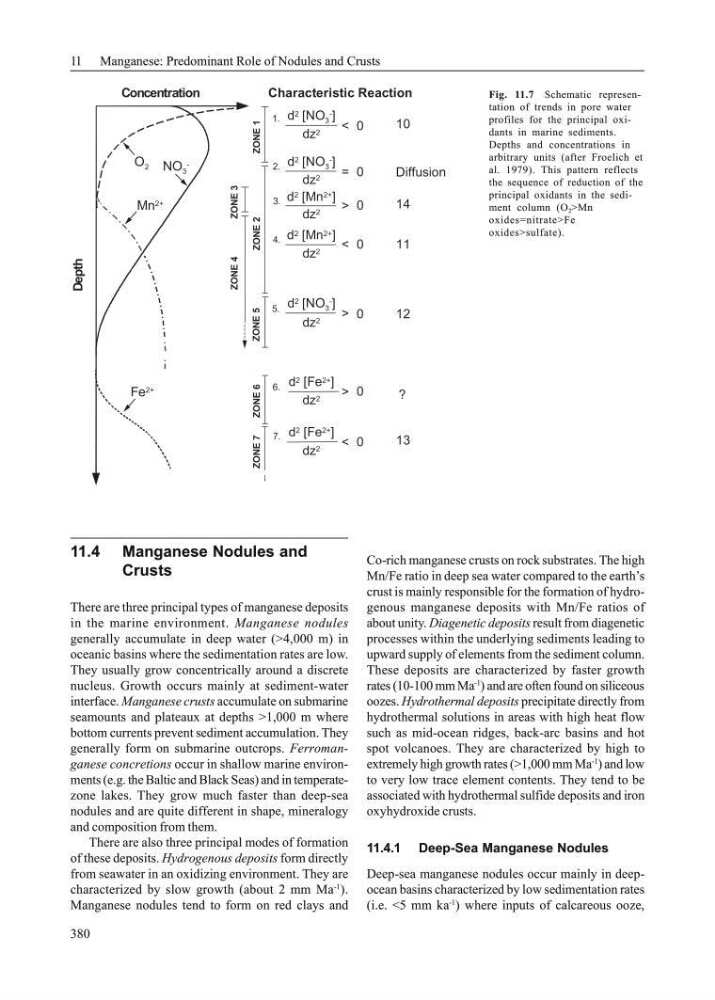
Fig. 11.7 Schematic representation of trends in pore water
profiles for the principal oxidants in marine sediments.
Depths and concentrations in
arbitrary units (after Froelich et
al. 1979). This pattern reflects
the sequence of reduction of the
principal oxidants in the sediment column (O 2 >Mn
oxides=nitrate>Fe
oxides>sulfate).
11 Manganese: Predominant Role of Nodules and Crusts
11.4 Manganese Nodules and
Crusts
There are three principal types of manganese deposits
in the marine environment. Manganese nodules
generally accumulate in deep water (>4,000 m) in
oceanic basins where the sedimentation rates are low.
They usually grow concentrically around a discrete
nucleus. Growth occurs mainly at sediment-water
interface. Manganese crusts accumulate on submarine
seamounts and plateaux at depths >1,000 m where
bottom currents prevent sediment accumulation. They
generally form on submarine outcrops. Ferromanganese concretions occur in shallow marine environments (e.g. the Baltic and Black Seas) and in temperatezone lakes. They grow much faster than deep-sea
nodules and are quite different in shape, mineralogy
and composition from them.
There are also three principal modes of formation
of these deposits. Hydrogenous deposits form directly
from seawater in an oxidizing environment. They are
characterized by slow growth (about 2 mm Ma
-1
).
Manganese nodules tend to form on red clays and
Co-rich manganese crusts on rock substrates. The high
Mn/Fe ratio in deep sea water compared to the earth’s
crust is mainly responsible for the formation of hydrogenous manganese deposits with Mn/Fe ratios of
about unity. Diagenetic deposits result from diagenetic
processes within the underlying sediments leading to
upward supply of elements from the sediment column.
These deposits are characterized by faster growth
rates (10-100 mm Ma
-1
) and are often found on siliceous
oozes. Hydrothermal deposits precipitate directly from
hydrothermal solutions in areas with high heat flow
such as mid-ocean ridges, back-arc basins and hot
spot volcanoes. They are characterized by high to
extremely high growth rates (>1,000 mm Ma
-1
) and low
to very low trace element contents. They tend to be
associated with hydrothermal sulfide deposits and iron
oxyhydroxide crusts.
11.4.1 Deep-Sea Manganese Nodules
Deep-sea manganese nodules occur mainly in deepocean basins characterized by low sedimentation rates
(i.e. <5 mm ka
-1
) where inputs of calcareous ooze,
Characteristic Reaction
Concentration
d 2 [Fe 2+ ]
dz 2
<
d 2 [Fe 2+ ]
dz 2
>
0
0
7.
6.
13
?
5.
> 0
12
d 2 [NO 3
- ]
dz 2
dz 2
< 0
> 0
11
14
4.
3.
2.
d 2 [Mn 2+ ]
d 2 [Mn 2+ ]
d 2 [NO 3
- ]
d 2 [NO 3
- ]
dz 2
dz 2
dz 2
< 0
0
1.
10
Diffusion
ZONE 1
ZONE 5
ZONE 4
ZONE 2
ZONE 6
ZONE 7
ZONE 3
O 2 NO 3
-
Mn
2+
Fe
2+
=
Depth
Fig. 11.7 Schematic representation of trends in pore water
profiles for the principal oxidants in marine sediments.
Depths and concentrations in
arbitrary units (after Froelich et
al. 1979). This pattern reflects
the sequence of reduction of the
principal oxidants in the sediment column (O 2 >Mn
oxides=nitrate>Fe
oxides>sulfate).