

374
11 Manganese: Predominant Role of Nodules and Crusts
deposits. Rate equations and rate constants for the
oxidation of manganese in seawater based on field data
have been determined by Yeats and Strain (1990), von
Langen et al. (1997) and Morgan (2005).
By contrast, the form and concentration of iron in
seawater remain poorly known because of the pronounced tendency of Fe(III) species to hydrolyze in
aqueous solution (Bruland 1983) (see Chap. 7). Iron
occurs in seawater mainly in the hydrolyzed forms
Fe(OH) 3 ° and Fe(OH) 2
+
and as FeCl
+
. The concentration
range of Fe in seawater is 0.1-2.5 nmol kg
-1
giving a Mn/
Fe ratio of about unity which is much greater than that
in the Earth’s crust.
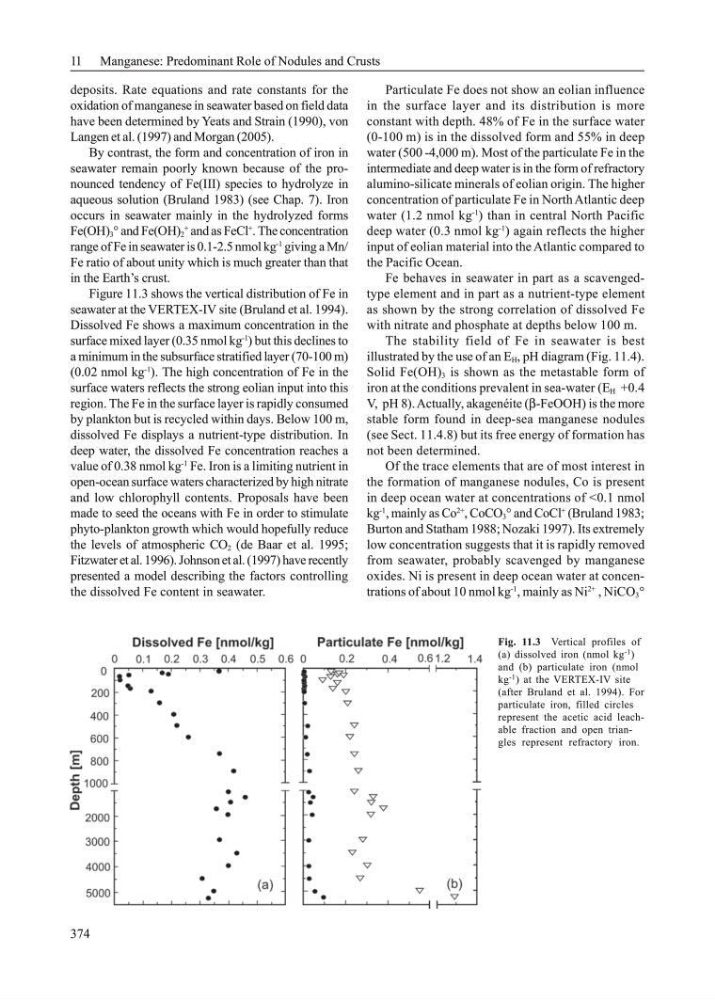
Figure 11.3 shows the vertical distribution of Fe in
seawater at the VERTEX-IV site (Bruland et al. 1994).
Dissolved Fe shows a maximum concentration in the
surface mixed layer (0.35 nmol kg
-1
) but this declines to
a minimum in the subsurface stratified layer (70-100 m)
(0.02 nmol kg
-1
). The high concentration of Fe in the
surface waters reflects the strong eolian input into this
region. The Fe in the surface layer is rapidly consumed
by plankton but is recycled within days. Below 100 m,
dissolved Fe displays a nutrient-type distribution. In
deep water, the dissolved Fe concentration reaches a
value of 0.38 nmol kg
-1
Fe. Iron is a limiting nutrient in
open-ocean surface waters characterized by high nitrate
and low chlorophyll contents. Proposals have been
made to seed the oceans with Fe in order to stimulate
phyto-plankton growth which would hopefully reduce
the levels of atmospheric CO 2 (de Baar et al. 1995;
Fitzwater et al. 1996). Johnson et al. (1997) have recently
presented a model describing the factors controlling
the dissolved Fe content in seawater.
Particulate Fe does not show an eolian influence
in the surface layer and its distribution is more
constant with depth. 48% of Fe in the surface water
(0-100 m) is in the dissolved form and 55% in deep
water (500 -4,000 m). Most of the particulate Fe in the
intermediate and deep water is in the form of refractory
alumino-silicate minerals of eolian origin. The higher
concentration of particulate Fe in North Atlantic deep
water (1.2 nmol kg
-1
) than in central North Pacific
deep water (0.3 nmol kg
-1
) again reflects the higher
input of eolian material into the Atlantic compared to
the Pacific Ocean.
Fe behaves in seawater in part as a scavengedtype element and in part as a nutrient-type element
as shown by the strong correlation of dissolved Fe
with nitrate and phosphate at depths below 100 m.
The stability field of Fe in seawater is best
illustrated by the use of an E H , pH diagram (Fig. 11.4).
Solid Fe(OH) 3 is shown as the metastable form of
iron at the conditions prevalent in sea-water (E H +0.4
V, pH 8). Actually, akagenéite (β-FeOOH) is the more
stable form found in deep-sea manganese nodules
(see Sect. 11.4.8) but its free energy of formation has
not been determined.
Of the trace elements that are of most interest in
the formation of manganese nodules, Co is present
in deep ocean water at concentrations of <0.1 nmol
kg
-1
, mainly as Co
2+
, CoCO 3 ° and CoCl
+
(Bruland 1983;
Burton and Statham 1988; Nozaki 1997). Its extremely
low concentration suggests that it is rapidly removed
from seawater, probably scavenged by manganese
oxides. Ni is present in deep ocean water at concentrations of about 10 nmol kg
-1
, mainly as Ni
2+
, NiCO 3 °
Fig. 11.3 Vertical profiles of
(a) dissolved iron (nmol kg -1 )
and (b) particulate iron (nmol
kg -1 ) at the VERTEX-IV site
(after Bruland et al. 1994). For
particulate iron, filled circles
represent the acetic acid leachable fraction and open triangles represent refractory iron.
11 Manganese: Predominant Role of Nodules and Crusts
deposits. Rate equations and rate constants for the
oxidation of manganese in seawater based on field data
have been determined by Yeats and Strain (1990), von
Langen et al. (1997) and Morgan (2005).
By contrast, the form and concentration of iron in
seawater remain poorly known because of the pronounced tendency of Fe(III) species to hydrolyze in
aqueous solution (Bruland 1983) (see Chap. 7). Iron
occurs in seawater mainly in the hydrolyzed forms
Fe(OH) 3 ° and Fe(OH) 2
+
and as FeCl
+
. The concentration
range of Fe in seawater is 0.1-2.5 nmol kg
-1
giving a Mn/
Fe ratio of about unity which is much greater than that
in the Earth’s crust.
Figure 11.3 shows the vertical distribution of Fe in
seawater at the VERTEX-IV site (Bruland et al. 1994).
Dissolved Fe shows a maximum concentration in the
surface mixed layer (0.35 nmol kg
-1
) but this declines to
a minimum in the subsurface stratified layer (70-100 m)
(0.02 nmol kg
-1
). The high concentration of Fe in the
surface waters reflects the strong eolian input into this
region. The Fe in the surface layer is rapidly consumed
by plankton but is recycled within days. Below 100 m,
dissolved Fe displays a nutrient-type distribution. In
deep water, the dissolved Fe concentration reaches a
value of 0.38 nmol kg
-1
Fe. Iron is a limiting nutrient in
open-ocean surface waters characterized by high nitrate
and low chlorophyll contents. Proposals have been
made to seed the oceans with Fe in order to stimulate
phyto-plankton growth which would hopefully reduce
the levels of atmospheric CO 2 (de Baar et al. 1995;
Fitzwater et al. 1996). Johnson et al. (1997) have recently
presented a model describing the factors controlling
the dissolved Fe content in seawater.
Particulate Fe does not show an eolian influence
in the surface layer and its distribution is more
constant with depth. 48% of Fe in the surface water
(0-100 m) is in the dissolved form and 55% in deep
water (500 -4,000 m). Most of the particulate Fe in the
intermediate and deep water is in the form of refractory
alumino-silicate minerals of eolian origin. The higher
concentration of particulate Fe in North Atlantic deep
water (1.2 nmol kg
-1
) than in central North Pacific
deep water (0.3 nmol kg
-1
) again reflects the higher
input of eolian material into the Atlantic compared to
the Pacific Ocean.
Fe behaves in seawater in part as a scavengedtype element and in part as a nutrient-type element
as shown by the strong correlation of dissolved Fe
with nitrate and phosphate at depths below 100 m.
The stability field of Fe in seawater is best
illustrated by the use of an E H , pH diagram (Fig. 11.4).
Solid Fe(OH) 3 is shown as the metastable form of
iron at the conditions prevalent in sea-water (E H +0.4
V, pH 8). Actually, akagenéite (β-FeOOH) is the more
stable form found in deep-sea manganese nodules
(see Sect. 11.4.8) but its free energy of formation has
not been determined.
Of the trace elements that are of most interest in
the formation of manganese nodules, Co is present
in deep ocean water at concentrations of <0.1 nmol
kg
-1
, mainly as Co
2+
, CoCO 3 ° and CoCl
+
(Bruland 1983;
Burton and Statham 1988; Nozaki 1997). Its extremely
low concentration suggests that it is rapidly removed
from seawater, probably scavenged by manganese
oxides. Ni is present in deep ocean water at concentrations of about 10 nmol kg
-1
, mainly as Ni
2+
, NiCO 3 °
Fig. 11.3 Vertical profiles of
(a) dissolved iron (nmol kg -1 )
and (b) particulate iron (nmol
kg -1 ) at the VERTEX-IV site
(after Bruland et al. 1994). For
particulate iron, filled circles
represent the acetic acid leachable fraction and open triangles represent refractory iron.