

7
The Biogeochemistry of Iron
246
uptake by the oceans. A comparison of iron and
CO 2 concentrations of the past 160,000 years
recorded within an Antarctic ice core revealed a
strikingly negative correlation (Fig. 7.7) which
supports the ‘iron hypothesis’.
So far, dissolved iron has been discussed with
respect to the assimilation by phytoplankton. The
chemical state of bioavailable dissolved species
is presently a matter of intensive studies and discussions. Due to thermodynamic reasons concentrations of free ions of dissolved iron are extremely low under oxic and pH-neutral conditions.
A discussion paper by Johnson et al. (1997)
reviews regional distributions and depth profiles
of dissolved iron and points out that at greater
depth the iron concentrations always remain
constant of ~ 0.6 nM. Other elements with such
short residence time (100 to 200 years) typically
continuously decrease with depth and age. This
suggests a substantial decrease in the iron removal rate below this concentration. As organic
ligands with a binding capacity of 0.6 nM Fe have
been found (Rue and Bruland 1995; Wu and Luther
1995), iron-organic complexes are regarded to be of
great importance for the distribution of dissolved
iron. Additional evidence for the interaction with
dissolved organic molecules comes from the study
of iron uptake mechanisms by organisms. To make
dissolved iron more accessible, microorganisms
have acquired the ability to synthesize chelators
which complex ferric iron of solid phase. These
chelators are commonly called siderophores and
consist of a low-molecular-mass compound with a
high affinity for ferric iron. Siderophores are
secreted out of the microorganism where they form
a complex with ferric iron. After transport into the
cell, the chelated ferric iron is enzymatically
reduced and released from the siderophore, which
is secreted again for further complexation. For the
open ocean environment ferric iron availability by
the secretion of siderophores was shown for
phytoplankton (Trick et al. 1983), as well as for
bacteria (Trick 1989). Kuma et al. (1994) showed
that total natural organic Fe
3+
-chelators are
abundant in open ocean regions of the eastern
Indian Ocean and the western North Pacific Ocean
where they control the dissolved iron concentration. Recent experiments have explored the
mechanisms of the dissolution of iron oxyhydroxides under variable light and chelator conditions and it was concluded that the interplay of
siderophores and light controls the overall process
(Borer et al. 2005).
7.4
The Early Diagenesis of Iron
in Sediments
The fundamental work by Froelich et al. (1979)
established a conceptual model for the organic
matter respiration in marine sediments which has
been modified, verified and extended in numerous
aspects since then. Froelich and colleagues found
a succession of electron acceptors used by
dissimilatory bacteria according to their energy
gain. Consequently, a biogeochemical zonation of
the sediment results where O 2 , NO 3
-
, bioavailable
Mn(IV) and Fe(III) and SO 4
2diminish successively with depth. Apart from the consumption of
electron acceptors the production of reduced
species such as NH 4
+
, Mn
2+
, Fe
2+
, HS
-
and CH 4
occurs. These components may be reoxidized
abiotically under given thermodynamic conditions. As will be shown, these reoxidation reactions can also be microbiologically catalyzed. It is
important to note that for the investigation of iron
reactivity a differentiation of biotic and abiotic
reactions is inherently important but often very
difficult to achieve. Another considerable
question with respect to the iron reactivity in
sediments concerns the bioavailable fraction of
iron bearing minerals. So far, it could be shown
that ferric iron of iron oxides as well as certain
sheet silicates can be used by dissimilatory iron
reducing bacteria but their quantities and rates of
reduction vary significantly. A final discussion of
this section will compare different depositional
environments with respect to the importance of
dissimilatory iron reduction, chemical reduction
and the availability of ferric iron.
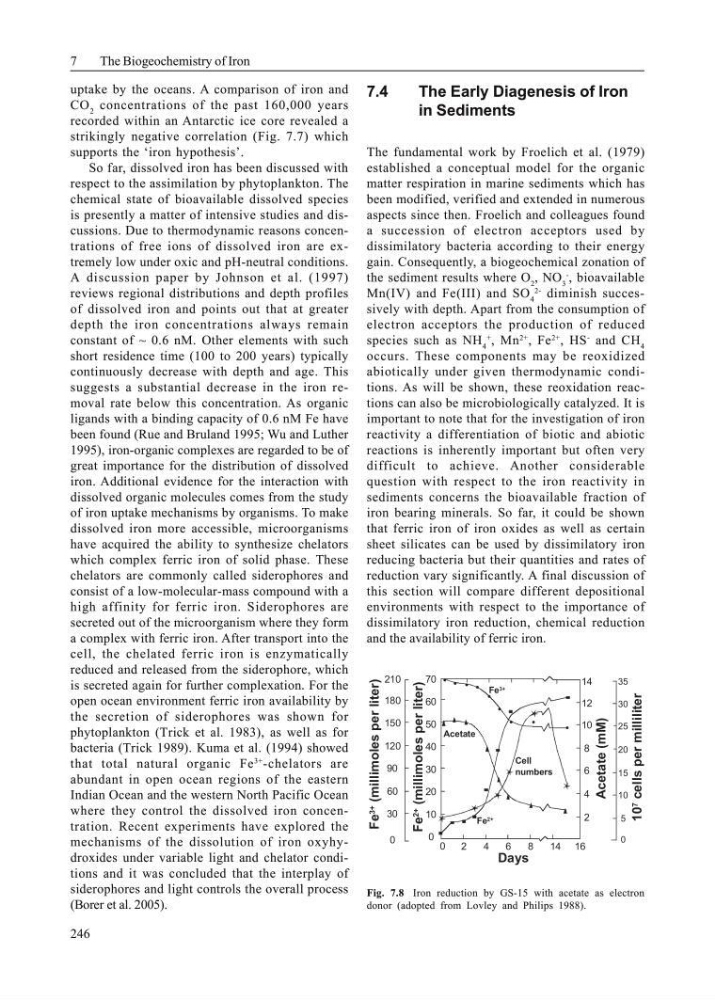
Fig. 7.8 Iron reduction by GS-15 with acetate as electron
donor (adopted from Lovley and Philips 1988).
Acetate
Fe 3+
Cell
numbers
Fe
2+
70
60
50
40
30
20
10
210
180
150
120
90
60
30
0
0
2
4
6
8
14
16
0
2
4
6
8
10
14
12
35
30
25
20
15
10
5
0
Acetate (mM)
Days
10 7
cells per milliliter
Fe
2+
(millimoles per liter)
Fe
3+
(millimoles per liter)
The Biogeochemistry of Iron
246
uptake by the oceans. A comparison of iron and
CO 2 concentrations of the past 160,000 years
recorded within an Antarctic ice core revealed a
strikingly negative correlation (Fig. 7.7) which
supports the ‘iron hypothesis’.
So far, dissolved iron has been discussed with
respect to the assimilation by phytoplankton. The
chemical state of bioavailable dissolved species
is presently a matter of intensive studies and discussions. Due to thermodynamic reasons concentrations of free ions of dissolved iron are extremely low under oxic and pH-neutral conditions.
A discussion paper by Johnson et al. (1997)
reviews regional distributions and depth profiles
of dissolved iron and points out that at greater
depth the iron concentrations always remain
constant of ~ 0.6 nM. Other elements with such
short residence time (100 to 200 years) typically
continuously decrease with depth and age. This
suggests a substantial decrease in the iron removal rate below this concentration. As organic
ligands with a binding capacity of 0.6 nM Fe have
been found (Rue and Bruland 1995; Wu and Luther
1995), iron-organic complexes are regarded to be of
great importance for the distribution of dissolved
iron. Additional evidence for the interaction with
dissolved organic molecules comes from the study
of iron uptake mechanisms by organisms. To make
dissolved iron more accessible, microorganisms
have acquired the ability to synthesize chelators
which complex ferric iron of solid phase. These
chelators are commonly called siderophores and
consist of a low-molecular-mass compound with a
high affinity for ferric iron. Siderophores are
secreted out of the microorganism where they form
a complex with ferric iron. After transport into the
cell, the chelated ferric iron is enzymatically
reduced and released from the siderophore, which
is secreted again for further complexation. For the
open ocean environment ferric iron availability by
the secretion of siderophores was shown for
phytoplankton (Trick et al. 1983), as well as for
bacteria (Trick 1989). Kuma et al. (1994) showed
that total natural organic Fe
3+
-chelators are
abundant in open ocean regions of the eastern
Indian Ocean and the western North Pacific Ocean
where they control the dissolved iron concentration. Recent experiments have explored the
mechanisms of the dissolution of iron oxyhydroxides under variable light and chelator conditions and it was concluded that the interplay of
siderophores and light controls the overall process
(Borer et al. 2005).
7.4
The Early Diagenesis of Iron
in Sediments
The fundamental work by Froelich et al. (1979)
established a conceptual model for the organic
matter respiration in marine sediments which has
been modified, verified and extended in numerous
aspects since then. Froelich and colleagues found
a succession of electron acceptors used by
dissimilatory bacteria according to their energy
gain. Consequently, a biogeochemical zonation of
the sediment results where O 2 , NO 3
-
, bioavailable
Mn(IV) and Fe(III) and SO 4
2diminish successively with depth. Apart from the consumption of
electron acceptors the production of reduced
species such as NH 4
+
, Mn
2+
, Fe
2+
, HS
-
and CH 4
occurs. These components may be reoxidized
abiotically under given thermodynamic conditions. As will be shown, these reoxidation reactions can also be microbiologically catalyzed. It is
important to note that for the investigation of iron
reactivity a differentiation of biotic and abiotic
reactions is inherently important but often very
difficult to achieve. Another considerable
question with respect to the iron reactivity in
sediments concerns the bioavailable fraction of
iron bearing minerals. So far, it could be shown
that ferric iron of iron oxides as well as certain
sheet silicates can be used by dissimilatory iron
reducing bacteria but their quantities and rates of
reduction vary significantly. A final discussion of
this section will compare different depositional
environments with respect to the importance of
dissimilatory iron reduction, chemical reduction
and the availability of ferric iron.
Fig. 7.8 Iron reduction by GS-15 with acetate as electron
donor (adopted from Lovley and Philips 1988).
Acetate
Fe 3+
Cell
numbers
Fe
2+
70
60
50
40
30
20
10
210
180
150
120
90
60
30
0
0
2
4
6
8
14
16
0
2
4
6
8
10
14
12
35
30
25
20
15
10
5
0
Acetate (mM)
Days
10 7
cells per milliliter
Fe
2+
(millimoles per liter)
Fe
3+
(millimoles per liter)