

6
Benthic Cycling of Oxygen, Nitrogen and Phosphorus
224
from the total uptake rates reveals values close to
zero for stations with a low dry weight of
macrofauna obviously increasing with increasing
population density (Fig. 6.14b). On one hand, the
difference between both fluxes provides a measure
of bioirrigation meaning that there is additional
transport across the sediment-water interface due
to active pumping of organisms and a higher
oxygen demand due to an increased surface area
at additional sites where oxygen is consumed
(worm burrows etc.). On the other hand, the respiration by the macro- or meiofauna itself increases
the oxygen consumption (Glud et al. 1994; Heip et
al. 1995; Soetaert et al. 1997). Since the chamber
system provides information on total mineralization rates and fluxes, and the profiling lander on
the depth distribution of solutes and redox
processes, the application of both lander systems
is required to properly investigate the oxygen
demand and the pathways of oxygen in the
sediment.
The determination of in-situ fluxes of nitrate is
comparatively limited. Although there are
electrodes for the determination of microconcentration profiles in form of biosensors
(Larsen et al. 1996), they are not yet suitable to be
used on lander systems in the deep sea. The
measurement of total nitrate fluxes by benthic
chambers in continental slope sediments off California is shown in Figure 3.24 (Jahnke and
Christiansen 1989). At this site, nitrate fluxes are
directed into the sediment indicating strong
denitrification supported by very low oxygen
concentrations in the overlying bottom water.
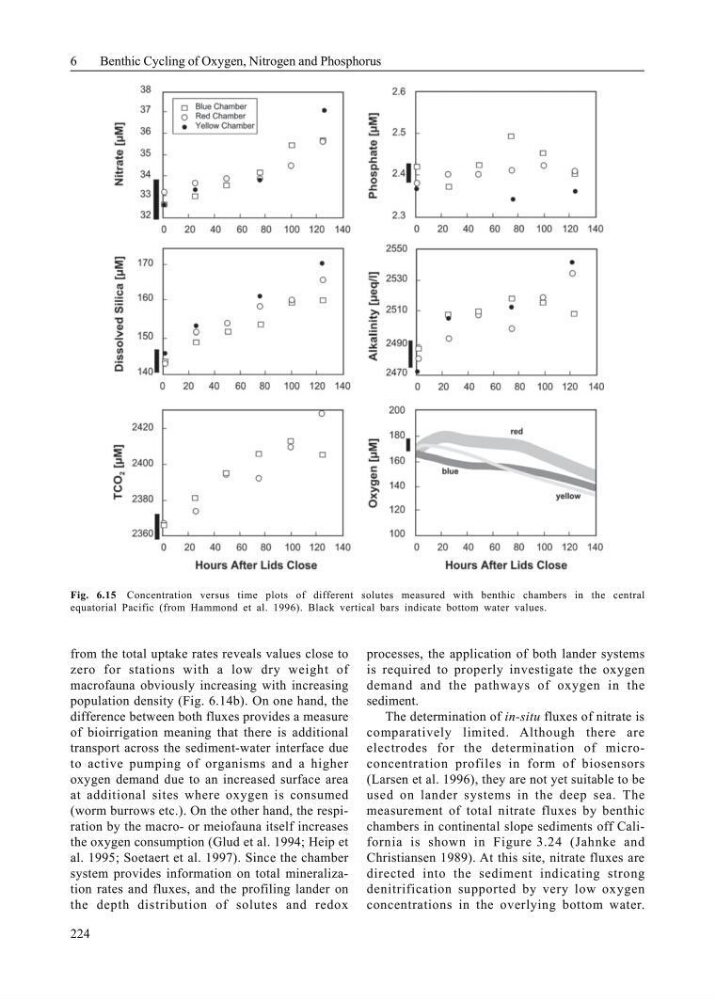
Fig. 6.15 Concentration versus time plots of different solutes measured with benthic chambers in the central
equatorial Pacific (from Hammond et al. 1996). Black vertical bars indicate bottom water values.
Benthic Cycling of Oxygen, Nitrogen and Phosphorus
224
from the total uptake rates reveals values close to
zero for stations with a low dry weight of
macrofauna obviously increasing with increasing
population density (Fig. 6.14b). On one hand, the
difference between both fluxes provides a measure
of bioirrigation meaning that there is additional
transport across the sediment-water interface due
to active pumping of organisms and a higher
oxygen demand due to an increased surface area
at additional sites where oxygen is consumed
(worm burrows etc.). On the other hand, the respiration by the macro- or meiofauna itself increases
the oxygen consumption (Glud et al. 1994; Heip et
al. 1995; Soetaert et al. 1997). Since the chamber
system provides information on total mineralization rates and fluxes, and the profiling lander on
the depth distribution of solutes and redox
processes, the application of both lander systems
is required to properly investigate the oxygen
demand and the pathways of oxygen in the
sediment.
The determination of in-situ fluxes of nitrate is
comparatively limited. Although there are
electrodes for the determination of microconcentration profiles in form of biosensors
(Larsen et al. 1996), they are not yet suitable to be
used on lander systems in the deep sea. The
measurement of total nitrate fluxes by benthic
chambers in continental slope sediments off California is shown in Figure 3.24 (Jahnke and
Christiansen 1989). At this site, nitrate fluxes are
directed into the sediment indicating strong
denitrification supported by very low oxygen
concentrations in the overlying bottom water.
Fig. 6.15 Concentration versus time plots of different solutes measured with benthic chambers in the central
equatorial Pacific (from Hammond et al. 1996). Black vertical bars indicate bottom water values.