

219
which allows a significant fractionation and δ
15
Nenrichment of the residual nitrate of up to 20‰
(Brandes et al. 1998). On annual time scales, the
uptake of nitrate in the euphotic zone is generally
believed to be complete (Thunell et al. 2004), so
that upwelling of
15
N-enriched water masses
causes the production of relatively
15
N-rich
organic material. This process is believed to be
particularly enhanced during interglacial rather
than glacial times and gave rise to the use of δ
15
N
values of sedimentary material as a recorder of
nutrient utilization and paleoproductivity (Altabet
et al. 1995; Thunell and Kepple 2004). The
applicability of this proxy has, however, been
disputed, because of potential alterations of the
primary signal during nitrification and denitrification in the sediments. Variations in the δ
15
Nrecord are considered to be dependent on the
preservation of the organic material, hence burial
potential controlled by the sedimentation rate and
the oxygenation of the water column (cf.
Sections 6.3.1.2 and 6.5.2). Whereas in regions
characterized by high particle fluxes and low
bottom water oxygen levels δ
15
N-values are
indistinguishable from sediment trap material,
poor preservation of organic matter may lead to
increased
15
N/
14
N-ratios of up to 5‰ (i.e. Altabet
et al. 1994; 1999; Thunell et al. 2004). The shift to
higher δ
15
N-values is mainly attributed to the
decomposition of amino acids, which are the main
carriers of nitrogen in fresh marine detritus and
more susceptible to degradation. Based on the
observation that amino acids are rapidly consumed in surface sediments Dauwe et al. (1999)
developed the so-called degradation index (DI),
which has recently been used by Gaye-Haake et
al. (2005) in order to demonstrate the dependence
of the nitrogen isotope composition on the degradation of the sediments. Their data from the
Arabian Sea clearly show the shift from lower
(sediment traps) to higher δ
15
N-values (sediments)
with increasing degradation (Fig. 6.10).
6.3.2
Input and Redistribution of
Phosphate in Marine Sediments
6.3.2.1 P-Species and Forms of Bonding
Particulate phosphorus reaches marine sediments
in various portions of inorganic and organic
fractions. In a recent study Faul et al. (2005) have
investigated the phosphorus distribution in
sinking oceanic particulate matter from a wide
range of oceanic regimes. Correspondingly, the P
flux to the sediment is typically dominated by
reactive P components including organic P
(∼40%), authigenic P (∼25%), and labile P and/or
phases which are associated with iron
oxyhydroxides (∼21%). With only about 13%, the
non-reactive detrital fraction seems to be less
important. While the most important carrier of
inorganic P are iron oxyhydroxides, which mostly
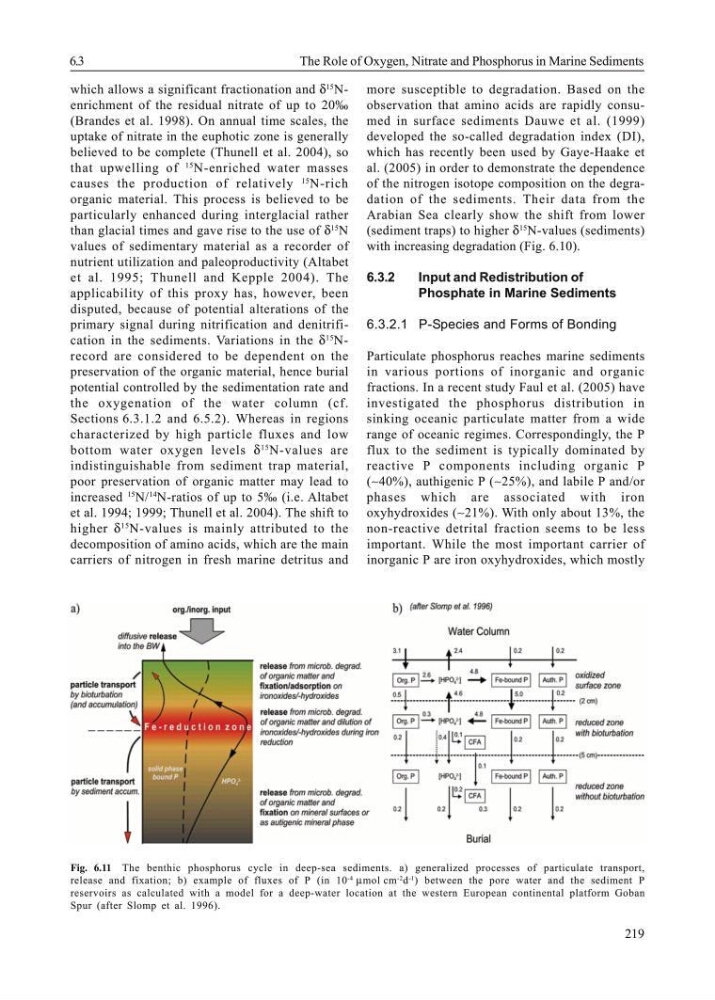
Fig. 6.11 The benthic phosphorus cycle in deep-sea sediments. a) generalized processes of particulate transport,
release and fixation; b) example of fluxes of P (in 10
-4 µmol cm
-2 d
-1 ) between the pore water and the sediment P
reservoirs as calculated with a model for a deep-water location at the western European continental platform Goban
Spur (after Slomp et al. 1996).
6.3
The Role of Oxygen, Nitrate and Phosphorus in Marine Sediments
which allows a significant fractionation and δ
15
Nenrichment of the residual nitrate of up to 20‰
(Brandes et al. 1998). On annual time scales, the
uptake of nitrate in the euphotic zone is generally
believed to be complete (Thunell et al. 2004), so
that upwelling of
15
N-enriched water masses
causes the production of relatively
15
N-rich
organic material. This process is believed to be
particularly enhanced during interglacial rather
than glacial times and gave rise to the use of δ
15
N
values of sedimentary material as a recorder of
nutrient utilization and paleoproductivity (Altabet
et al. 1995; Thunell and Kepple 2004). The
applicability of this proxy has, however, been
disputed, because of potential alterations of the
primary signal during nitrification and denitrification in the sediments. Variations in the δ
15
Nrecord are considered to be dependent on the
preservation of the organic material, hence burial
potential controlled by the sedimentation rate and
the oxygenation of the water column (cf.
Sections 6.3.1.2 and 6.5.2). Whereas in regions
characterized by high particle fluxes and low
bottom water oxygen levels δ
15
N-values are
indistinguishable from sediment trap material,
poor preservation of organic matter may lead to
increased
15
N/
14
N-ratios of up to 5‰ (i.e. Altabet
et al. 1994; 1999; Thunell et al. 2004). The shift to
higher δ
15
N-values is mainly attributed to the
decomposition of amino acids, which are the main
carriers of nitrogen in fresh marine detritus and
more susceptible to degradation. Based on the
observation that amino acids are rapidly consumed in surface sediments Dauwe et al. (1999)
developed the so-called degradation index (DI),
which has recently been used by Gaye-Haake et
al. (2005) in order to demonstrate the dependence
of the nitrogen isotope composition on the degradation of the sediments. Their data from the
Arabian Sea clearly show the shift from lower
(sediment traps) to higher δ
15
N-values (sediments)
with increasing degradation (Fig. 6.10).
6.3.2
Input and Redistribution of
Phosphate in Marine Sediments
6.3.2.1 P-Species and Forms of Bonding
Particulate phosphorus reaches marine sediments
in various portions of inorganic and organic
fractions. In a recent study Faul et al. (2005) have
investigated the phosphorus distribution in
sinking oceanic particulate matter from a wide
range of oceanic regimes. Correspondingly, the P
flux to the sediment is typically dominated by
reactive P components including organic P
(∼40%), authigenic P (∼25%), and labile P and/or
phases which are associated with iron
oxyhydroxides (∼21%). With only about 13%, the
non-reactive detrital fraction seems to be less
important. While the most important carrier of
inorganic P are iron oxyhydroxides, which mostly
Fig. 6.11 The benthic phosphorus cycle in deep-sea sediments. a) generalized processes of particulate transport,
release and fixation; b) example of fluxes of P (in 10
-4 µmol cm
-2 d
-1 ) between the pore water and the sediment P
reservoirs as calculated with a model for a deep-water location at the western European continental platform Goban
Spur (after Slomp et al. 1996).
6.3
The Role of Oxygen, Nitrate and Phosphorus in Marine Sediments