

6
Benthic Cycling of Oxygen, Nitrogen and Phosphorus
214
oxygenated sediments (cf. Section 6.3.1.3), but it
may also diffuse into the bottom water, if oxygen
or other suitable oxidants are either limited or
absent.
Nitrate as terminal electron acceptor is especially important for the oxidation of ferrous iron
(Straub et al. 1996) or hydrogen sulfide. Particularly among the sulfide oxidizing bacteria a unique
adaptation for the use of nitrate as electron
acceptor has evolved: a central vacuole used for
the storage of nitrate (Fossing et al. 1995). The
vacuolated sulfur bacteria contain nitrate in concentrations ranging from several tens to hundreds of mmolar, which is up to five orders of magnitude higher than the ambient environmental
concentrations (Fossing et al. 1995). High internal
nitrate concentrations are found in three genera of
sulfur bacteria (Fig. 6.7) called Beggiatoa (McHatton
et al. 1996), Thioploca (Fossing et al. 1995) and
Thiomargarita (Schulz et al. 1999). All of these
bacteria are also storing the electron donor sulfide
in the form of sulfur globules. The vacuolated
sulfur bacteria can be unusually large (up to
several 100 µm diameter), because the volume of
the vacuole is not metabolically active. Their
sulfur inclusions scatter the light giving these
bacteria a bright white appearance, which makes it
possible to see them with the naked eye.
Beggiatoa and Thioploca are filamentous
bacteria, meaning that the cells occur in a row and
are connected with each other. The filaments are
motile by gliding. Thioploca filaments are found
as very dense mats in sediments of the upwelling
areas off Chile and Peru. The filaments live as
bundles in vertical sheaths reaching up to 20 cm
into the sediment (Fig. 6.7). In the sheaths they
glide between the surface of the sediment, where
they take up nitrate, and deeper parts of the
sediment, where sulfide produced by sulfate reducing bacteria is available (Fossing et al. 1995). The
larger nitrate storing forms of Beggiatoa are
frequently encountered in areas with locally
enhanced sulfide flux, such as hydrothermal vents
and seeps or methane hydrates. In contrast to
Thioploca the filaments are not forming bundles.
They are usually found as white or more seldom
orange mats at the sediment surface (Fig. 6.7). In
the Benguela upwelling region, a large area of the
seafloor covered with loose diatome ooze, is
populated by Thiomargarita cells (Schulz et al.
1999). In contrast to their close relatives Beggiatoa and Thioploca these sulfur bacteria are not
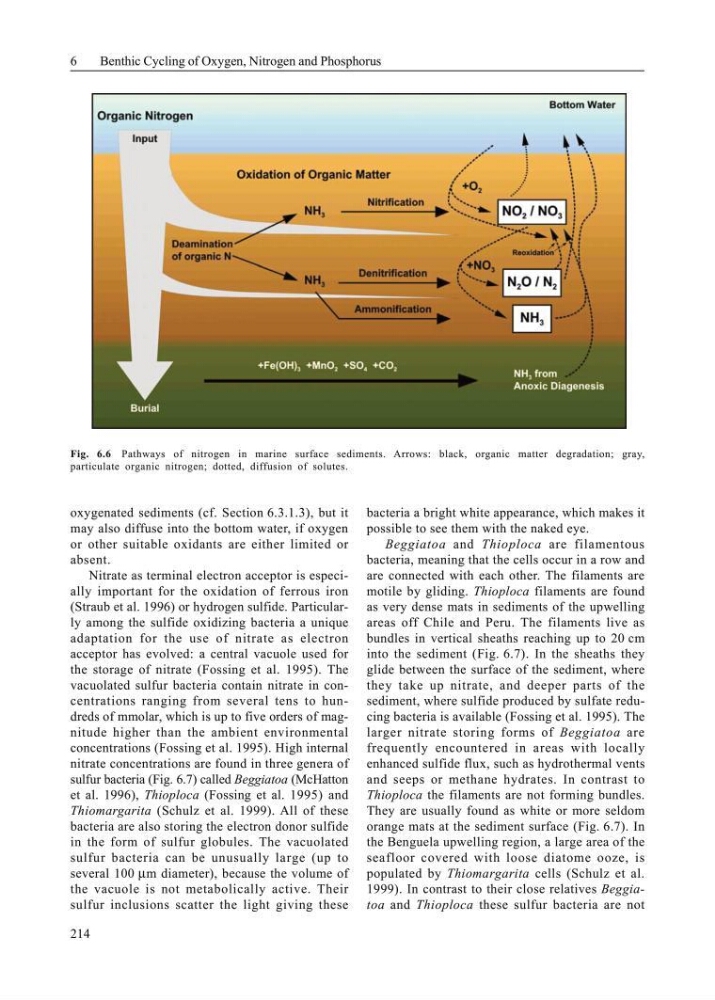
Fig. 6.6 Pathways of nitrogen in marine surface sediments. Arrows: black, organic matter degradation; gray,
particulate organic nitrogen; dotted, diffusion of solutes.
Benthic Cycling of Oxygen, Nitrogen and Phosphorus
214
oxygenated sediments (cf. Section 6.3.1.3), but it
may also diffuse into the bottom water, if oxygen
or other suitable oxidants are either limited or
absent.
Nitrate as terminal electron acceptor is especially important for the oxidation of ferrous iron
(Straub et al. 1996) or hydrogen sulfide. Particularly among the sulfide oxidizing bacteria a unique
adaptation for the use of nitrate as electron
acceptor has evolved: a central vacuole used for
the storage of nitrate (Fossing et al. 1995). The
vacuolated sulfur bacteria contain nitrate in concentrations ranging from several tens to hundreds of mmolar, which is up to five orders of magnitude higher than the ambient environmental
concentrations (Fossing et al. 1995). High internal
nitrate concentrations are found in three genera of
sulfur bacteria (Fig. 6.7) called Beggiatoa (McHatton
et al. 1996), Thioploca (Fossing et al. 1995) and
Thiomargarita (Schulz et al. 1999). All of these
bacteria are also storing the electron donor sulfide
in the form of sulfur globules. The vacuolated
sulfur bacteria can be unusually large (up to
several 100 µm diameter), because the volume of
the vacuole is not metabolically active. Their
sulfur inclusions scatter the light giving these
bacteria a bright white appearance, which makes it
possible to see them with the naked eye.
Beggiatoa and Thioploca are filamentous
bacteria, meaning that the cells occur in a row and
are connected with each other. The filaments are
motile by gliding. Thioploca filaments are found
as very dense mats in sediments of the upwelling
areas off Chile and Peru. The filaments live as
bundles in vertical sheaths reaching up to 20 cm
into the sediment (Fig. 6.7). In the sheaths they
glide between the surface of the sediment, where
they take up nitrate, and deeper parts of the
sediment, where sulfide produced by sulfate reducing bacteria is available (Fossing et al. 1995). The
larger nitrate storing forms of Beggiatoa are
frequently encountered in areas with locally
enhanced sulfide flux, such as hydrothermal vents
and seeps or methane hydrates. In contrast to
Thioploca the filaments are not forming bundles.
They are usually found as white or more seldom
orange mats at the sediment surface (Fig. 6.7). In
the Benguela upwelling region, a large area of the
seafloor covered with loose diatome ooze, is
populated by Thiomargarita cells (Schulz et al.
1999). In contrast to their close relatives Beggiatoa and Thioploca these sulfur bacteria are not
Fig. 6.6 Pathways of nitrogen in marine surface sediments. Arrows: black, organic matter degradation; gray,
particulate organic nitrogen; dotted, diffusion of solutes.