

213
at intermediate carbon availability levels when
carbon is not limiting for oxic respiration, but
sulfate reduction is still low or absent. Studies of
Jørgensen and Sørensen (1985) along a salinity
gradient in a Danish estuary revealed evidence
that denitrification and nitrate reduction (Eq. 6.9)
became a more important pathway as sulfate
became limited due to increased freshwater input
close to the river outlet.
Many bacteria are able to reduce nitrate to
ammonia in order to use nitrate as a nitrogen
source for the build up of biomass (assimilation).
Also the dissimilatoty nitrate reduction to
ammonia (DNRA), where nitrate is respired to
ammonia, is a widespread physiological ability
among bacteria. Nevertheless, until recently it was
thought to have small ecological significance,
because the potential energy gain of nitrate
reduction to nitrogen is higher (compare Fig. 5.9).
The ability of some bacteria to reduce nitrite further to ammonia (Jørgensen and Sørensen 1985;
Sørensen 1987) can be expressed by the following
equation:
NO 2
-
+ 8 H
+
+ 6 e
-
→ NH 4
+
+ 2 H 2 O
(6.9)
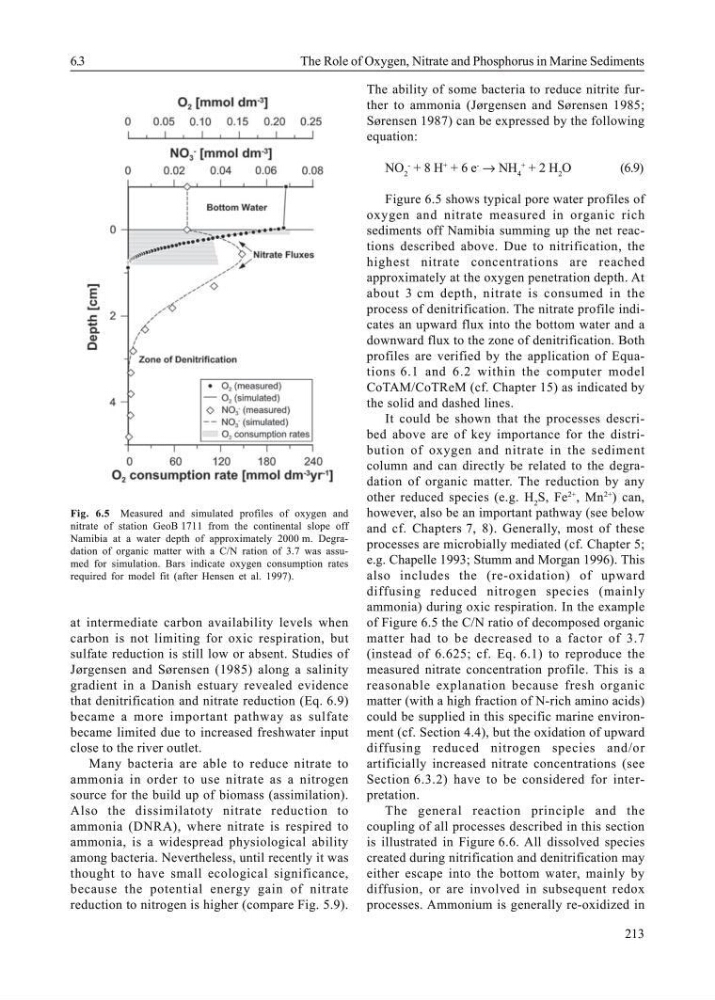
Figure 6.5 shows typical pore water profiles of
oxygen and nitrate measured in organic rich
sediments off Namibia summing up the net reactions described above. Due to nitrification, the
highest nitrate concentrations are reached
approximately at the oxygen penetration depth. At
about 3 cm depth, nitrate is consumed in the
process of denitrification. The nitrate profile indicates an upward flux into the bottom water and a
downward flux to the zone of denitrification. Both
profiles are verified by the application of Equations 6.1 and 6.2 within the computer model
CoTAM/CoTReM (cf. Chapter 15) as indicated by
the solid and dashed lines.
It could be shown that the processes described above are of key importance for the distribution of oxygen and nitrate in the sediment
column and can directly be related to the degradation of organic matter. The reduction by any
other reduced species (e.g. H 2 S, Fe
2+
, Mn
2+
) can,
however, also be an important pathway (see below
and cf. Chapters 7, 8). Generally, most of these
processes are microbially mediated (cf. Chapter 5;
e.g. Chapelle 1993; Stumm and Morgan 1996). This
also includes the (re-oxidation) of upward
diffusing reduced nitrogen species (mainly
ammonia) during oxic respiration. In the example
of Figure 6.5 the C/N ratio of decomposed organic
matter had to be decreased to a factor of 3.7
(instead of 6.625; cf. Eq. 6.1) to reproduce the
measured nitrate concentration profile. This is a
reasonable explanation because fresh organic
matter (with a high fraction of N-rich amino acids)
could be supplied in this specific marine environment (cf. Section 4.4), but the oxidation of upward
diffusing reduced nitrogen species and/or
artificially increased nitrate concentrations (see
Section 6.3.2) have to be considered for interpretation.
The general reaction principle and the
coupling of all processes described in this section
is illustrated in Figure 6.6. All dissolved species
created during nitrification and denitrification may
either escape into the bottom water, mainly by
diffusion, or are involved in subsequent redox
processes. Ammonium is generally re-oxidized in
Fig. 6.5 Measured and simulated profiles of oxygen and
nitrate of station GeoB 1711 from the continental slope off
Namibia at a water depth of approximately 2000 m. Degradation of organic matter with a C/N ration of 3.7 was assumed for simulation. Bars indicate oxygen consumption rates
required for model fit (after Hensen et al. 1997).
6.3
The Role of Oxygen, Nitrate and Phosphorus in Marine Sediments
at intermediate carbon availability levels when
carbon is not limiting for oxic respiration, but
sulfate reduction is still low or absent. Studies of
Jørgensen and Sørensen (1985) along a salinity
gradient in a Danish estuary revealed evidence
that denitrification and nitrate reduction (Eq. 6.9)
became a more important pathway as sulfate
became limited due to increased freshwater input
close to the river outlet.
Many bacteria are able to reduce nitrate to
ammonia in order to use nitrate as a nitrogen
source for the build up of biomass (assimilation).
Also the dissimilatoty nitrate reduction to
ammonia (DNRA), where nitrate is respired to
ammonia, is a widespread physiological ability
among bacteria. Nevertheless, until recently it was
thought to have small ecological significance,
because the potential energy gain of nitrate
reduction to nitrogen is higher (compare Fig. 5.9).
The ability of some bacteria to reduce nitrite further to ammonia (Jørgensen and Sørensen 1985;
Sørensen 1987) can be expressed by the following
equation:
NO 2
-
+ 8 H
+
+ 6 e
-
→ NH 4
+
+ 2 H 2 O
(6.9)
Figure 6.5 shows typical pore water profiles of
oxygen and nitrate measured in organic rich
sediments off Namibia summing up the net reactions described above. Due to nitrification, the
highest nitrate concentrations are reached
approximately at the oxygen penetration depth. At
about 3 cm depth, nitrate is consumed in the
process of denitrification. The nitrate profile indicates an upward flux into the bottom water and a
downward flux to the zone of denitrification. Both
profiles are verified by the application of Equations 6.1 and 6.2 within the computer model
CoTAM/CoTReM (cf. Chapter 15) as indicated by
the solid and dashed lines.
It could be shown that the processes described above are of key importance for the distribution of oxygen and nitrate in the sediment
column and can directly be related to the degradation of organic matter. The reduction by any
other reduced species (e.g. H 2 S, Fe
2+
, Mn
2+
) can,
however, also be an important pathway (see below
and cf. Chapters 7, 8). Generally, most of these
processes are microbially mediated (cf. Chapter 5;
e.g. Chapelle 1993; Stumm and Morgan 1996). This
also includes the (re-oxidation) of upward
diffusing reduced nitrogen species (mainly
ammonia) during oxic respiration. In the example
of Figure 6.5 the C/N ratio of decomposed organic
matter had to be decreased to a factor of 3.7
(instead of 6.625; cf. Eq. 6.1) to reproduce the
measured nitrate concentration profile. This is a
reasonable explanation because fresh organic
matter (with a high fraction of N-rich amino acids)
could be supplied in this specific marine environment (cf. Section 4.4), but the oxidation of upward
diffusing reduced nitrogen species and/or
artificially increased nitrate concentrations (see
Section 6.3.2) have to be considered for interpretation.
The general reaction principle and the
coupling of all processes described in this section
is illustrated in Figure 6.6. All dissolved species
created during nitrification and denitrification may
either escape into the bottom water, mainly by
diffusion, or are involved in subsequent redox
processes. Ammonium is generally re-oxidized in
Fig. 6.5 Measured and simulated profiles of oxygen and
nitrate of station GeoB 1711 from the continental slope off
Namibia at a water depth of approximately 2000 m. Degradation of organic matter with a C/N ration of 3.7 was assumed for simulation. Bars indicate oxygen consumption rates
required for model fit (after Hensen et al. 1997).
6.3
The Role of Oxygen, Nitrate and Phosphorus in Marine Sediments