

Satellite Remote Sensing of Evaporation over Sea
16T-~~--~~~~~~~~-L~~~
14
12
g 10
8
~ 6
g
4
2
o
22
20
18
16
14
12
I- 10
<1
8
6
4
2
0
.. '
., .... :.: ..
,. ... '.- ..
.... .. : .... . .
.......... ~~ .:.;;~:~ ...... " ..
. . . . :.. . . .: .. ,:~·.,r . . . . """
..... _,~:,: .. ~ ~ .:'. '",::. : e.'
. . .c:i . . ::,:.
. ....... '\ ..
. ! '\
I
.."
...... ..
~~~~--~'-~~~-r--~
o 4 8 12 16 20 24 28 32
.'
' ..
.. .. .... I ..
#" ~ ....... .
. . . . .... I::: . :, :. ::, ... : ...
...... :.: . . ~ .... :.:. ~:".f!.:··: . .
..
h ..... " : ..•.. ."". ., ....
..
·.tll .•. ,-.,'.-: . :, .... : ... I.:' # .. "
..
.. \ " .. :,
.. " :.
.'
o 4 8 12 16 20 24 28 32
To [0C]
439
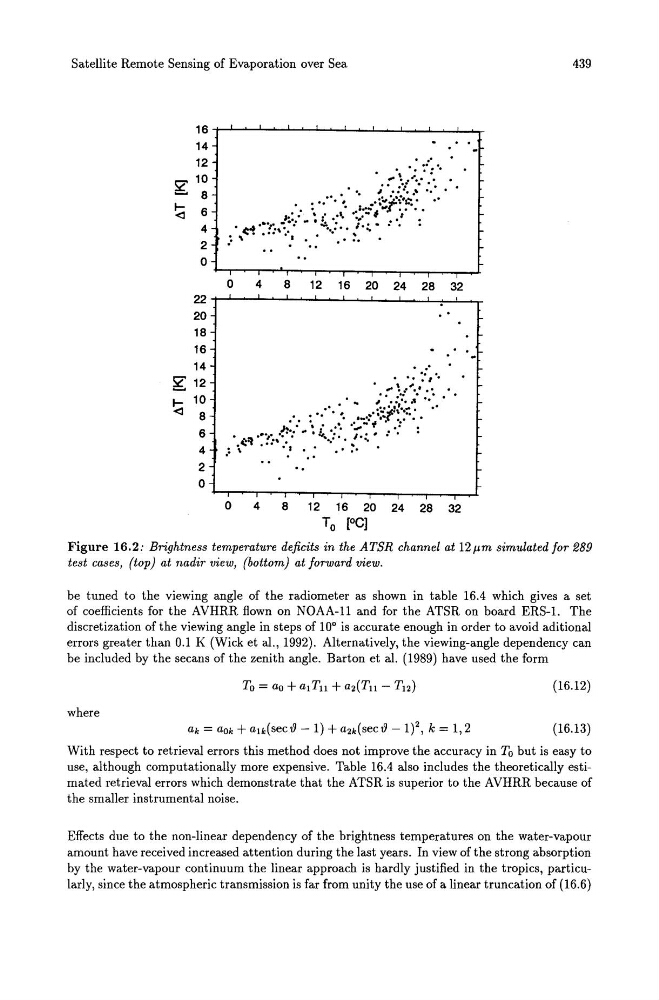
Figure 16.2: Brightness temperature deficits in the ATSR channel at 12 pm simulated for 289
test cases, (top) at nadir view, (bottom) at forward view.
be tuned to the viewing angle of the radiometer as shown in table 16.4 which gives a set
of coefficients for the AVHRR flown on NOAA-ll and for the ATSR on board ERS-l. The
discretization of the viewing angle in steps of 10° is accurate enough in order to avoid aditional
errors greater than 0.1 K (Wick et al., 1992). Alternatively, the viewing-angle dependency can
be included by the secans of the zenith angle. Barton et al. (1989) have used the form
(16.12)
where
(16.13)
With respect to retrieval errors this method does not improve the accuracy in To but is easy to
use, although computationally more expensive. Table 16.4 also includes the theoretically estimated retrieval errors which demonstrate that the ATSR is superior to the AVHRR because of
the smaller instrumental noise.
Effects due to the non-linear dependency of the brightness temperatures on the water-vapour
amount have received increased attention during the last years. In view of the strong absorption
by the water-vapour continuum the linear approach is hardly justified in the tropics, particularly, since the atmospheric transmission is far from unity the use of a linear truncation of (16.6)
16T-~~--~~~~~~~~-L~~~
14
12
g 10
8
~ 6
g
4
2
o
22
20
18
16
14
12
I- 10
<1
8
6
4
2
0
.. '
., .... :.: ..
,. ... '.- ..
.... .. : .... . .
.......... ~~ .:.;;~:~ ...... " ..
. . . . :.. . . .: .. ,:~·.,r . . . . """
..... _,~:,: .. ~ ~ .:'. '",::. : e.'
. . .c:i . . ::,:.
. ....... '\ ..
. ! '\
I
.."
...... ..
~~~~--~'-~~~-r--~
o 4 8 12 16 20 24 28 32
.'
' ..
.. .. .... I ..
#" ~ ....... .
. . . . .... I::: . :, :. ::, ... : ...
...... :.: . . ~ .... :.:. ~:".f!.:··: . .
..
h ..... " : ..•.. ."". ., ....
..
·.tll .•. ,-.,'.-: . :, .... : ... I.:' # .. "
..
.. \ " .. :,
.. " :.
.'
o 4 8 12 16 20 24 28 32
To [0C]
439
Figure 16.2: Brightness temperature deficits in the ATSR channel at 12 pm simulated for 289
test cases, (top) at nadir view, (bottom) at forward view.
be tuned to the viewing angle of the radiometer as shown in table 16.4 which gives a set
of coefficients for the AVHRR flown on NOAA-ll and for the ATSR on board ERS-l. The
discretization of the viewing angle in steps of 10° is accurate enough in order to avoid aditional
errors greater than 0.1 K (Wick et al., 1992). Alternatively, the viewing-angle dependency can
be included by the secans of the zenith angle. Barton et al. (1989) have used the form
(16.12)
where
(16.13)
With respect to retrieval errors this method does not improve the accuracy in To but is easy to
use, although computationally more expensive. Table 16.4 also includes the theoretically estimated retrieval errors which demonstrate that the ATSR is superior to the AVHRR because of
the smaller instrumental noise.
Effects due to the non-linear dependency of the brightness temperatures on the water-vapour
amount have received increased attention during the last years. In view of the strong absorption
by the water-vapour continuum the linear approach is hardly justified in the tropics, particularly, since the atmospheric transmission is far from unity the use of a linear truncation of (16.6)