

Remote Sensing Parameterization of Meso-scale ...
411
Classes of
T m1x
a
T m1x
a
zmlx
Oh
U~IX
W- m1x
h
H-schematizations (zsur ~ 2 m) (zsur ~ 100 m)
Class 1
c
n
c
c
n
Class 2
c
n
v
c
c
Class 3
n
c
c
c
c
Class 4
n
c
v
c
c
Class 5
v
c
v
v
v
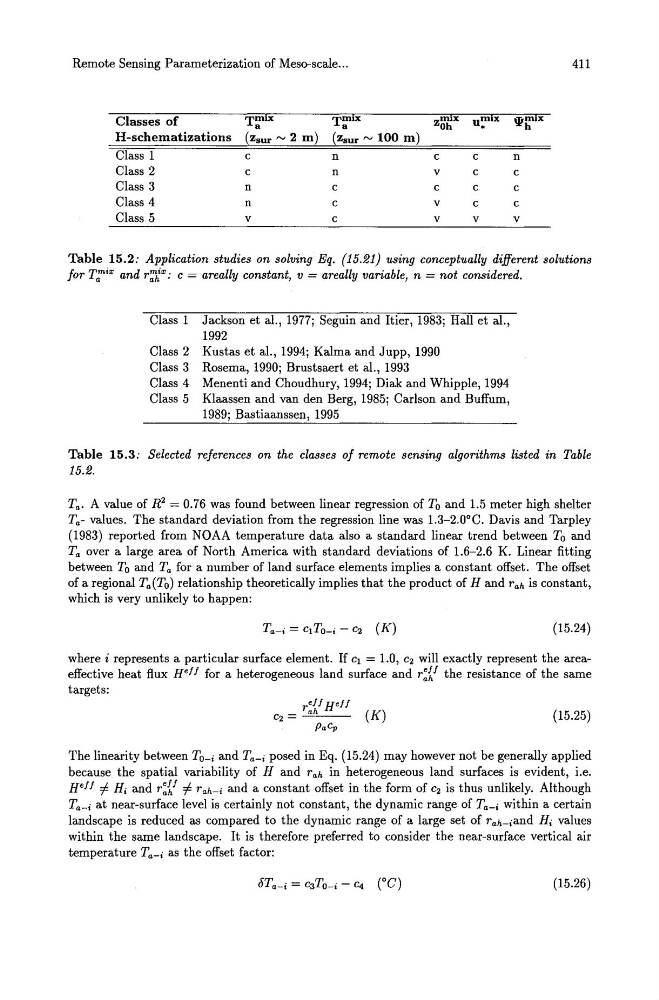
Table 15.2: Application studies on solving Eq. (15.21) using conceptually different solutions
for T;:ix and r:~x: c = areally constant, v = areally variable, n = not considered.
Class 1 Jackson et al., 1977; Seguin and Itier, 1983; Hall et al.,
1992
Class 2 Kustas et al., 1994; Kalma and Jupp, 1990
Class 3 Rosema, 1990; Brustsaert et al., 1993
Class 4 Menenti and Choudhury, 1994; Diak and Whipple, 1994
Class 5 Klaassen and van den Berg, 1985; Carlson and Buffum,
1989; Bastiaanssen, 1995
Table 15.3: Selected references on the classes of remote sensing algorithms listed in Table
15.2.
Ta. A value of R2 = 0.76 was found between linear regression of To and 1.5 meter high shelter
Ta- values. The standard deviation from the regression line was 1.3-2.0°C. Davis and Tarpley
(1983) reported from NOAA temperature data also a standard linear trend between To and
Ta over a large area of North America with standard deviations of 1.6-2.6 K. Linear fitting
between To and Ta for a number of land surface elements implies a constant offset. The offset
of a regional Ta(To) relationship theoretically implies that the product of H and rah is constant,
which is very unlikely to happen:
(15.24)
where i represents a particular surface element. If Cl = 1.0, C2 will exactly represent the areaeffective heat flux He" for a heterogeneous land surface and r~{' the resistance of the same
targets:
(15.25)
The linearity between TO-i and Ta-i posed in Eq. (15.24) may however not be generally applied
because the spatial variability of Hand rah in heterogeneous land surfaces is evident, i.e.
Heff i- Hi and r:{' i- rah-i and a constant offset in the form of C2 is thus unlikely. Although
Ta-i at near-surface level is certainly not constant, the dynamic range of Ta-i within a certain
landscape is reduced as compared to the dynamic range of a large set of rah-iand Hi values
within the same landscape. It is therefore preferred to consider the near-surface vertical air
temperature Ta-i as the offset factor:
(15.26)
411
Classes of
T m1x
a
T m1x
a
zmlx
Oh
U~IX
W- m1x
h
H-schematizations (zsur ~ 2 m) (zsur ~ 100 m)
Class 1
c
n
c
c
n
Class 2
c
n
v
c
c
Class 3
n
c
c
c
c
Class 4
n
c
v
c
c
Class 5
v
c
v
v
v
Table 15.2: Application studies on solving Eq. (15.21) using conceptually different solutions
for T;:ix and r:~x: c = areally constant, v = areally variable, n = not considered.
Class 1 Jackson et al., 1977; Seguin and Itier, 1983; Hall et al.,
1992
Class 2 Kustas et al., 1994; Kalma and Jupp, 1990
Class 3 Rosema, 1990; Brustsaert et al., 1993
Class 4 Menenti and Choudhury, 1994; Diak and Whipple, 1994
Class 5 Klaassen and van den Berg, 1985; Carlson and Buffum,
1989; Bastiaanssen, 1995
Table 15.3: Selected references on the classes of remote sensing algorithms listed in Table
15.2.
Ta. A value of R2 = 0.76 was found between linear regression of To and 1.5 meter high shelter
Ta- values. The standard deviation from the regression line was 1.3-2.0°C. Davis and Tarpley
(1983) reported from NOAA temperature data also a standard linear trend between To and
Ta over a large area of North America with standard deviations of 1.6-2.6 K. Linear fitting
between To and Ta for a number of land surface elements implies a constant offset. The offset
of a regional Ta(To) relationship theoretically implies that the product of H and rah is constant,
which is very unlikely to happen:
(15.24)
where i represents a particular surface element. If Cl = 1.0, C2 will exactly represent the areaeffective heat flux He" for a heterogeneous land surface and r~{' the resistance of the same
targets:
(15.25)
The linearity between TO-i and Ta-i posed in Eq. (15.24) may however not be generally applied
because the spatial variability of Hand rah in heterogeneous land surfaces is evident, i.e.
Heff i- Hi and r:{' i- rah-i and a constant offset in the form of C2 is thus unlikely. Although
Ta-i at near-surface level is certainly not constant, the dynamic range of Ta-i within a certain
landscape is reduced as compared to the dynamic range of a large set of rah-iand Hi values
within the same landscape. It is therefore preferred to consider the near-surface vertical air
temperature Ta-i as the offset factor:
(15.26)