

A total of 24 FGDs were held covering different socioeconomic groups along
with a few personal interviews with informers in all the villages to understand
farmer’s knowledge and awareness about changing climate in the rural context and
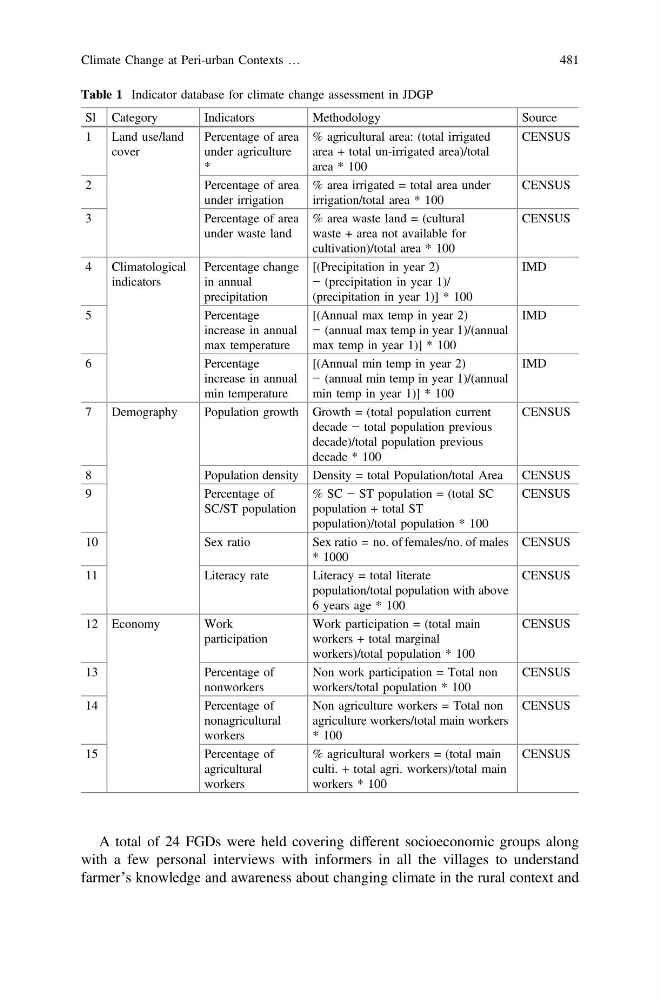
Table 1 Indicator database for climate change assessment in JDGP
Sl Category
Indicators
Methodology
Source
1
Land use/land
cover
Percentage of area
under agriculture
*
% agricultural area: (total irrigated
area + total un-irrigated area)/total
area * 100
CENSUS
2
Percentage of area
under irrigation
% area irrigated = total area under
irrigation/total area * 100
CENSUS
3
Percentage of area
under waste land
% area waste land = (cultural
waste + area not available for
cultivation)/total area * 100
CENSUS
4
Climatological
indicators
Percentage change
in annual
precipitation
[(Precipitation in year 2)
− (precipitation in year 1)/
(precipitation in year 1)] * 100
IMD
5
Percentage
increase in annual
max temperature
[(Annual max temp in year 2)
− (annual max temp in year 1)/(annual
max temp in year 1)] * 100
IMD
6
Percentage
increase in annual
min temperature
[(Annual min temp in year 2)
− (annual min temp in year 1)/(annual
min temp in year 1)] * 100
IMD
7
Demography
Population growth Growth = (total population current
decade − total population previous
decade)/total population previous
decade * 100
CENSUS
8
Population density Density = total Population/total Area
CENSUS
9
Percentage of
SC/ST population
% SC − ST population = (total SC
population + total ST
population)/total population * 100
CENSUS
10
Sex ratio
Sex ratio = no. of females/no. of males
* 1000
CENSUS
11
Literacy rate
Literacy = total literate
population/total population with above
6 years age * 100
CENSUS
12 Economy
Work
participation
Work participation = (total main
workers + total marginal
workers)/total population * 100
CENSUS
13
Percentage of
nonworkers
Non work participation = Total non
workers/total population * 100
CENSUS
14
Percentage of
nonagricultural
workers
Non agriculture workers = Total non
agriculture workers/total main workers
* 100
CENSUS
15
Percentage of
agricultural
workers
% agricultural workers = (total main
culti. + total agri. workers)/total main
workers * 100
CENSUS
Climate Change at Peri-urban Contexts …
481
with a few personal interviews with informers in all the villages to understand
farmer’s knowledge and awareness about changing climate in the rural context and
Table 1 Indicator database for climate change assessment in JDGP
Sl Category
Indicators
Methodology
Source
1
Land use/land
cover
Percentage of area
under agriculture
*
% agricultural area: (total irrigated
area + total un-irrigated area)/total
area * 100
CENSUS
2
Percentage of area
under irrigation
% area irrigated = total area under
irrigation/total area * 100
CENSUS
3
Percentage of area
under waste land
% area waste land = (cultural
waste + area not available for
cultivation)/total area * 100
CENSUS
4
Climatological
indicators
Percentage change
in annual
precipitation
[(Precipitation in year 2)
− (precipitation in year 1)/
(precipitation in year 1)] * 100
IMD
5
Percentage
increase in annual
max temperature
[(Annual max temp in year 2)
− (annual max temp in year 1)/(annual
max temp in year 1)] * 100
IMD
6
Percentage
increase in annual
min temperature
[(Annual min temp in year 2)
− (annual min temp in year 1)/(annual
min temp in year 1)] * 100
IMD
7
Demography
Population growth Growth = (total population current
decade − total population previous
decade)/total population previous
decade * 100
CENSUS
8
Population density Density = total Population/total Area
CENSUS
9
Percentage of
SC/ST population
% SC − ST population = (total SC
population + total ST
population)/total population * 100
CENSUS
10
Sex ratio
Sex ratio = no. of females/no. of males
* 1000
CENSUS
11
Literacy rate
Literacy = total literate
population/total population with above
6 years age * 100
CENSUS
12 Economy
Work
participation
Work participation = (total main
workers + total marginal
workers)/total population * 100
CENSUS
13
Percentage of
nonworkers
Non work participation = Total non
workers/total population * 100
CENSUS
14
Percentage of
nonagricultural
workers
Non agriculture workers = Total non
agriculture workers/total main workers
* 100
CENSUS
15
Percentage of
agricultural
workers
% agricultural workers = (total main
culti. + total agri. workers)/total main
workers * 100
CENSUS
Climate Change at Peri-urban Contexts …
481