

61
- - ..-_. -
"...r
.- .......
~
."..
.-'
,;'
.,
. .
-----7 10 m s-1
-----7 3 m s- 1
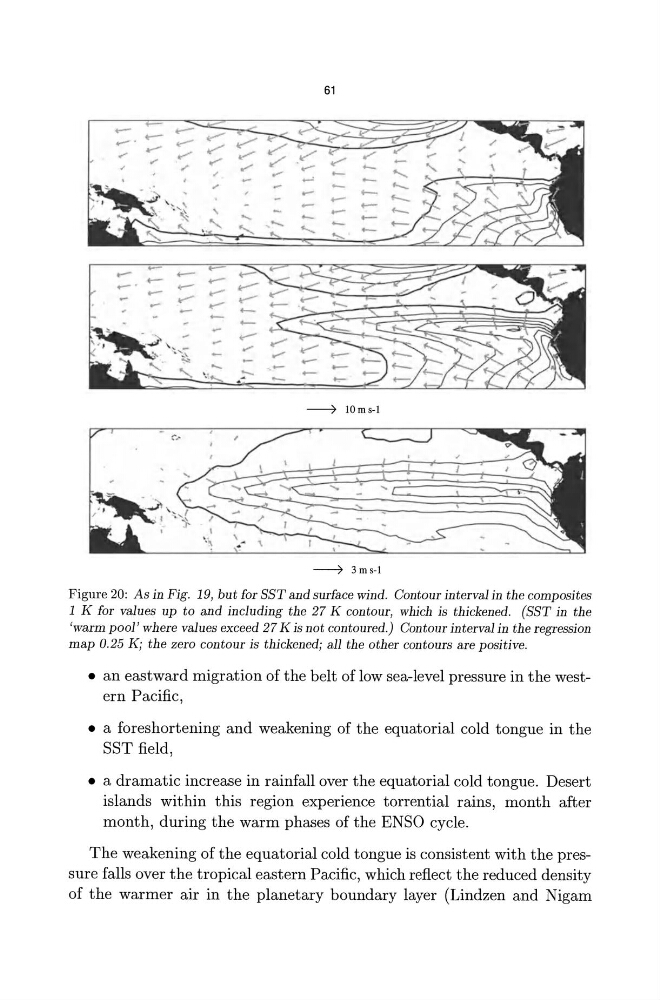
Figure 20: As in Fig. 19, but for SST and surface wind. Contour interval in the composites
1 K for values up to and including the 27 K contour, which is thickened. (SST in the
'warm pool' where values exceed 27 K is not contoured.) Contour interval in the regression
map 0.25 K; the zero contour is thickened; all the other contours are positive.
• an eastward migration of the belt of low sea-level pressure in the western Pacific,
• a foreshortening and weakening of the equatorial cold tongue in the
SST field,
• a dramatic increase in rainfall over the equatorial cold tongue. Desert
islands within this region experience torrential rains, month after
month, during the warm phases of the ENSO cycle.
The weakening of the equatorial cold tongue is consistent with the pressure falls over the tropical eastern Pacific, which reflect the reduced density
of the warmer air in the planetary boundary layer (Lindzen and Nigam
- - ..-_. -
"...r
.- .......
~
."..
.-'
,;'
.,
. .
-----7 10 m s-1
-----7 3 m s- 1
Figure 20: As in Fig. 19, but for SST and surface wind. Contour interval in the composites
1 K for values up to and including the 27 K contour, which is thickened. (SST in the
'warm pool' where values exceed 27 K is not contoured.) Contour interval in the regression
map 0.25 K; the zero contour is thickened; all the other contours are positive.
• an eastward migration of the belt of low sea-level pressure in the western Pacific,
• a foreshortening and weakening of the equatorial cold tongue in the
SST field,
• a dramatic increase in rainfall over the equatorial cold tongue. Desert
islands within this region experience torrential rains, month after
month, during the warm phases of the ENSO cycle.
The weakening of the equatorial cold tongue is consistent with the pressure falls over the tropical eastern Pacific, which reflect the reduced density
of the warmer air in the planetary boundary layer (Lindzen and Nigam