

409
atmospheric dynamics such as the CdV model and explain transitions by
interaction with shorter waves simply acting as white noise (see e. g. Egger
1981, De Swart and Grassman 1987). The observational evidence for dynamically disjunct multiple states, particularly with features of the CdV
model, in the atmospheric circulation is however sparse (see the collection
of papers in Benzi et al. 1986) and the applicability has correctly been questioned (see e. g. TUng and Rosenthal 1985). Indications of a double peak
distribution of large-scale wave amplitudes have been found, however with
no counterpart in the distribution of the mean flow amplitudes. Moreover,
on the theoretical side it was found that relaxing the severe truncation and
allowing for more modes and wave-wave interactions the multiple equilibria in barotropic models disappeared. They also disappeared for realistic
forcing and friction parameters in the original CdV model.
160
150
~
140
E
~
1:
1 c \!
...
.LJ.-L...LJ...w..LL~.u~!d",L!"t!t!d.!' Ill.t.!""" ! I,' .. ~! 1 1 < 1 ! I ! ! d ! 'dild
July
Jan
July
Jan
July
Jan
Jan
July
Jan
1978
1979
1960 1981
1982
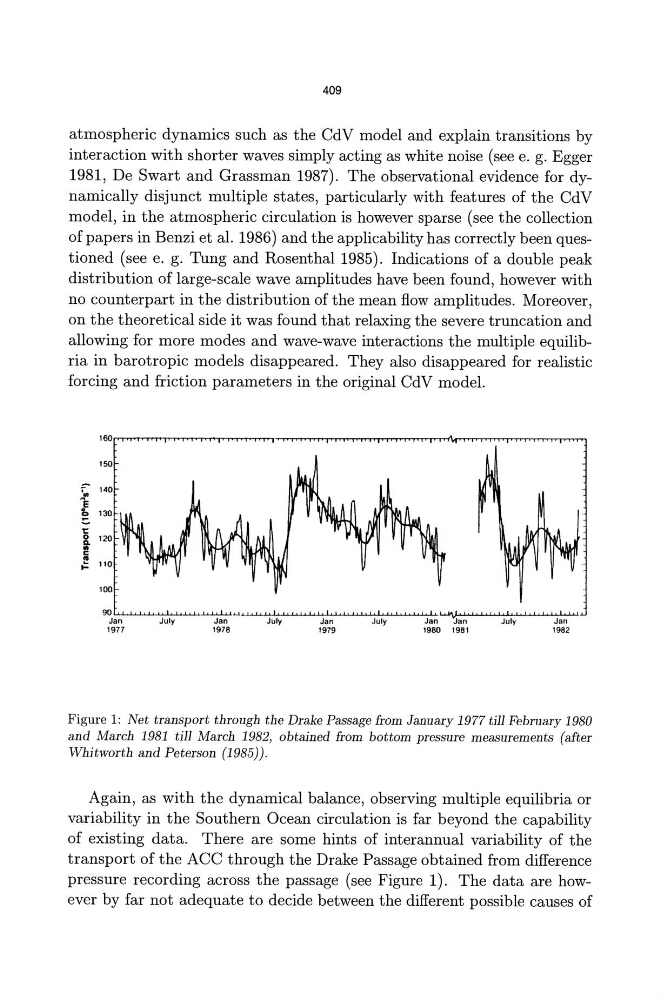
Figure 1: Net transport through the Drake Passage from January 1977 till February 1980
and March 1981 till March 1982, obtained from bottom pressure measurements (after
Whitworth and Peterson (1985)).
Again, as with the dynamical balance, observing multiple equilibria or
variability in the Southern Ocean circulation is far beyond the capability
of existing data. There are some hints of interannual variability of the
transport of the ACC through the Drake Passage obtained from difference
pressure recording across the passage (see Figure 1). The data are however by far not adequate to decide between the different possible causes of
atmospheric dynamics such as the CdV model and explain transitions by
interaction with shorter waves simply acting as white noise (see e. g. Egger
1981, De Swart and Grassman 1987). The observational evidence for dynamically disjunct multiple states, particularly with features of the CdV
model, in the atmospheric circulation is however sparse (see the collection
of papers in Benzi et al. 1986) and the applicability has correctly been questioned (see e. g. TUng and Rosenthal 1985). Indications of a double peak
distribution of large-scale wave amplitudes have been found, however with
no counterpart in the distribution of the mean flow amplitudes. Moreover,
on the theoretical side it was found that relaxing the severe truncation and
allowing for more modes and wave-wave interactions the multiple equilibria in barotropic models disappeared. They also disappeared for realistic
forcing and friction parameters in the original CdV model.
160
150
~
140
E
~
1:
1 c \!
...
.LJ.-L...LJ...w..LL~.u~!d",L!"t!t!d.!' Ill.t.!""" ! I,' .. ~! 1 1 < 1 ! I ! ! d ! 'dild
July
Jan
July
Jan
July
Jan
Jan
July
Jan
1978
1979
1960 1981
1982
Figure 1: Net transport through the Drake Passage from January 1977 till February 1980
and March 1981 till March 1982, obtained from bottom pressure measurements (after
Whitworth and Peterson (1985)).
Again, as with the dynamical balance, observing multiple equilibria or
variability in the Southern Ocean circulation is far beyond the capability
of existing data. There are some hints of interannual variability of the
transport of the ACC through the Drake Passage obtained from difference
pressure recording across the passage (see Figure 1). The data are however by far not adequate to decide between the different possible causes of