

297
Surface
Greenhouse
temperature
Observed
Grennhouse
Surface pressure
without
temperature
effect
gas
greenhouse
effect
Venus
90.000
90.00% C02
-46'C
477 'C
523 'C
Earth
1.000
0.04% C02
-18 'C
15'C
33'C
1.00% H2O
Mars
0.007
80.00% C02
-57'C
-47 'C
10 'C
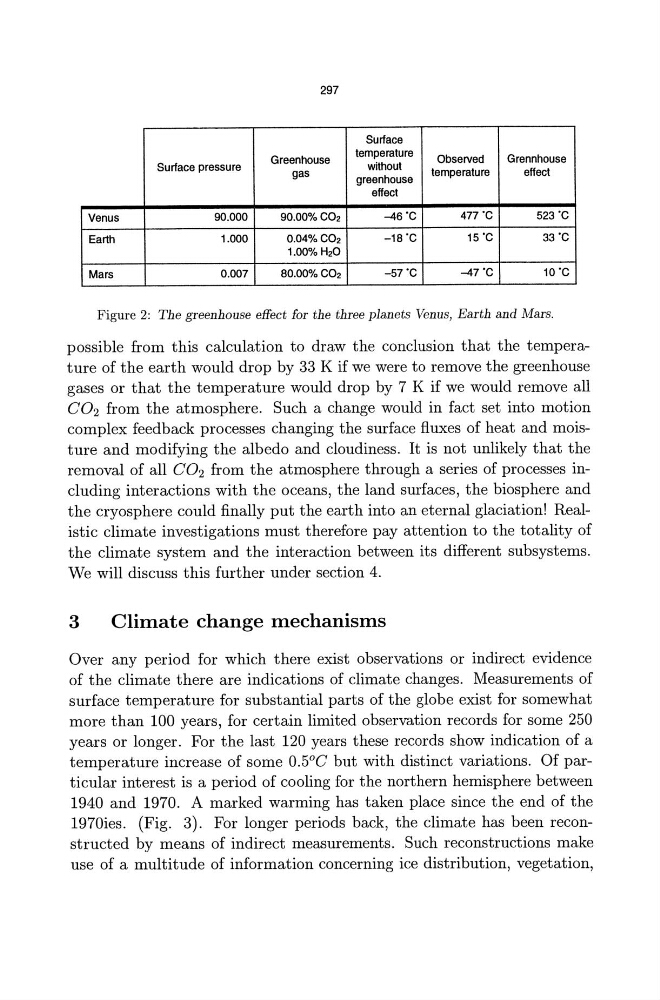
Figure 2: The greenhouse effect for the three planets Venus, Earth and Mars.
possible from this calculation to draw the conclusion that the temperature of the earth would drop by 33 K if we were to remove the greenhouse
gases or that the temperature would drop by 7 K if we would remove all
CO2 from the atmosphere. Such a change would in fact set into motion
complex feedback processes changing the surface fluxes of heat and moisture and modifying the albedo and cloudiness. It is not unlikely that the
removal of all CO2 from the atmosphere through a series of processes including interactions with the oceans, the land surfaces, the biosphere and
the cryosphere could finally put the earth into an eternal glaciation! Realistic climate investigations must therefore pay attention to the totality of
the climate system and the interaction between its different subsystems.
We will discuss this further under section 4.
3
Climate change mechanisms
Over any period for which there exist observations or indirect evidence
of the climate there are indications of climate changes. Measurements of
surface temperature for substantial parts of the globe exist for somewhat
more than 100 years, for certain limited observation records for some 250
years or longer. For the last 120 years these records show indication of a
temperature increase of some 0.5°C but with distinct variations. Of particular interest is a period of cooling for the northern hemisphere between
1940 and 1970. A marked warming has taken place since the end of the
1970ies. (Fig. 3). For longer periods back, the climate has been reconstructed by means of indirect measurements. Such reconstructions make
use of a multitude of information concerning ice distribution, vegetation,
Surface
Greenhouse
temperature
Observed
Grennhouse
Surface pressure
without
temperature
effect
gas
greenhouse
effect
Venus
90.000
90.00% C02
-46'C
477 'C
523 'C
Earth
1.000
0.04% C02
-18 'C
15'C
33'C
1.00% H2O
Mars
0.007
80.00% C02
-57'C
-47 'C
10 'C
Figure 2: The greenhouse effect for the three planets Venus, Earth and Mars.
possible from this calculation to draw the conclusion that the temperature of the earth would drop by 33 K if we were to remove the greenhouse
gases or that the temperature would drop by 7 K if we would remove all
CO2 from the atmosphere. Such a change would in fact set into motion
complex feedback processes changing the surface fluxes of heat and moisture and modifying the albedo and cloudiness. It is not unlikely that the
removal of all CO2 from the atmosphere through a series of processes including interactions with the oceans, the land surfaces, the biosphere and
the cryosphere could finally put the earth into an eternal glaciation! Realistic climate investigations must therefore pay attention to the totality of
the climate system and the interaction between its different subsystems.
We will discuss this further under section 4.
3
Climate change mechanisms
Over any period for which there exist observations or indirect evidence
of the climate there are indications of climate changes. Measurements of
surface temperature for substantial parts of the globe exist for somewhat
more than 100 years, for certain limited observation records for some 250
years or longer. For the last 120 years these records show indication of a
temperature increase of some 0.5°C but with distinct variations. Of particular interest is a period of cooling for the northern hemisphere between
1940 and 1970. A marked warming has taken place since the end of the
1970ies. (Fig. 3). For longer periods back, the climate has been reconstructed by means of indirect measurements. Such reconstructions make
use of a multitude of information concerning ice distribution, vegetation,