

Freshening
bO
•
~
.S
I
E
...
€ 0 >
...
0
200
bO
c
·s
€ 0 >
0
Freshening
~ ~. ~ ~ ~ ~ ~
~OCline
I
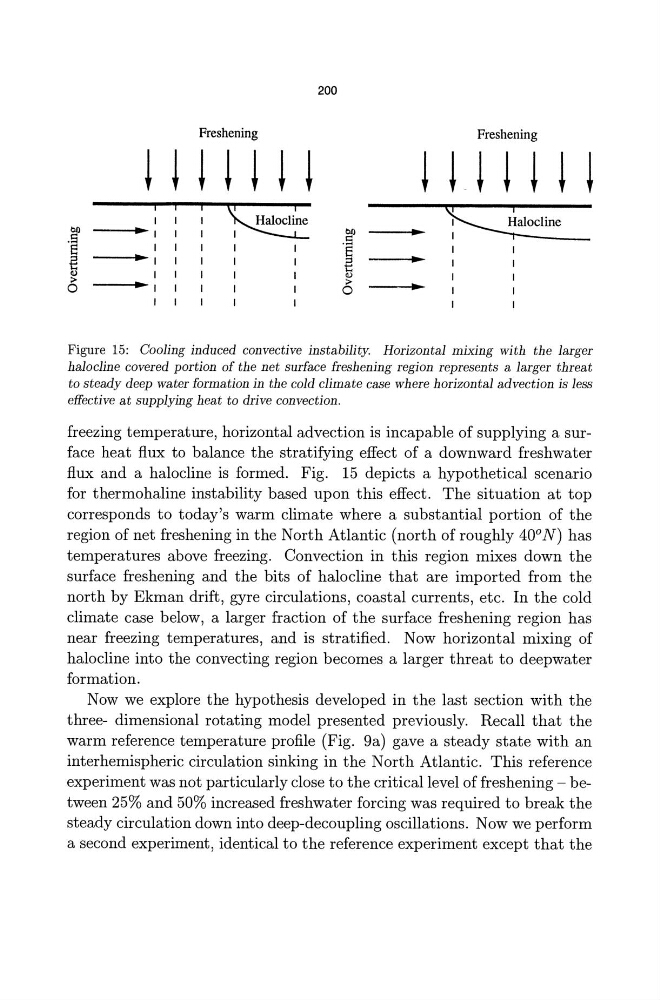
Figure 15: Cooling induced convective instability. Horizontal mixing with the larger
halocline covered portion of the net surface freshening region represents a larger threat
to steady deep water formation in the cold climate case where horizontal advection is less
effective at supplying heat to drive convection.
freezing temperature, horizontal advection is incapable of supplying a surface heat flux to balance the stratifying effect of a downward freshwater
flux and a halo cline is formed. Fig. 15 depicts a hypothetical scenario
for thermohaline instability based upon this effect. The situation at top
corresponds to today's warm climate where a substantial portion of the
region of net freshening in the North Atlantic (north of roughly 40° N) has
temperatures above freezing. Convection in this region mixes down the
surface freshening and the bits of halo cline that are imported from the
north by Ekman drift, gyre circulations, coastal currents, etc. In the cold
climate case below, a larger fraction of the surface freshening region has
near freezing temperatures, and is stratified. Now horizontal mixing of
halo cline into the convecting region becomes a larger threat to deepwater
formation.
Now we explore the hypothesis developed in the last section with the
three- dimensional rotating model presented previously. Recall that the
warm reference temperature profile (Fig. 9a) gave a steady state with an
interhemispheric circulation sinking in the North Atlantic. This reference
experiment was not particularly close to the critical level of freshening - between 25% and 50% increased freshwater forcing was required to break the
steady circulation down into deep-decoupling oscillations. Now we perform
a second experiment, identical to the reference experiment except that the
bO
•
~
.S
I
E
...
€ 0 >
...
0
200
bO
c
·s
€ 0 >
0
Freshening
~ ~. ~ ~ ~ ~ ~
~OCline
I
Figure 15: Cooling induced convective instability. Horizontal mixing with the larger
halocline covered portion of the net surface freshening region represents a larger threat
to steady deep water formation in the cold climate case where horizontal advection is less
effective at supplying heat to drive convection.
freezing temperature, horizontal advection is incapable of supplying a surface heat flux to balance the stratifying effect of a downward freshwater
flux and a halo cline is formed. Fig. 15 depicts a hypothetical scenario
for thermohaline instability based upon this effect. The situation at top
corresponds to today's warm climate where a substantial portion of the
region of net freshening in the North Atlantic (north of roughly 40° N) has
temperatures above freezing. Convection in this region mixes down the
surface freshening and the bits of halo cline that are imported from the
north by Ekman drift, gyre circulations, coastal currents, etc. In the cold
climate case below, a larger fraction of the surface freshening region has
near freezing temperatures, and is stratified. Now horizontal mixing of
halo cline into the convecting region becomes a larger threat to deepwater
formation.
Now we explore the hypothesis developed in the last section with the
three- dimensional rotating model presented previously. Recall that the
warm reference temperature profile (Fig. 9a) gave a steady state with an
interhemispheric circulation sinking in the North Atlantic. This reference
experiment was not particularly close to the critical level of freshening - between 25% and 50% increased freshwater forcing was required to break the
steady circulation down into deep-decoupling oscillations. Now we perform
a second experiment, identical to the reference experiment except that the