

187
SURFACE HEAT FLUX - SUBPOLAR N. ATL.
300 r---~-----.----.-----.----.~~-r----.-----r----'
200
~
\ :
~ \ :
::i!
~ 100
. ~ ..... ... ~ .. .. ~ ............... .
0 ~==~--~==~--~==~~~~~~~-2~
o
1000
2000
3000
4000
5000
6000
7000
8000
9000
TIME (yEARS)
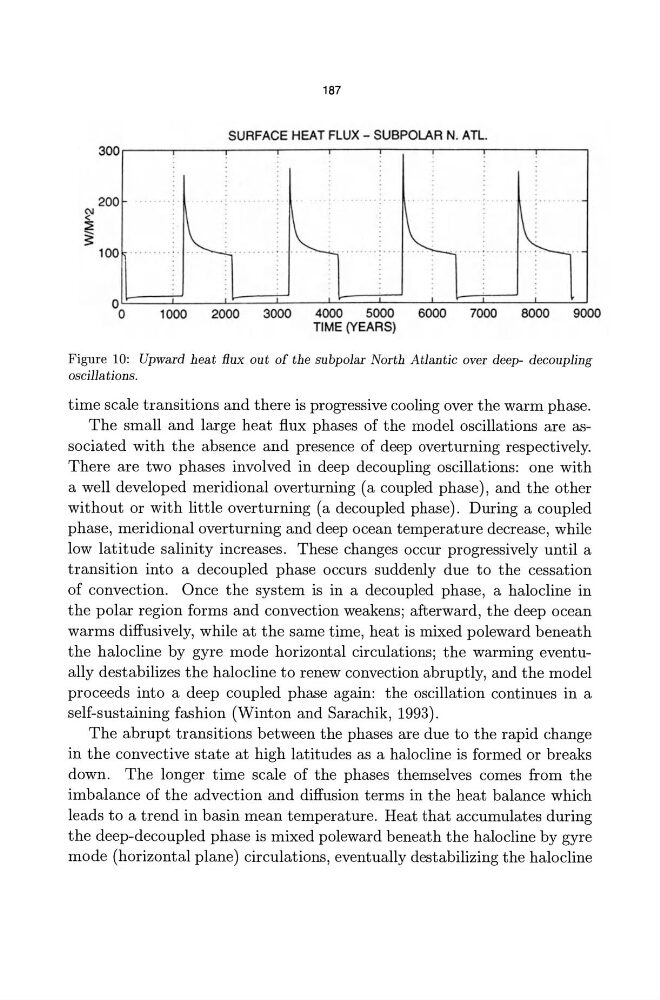
Figure 10: Upward heat flux out of the subpolar North Atlantic over deep- decoupling
oscillations.
time scale transitions and there is progressive cooling over the warm phase.
The small and large heat flux phases of the model oscillations are associated with the absence and presence of deep overturning respectively.
There are two phases involved in deep decoupling oscillations: one with
a well developed meridional overturning (a coupled phase), and the other
without or with little overturning (a decoupled phase). During a coupled
phase, meridional overturning and deep ocean temperature decrease, while
low latitude salinity increases. These changes occur progressively until a
transition into a decoupled phase occurs suddenly due to the cessation
of convection. Once the system is in a decoupled phase, a halo cline in
the polar region forms and convection weakens; afterward, the deep ocean
warms diffusively, while at the same time, heat is mixed poleward beneath
the halo cline by gyre mode horizontal circulations; the warming eventually destabilizes the halo cline to renew convection abruptly, and the model
proceeds into a deep coupled phase again: the oscillation continues in a
self-sustaining fashion (Winton and Sarachik, 1993) .
The abrupt transitions between the phases are due to the rapid change
in the convective state at high latitudes as a halo cline is formed or breaks
down. The longer time scale of the phases themselves comes from the
imbalance of the advection and diffusion terms in the heat balance which
leads to a trend in basin mean temperature. Heat that accumulates during
the deep-decoupled phase is mixed poleward beneath the halo cline by gyre
mode (horizontal plane) circulations, eventually destabilizing the halo cline
SURFACE HEAT FLUX - SUBPOLAR N. ATL.
300 r---~-----.----.-----.----.~~-r----.-----r----'
200
~
\ :
~ \ :
::i!
~ 100
. ~ ..... ... ~ .. .. ~ ............... .
0 ~==~--~==~--~==~~~~~~~-2~
o
1000
2000
3000
4000
5000
6000
7000
8000
9000
TIME (yEARS)
Figure 10: Upward heat flux out of the subpolar North Atlantic over deep- decoupling
oscillations.
time scale transitions and there is progressive cooling over the warm phase.
The small and large heat flux phases of the model oscillations are associated with the absence and presence of deep overturning respectively.
There are two phases involved in deep decoupling oscillations: one with
a well developed meridional overturning (a coupled phase), and the other
without or with little overturning (a decoupled phase). During a coupled
phase, meridional overturning and deep ocean temperature decrease, while
low latitude salinity increases. These changes occur progressively until a
transition into a decoupled phase occurs suddenly due to the cessation
of convection. Once the system is in a decoupled phase, a halo cline in
the polar region forms and convection weakens; afterward, the deep ocean
warms diffusively, while at the same time, heat is mixed poleward beneath
the halo cline by gyre mode horizontal circulations; the warming eventually destabilizes the halo cline to renew convection abruptly, and the model
proceeds into a deep coupled phase again: the oscillation continues in a
self-sustaining fashion (Winton and Sarachik, 1993) .
The abrupt transitions between the phases are due to the rapid change
in the convective state at high latitudes as a halo cline is formed or breaks
down. The longer time scale of the phases themselves comes from the
imbalance of the advection and diffusion terms in the heat balance which
leads to a trend in basin mean temperature. Heat that accumulates during
the deep-decoupled phase is mixed poleward beneath the halo cline by gyre
mode (horizontal plane) circulations, eventually destabilizing the halo cline