

3
2
1
o
-1
-2
176
Eastern Eq. Pacific SST Anomalies (C)
1870-1914
_3 ~~~~"""rrnn"TTrrnn"TT"nnn<""""rnnrl
3
2
1
o
-1
-2
70
75
80
85
90
95
00
05
10
15
1905-1954
_3~~~~nn""nn"rn""nnTTrnnlTTrnnoTTrnrrrl
r
5
10 , .. 15 lL~ , ~2~ ~o j 35 1£:} 45 ....... 19.J ...... 2- ... 1 ... 99]5
_~ ~~~-·~,,uyu.,V\~r' . ~,.
-2
_3 ~~~~rnnl"rn""nlTTrn""nn""nn""rrrl
45
50
55
60
65
70
75
80
85
90
95
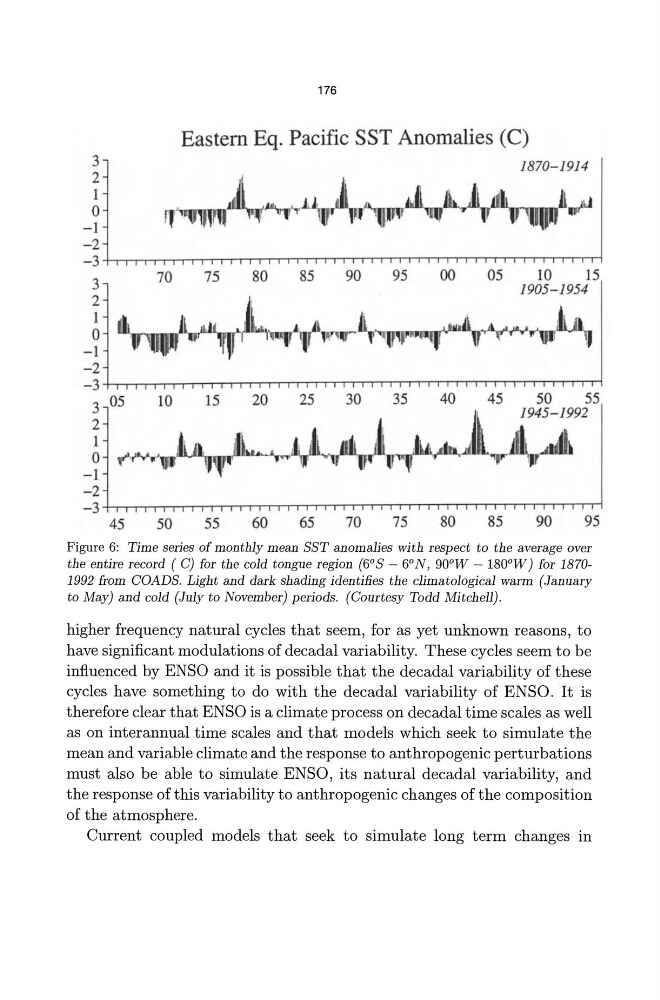
Figure 6: Tim e series of monthly mean SST anomalies with respect to the average over
the entire record ( C) for the cold tongue region (6 0 S - 6° N , 90 0 w - 180 0 W) for 18701992 from COADS. Light and dark shading identifies the climatological warm (January
to May) and cold (July to November) p eriods. (Courtesy Todd Mitchell) .
higher frequency natural cycles that seem, for as yet unknown reasons, to
have significant modulations of decadal variability. These cycles seem to be
influenced by ENSO and it is possible that the decadal variability of these
cycles have something to do with the decadal variability of ENSO. It is
therefore clear that ENSO is a climate process on decadal time scales as well
as on interannual time scales and that models which seek to simulate the
mean and variable climate and the response to anthropogenic perturbations
must also be able to simulate ENSO, its natural decadal variability, and
the response of this variability to anthropogenic changes of the composition
of the atmosphere.
Current coupled models that seek to simulate long term changes in
2
1
o
-1
-2
176
Eastern Eq. Pacific SST Anomalies (C)
1870-1914
_3 ~~~~"""rrnn"TTrrnn"TT"nnn<""""rnnrl
3
2
1
o
-1
-2
70
75
80
85
90
95
00
05
10
15
1905-1954
_3~~~~nn""nn"rn""nnTTrnnlTTrnnoTTrnrrrl
r
5
10 , .. 15 lL~ , ~2~ ~o j 35 1£:} 45 ....... 19.J ...... 2- ... 1 ... 99]5
_~ ~~~-·~,,uyu.,V\~r' . ~,.
-2
_3 ~~~~rnnl"rn""nlTTrn""nn""nn""rrrl
45
50
55
60
65
70
75
80
85
90
95
Figure 6: Tim e series of monthly mean SST anomalies with respect to the average over
the entire record ( C) for the cold tongue region (6 0 S - 6° N , 90 0 w - 180 0 W) for 18701992 from COADS. Light and dark shading identifies the climatological warm (January
to May) and cold (July to November) p eriods. (Courtesy Todd Mitchell) .
higher frequency natural cycles that seem, for as yet unknown reasons, to
have significant modulations of decadal variability. These cycles seem to be
influenced by ENSO and it is possible that the decadal variability of these
cycles have something to do with the decadal variability of ENSO. It is
therefore clear that ENSO is a climate process on decadal time scales as well
as on interannual time scales and that models which seek to simulate the
mean and variable climate and the response to anthropogenic perturbations
must also be able to simulate ENSO, its natural decadal variability, and
the response of this variability to anthropogenic changes of the composition
of the atmosphere.
Current coupled models that seek to simulate long term changes in