

111
Wavenumber k
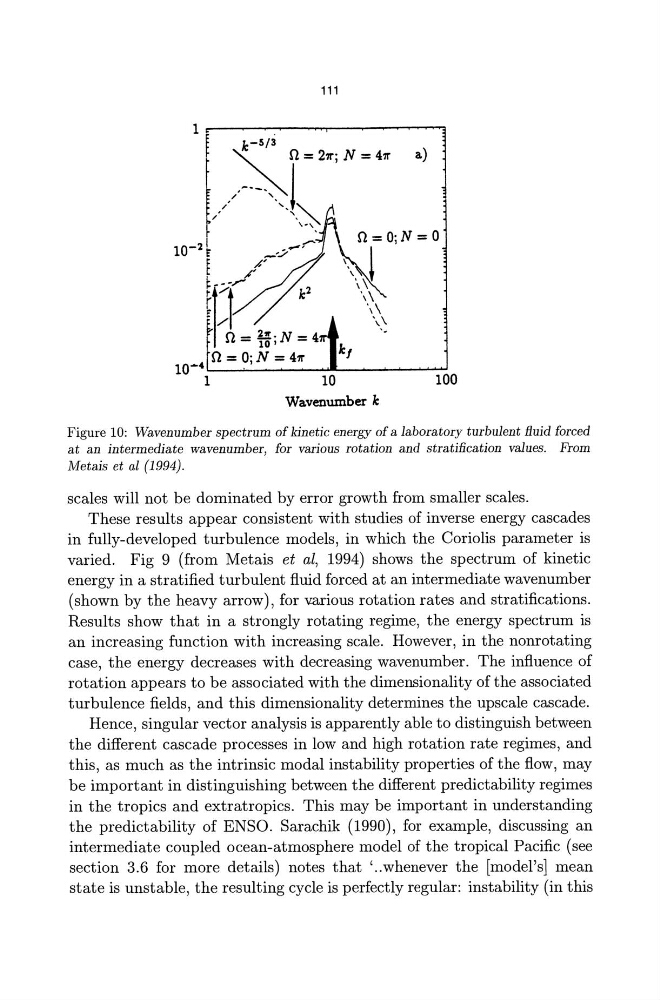
Figure 10: Wavenumber spectrum of kinetic energy of a laboratory turbulent fluid forced
at an intermediate wavenumber, for various rotation and stratification values. From
Metais et al (1994).
scales will not be dominated by error growth from smaller scales.
These results appear consistent with studies of inverse energy cascades
in fully-developed turbulence models, in which the Corio lis parameter is
varied. Fig 9 (from Metais et al, 1994) shows the spectrum of kinetic
energy in a stratified turbulent fluid forced at an intermediate wavenumber
(shown by the heavy arrow), for various rotation rates and stratifications.
Results show that in a strongly rotating regime, the energy spectrum is
an increasing function with increasing scale. However, in the nonrotating
case, the energy decreases with decreasing wavenumber. The influence of
rotation appears to be associated with the dimensionality of the associated
turbulence fields, and this dimensionality determines the upscale cascade.
Hence, singular vector analysis is apparently able to distinguish between
the different cascade processes in low and high rotation rate regimes, and
this, as much as the intrinsic modal instability properties of the flow, may
be important in distinguishing between the different predictability regimes
in the tropics and extratropics. This may be important in understanding
the predictability of ENSO. Sarachik (1990), for example, discussing an
intermediate coupled ocean-atmosphere model of the tropical Pacific (see
section 3.6 for more details) notes that ' .. whenever the [model's] mean
state is unstable, the resulting cycle is perfectly regular: instability (in this
Wavenumber k
Figure 10: Wavenumber spectrum of kinetic energy of a laboratory turbulent fluid forced
at an intermediate wavenumber, for various rotation and stratification values. From
Metais et al (1994).
scales will not be dominated by error growth from smaller scales.
These results appear consistent with studies of inverse energy cascades
in fully-developed turbulence models, in which the Corio lis parameter is
varied. Fig 9 (from Metais et al, 1994) shows the spectrum of kinetic
energy in a stratified turbulent fluid forced at an intermediate wavenumber
(shown by the heavy arrow), for various rotation rates and stratifications.
Results show that in a strongly rotating regime, the energy spectrum is
an increasing function with increasing scale. However, in the nonrotating
case, the energy decreases with decreasing wavenumber. The influence of
rotation appears to be associated with the dimensionality of the associated
turbulence fields, and this dimensionality determines the upscale cascade.
Hence, singular vector analysis is apparently able to distinguish between
the different cascade processes in low and high rotation rate regimes, and
this, as much as the intrinsic modal instability properties of the flow, may
be important in distinguishing between the different predictability regimes
in the tropics and extratropics. This may be important in understanding
the predictability of ENSO. Sarachik (1990), for example, discussing an
intermediate coupled ocean-atmosphere model of the tropical Pacific (see
section 3.6 for more details) notes that ' .. whenever the [model's] mean
state is unstable, the resulting cycle is perfectly regular: instability (in this