

70
2 Analytical Properties
Interferences
D,[ferent (DM)
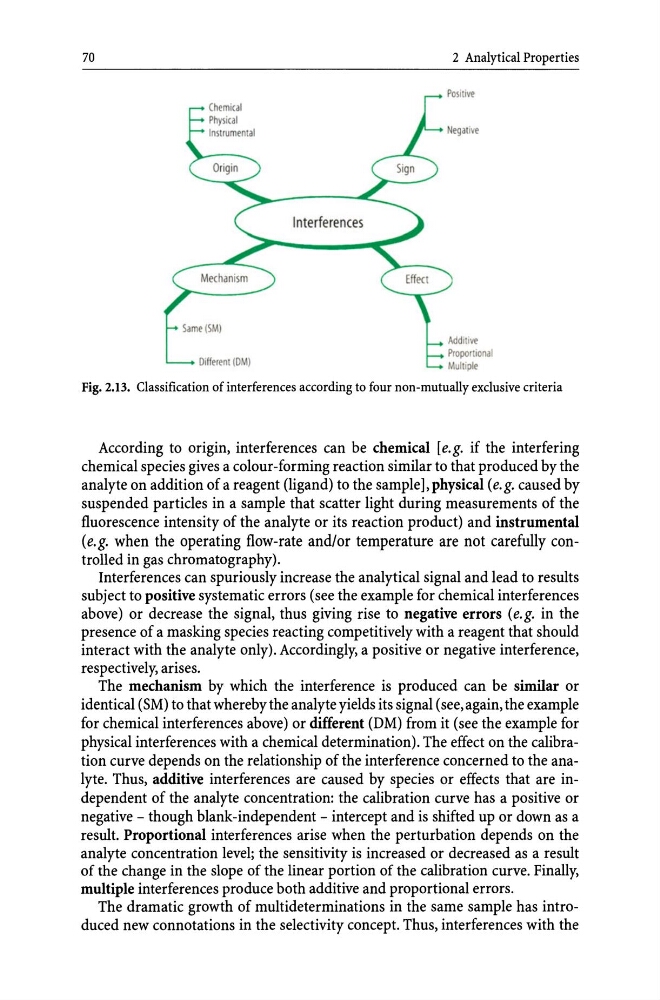
Fig. 2.13. Classification of interferences according to four non-mutually exclusive criteria
According to origin, interferences can be chemical [e. g. if the interfering
chemical species gives a colour-forming reaction similar to that produced by the
analyte on addition of a reagent (ligand) to the sample], physical (e.g. caused by
suspended particles in a sample that scatter light during measurements of the
fluorescence intensity of the analyte or its reaction product) and instrumental
(e.g. when the operating flow-rate and/or temperature are not carefully controlled in gas chromatography).
Interferences can spuriously increase the analytical signal and lead to results
subject to positive systematic errors (see the example for chemical interferences
above) or decrease the signal, thus giving rise to negative errors (e.g. in the
presence of a masking species reacting competitively with a reagent that should
interact with the analyte only). Accordingly, a positive or negative interference,
respectively, arises.
The mechanism by which the interference is produced can be similar or
identical (SM) to that whereby the analyte yields its signal (see, again, the example
for chemical interferences above) or different (DM) from it (see the example for
physical interferences with a chemical determination). The effect on the calibration curve depends on the relationship of the interference concerned to the analyte. Thus, additive interferences are caused by species or effects that are independent of the analyte concentration: the calibration curve has a positive or
negative - though blank-independent - intercept and is shifted up or down as a
result. Proportional interferences arise when the perturbation depends on the
analyte concentration level; the sensitivity is increased or decreased as a result
of the change in the slope of the linear portion of the calibration curve. Finally,
multiple interferences produce both additive and proportional errors.
The dramatic growth of multideterminations in the same sample has introduced new connotations in the selectivity concept. Thus, interferences with the
2 Analytical Properties
Interferences
D,[ferent (DM)
Fig. 2.13. Classification of interferences according to four non-mutually exclusive criteria
According to origin, interferences can be chemical [e. g. if the interfering
chemical species gives a colour-forming reaction similar to that produced by the
analyte on addition of a reagent (ligand) to the sample], physical (e.g. caused by
suspended particles in a sample that scatter light during measurements of the
fluorescence intensity of the analyte or its reaction product) and instrumental
(e.g. when the operating flow-rate and/or temperature are not carefully controlled in gas chromatography).
Interferences can spuriously increase the analytical signal and lead to results
subject to positive systematic errors (see the example for chemical interferences
above) or decrease the signal, thus giving rise to negative errors (e.g. in the
presence of a masking species reacting competitively with a reagent that should
interact with the analyte only). Accordingly, a positive or negative interference,
respectively, arises.
The mechanism by which the interference is produced can be similar or
identical (SM) to that whereby the analyte yields its signal (see, again, the example
for chemical interferences above) or different (DM) from it (see the example for
physical interferences with a chemical determination). The effect on the calibration curve depends on the relationship of the interference concerned to the analyte. Thus, additive interferences are caused by species or effects that are independent of the analyte concentration: the calibration curve has a positive or
negative - though blank-independent - intercept and is shifted up or down as a
result. Proportional interferences arise when the perturbation depends on the
analyte concentration level; the sensitivity is increased or decreased as a result
of the change in the slope of the linear portion of the calibration curve. Finally,
multiple interferences produce both additive and proportional errors.
The dramatic growth of multideterminations in the same sample has introduced new connotations in the selectivity concept. Thus, interferences with the