

290
Social, economic. scientific
or technical problem
4.\14 LYTICAL PROBLEM
Objen
Sample(s)
Measurand(s)
~
~F:'
~ ,;C
...
~
Tangible side
7 The Analytical Problem
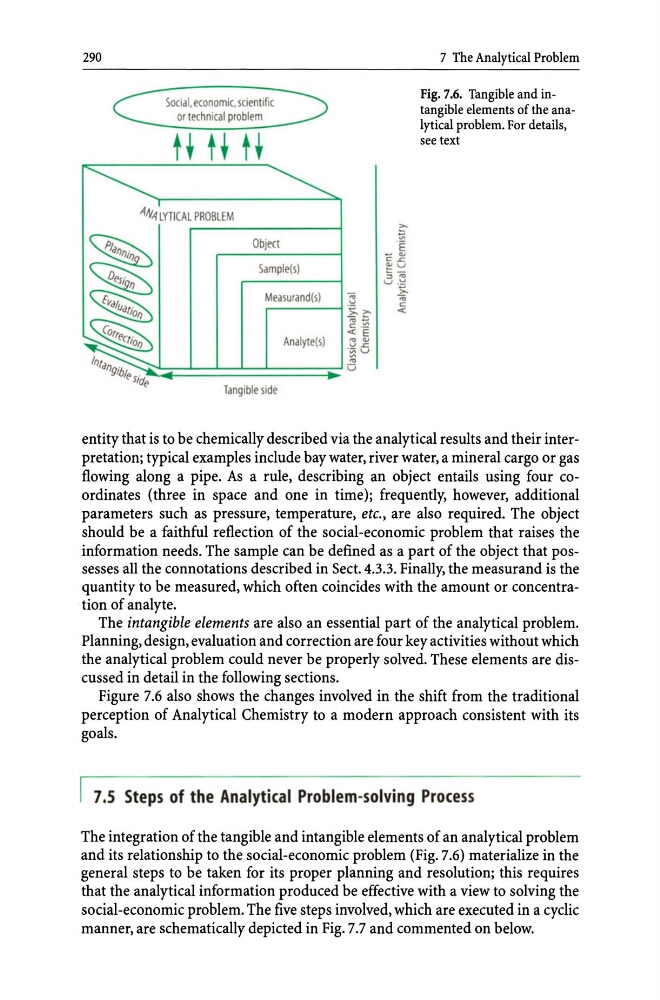
Fig. 7.6. Tangible and intangible elements of the analytical problem. For details,
see text
entity that is to be chemically described via the analytical results and their interpretation; typical examples include bay water, river water, a mineral cargo or gas
flowing along a pipe. As a rule, describing an object entails using four coordinates (three in space and one in time); frequently, however, additional
parameters such as pressure, temperature, etc., are also required. The object
should be a faithful reflection of the social-economic problem that raises the
information needs. The sample can be defined as a part of the object that possesses all the connotations described in Sect. 4.3.3. Finally, the measurand is the
quantity to be measured, which often coincides with the amount or concentration of analyte.
The intangible elements are also an essential part of the analytical problem.
Planning, design, evaluation and correction are four key activities without which
the analytical problem could never be properly solved. These elements are discussed in detail in the following sections.
Figure 7.6 also shows the changes involved in the shift from the traditional
perception of Analytical Chemistry to a modern approach consistent with its
goals.
7.5 Steps of the Analytical Problem-solving Process
The integration of the tangible and intangible elements of an analytical problem
and its relationship to the social-economic problem (Fig. 7.6) materialize in the
general steps to be taken for its proper planning and resolution; this requires
that the analytical information produced be effective with a view to solving the
social-economic problem. The five steps involved, which are executed in a cyclic
manner, are schematically depicted in Fig. 7.7 and commented on below.
Social, economic. scientific
or technical problem
4.\14 LYTICAL PROBLEM
Objen
Sample(s)
Measurand(s)
~
~F:'
~ ,;C
...
~
Tangible side
7 The Analytical Problem
Fig. 7.6. Tangible and intangible elements of the analytical problem. For details,
see text
entity that is to be chemically described via the analytical results and their interpretation; typical examples include bay water, river water, a mineral cargo or gas
flowing along a pipe. As a rule, describing an object entails using four coordinates (three in space and one in time); frequently, however, additional
parameters such as pressure, temperature, etc., are also required. The object
should be a faithful reflection of the social-economic problem that raises the
information needs. The sample can be defined as a part of the object that possesses all the connotations described in Sect. 4.3.3. Finally, the measurand is the
quantity to be measured, which often coincides with the amount or concentration of analyte.
The intangible elements are also an essential part of the analytical problem.
Planning, design, evaluation and correction are four key activities without which
the analytical problem could never be properly solved. These elements are discussed in detail in the following sections.
Figure 7.6 also shows the changes involved in the shift from the traditional
perception of Analytical Chemistry to a modern approach consistent with its
goals.
7.5 Steps of the Analytical Problem-solving Process
The integration of the tangible and intangible elements of an analytical problem
and its relationship to the social-economic problem (Fig. 7.6) materialize in the
general steps to be taken for its proper planning and resolution; this requires
that the analytical information produced be effective with a view to solving the
social-economic problem. The five steps involved, which are executed in a cyclic
manner, are schematically depicted in Fig. 7.7 and commented on below.