

7.4 Elements of the Analytical Problem
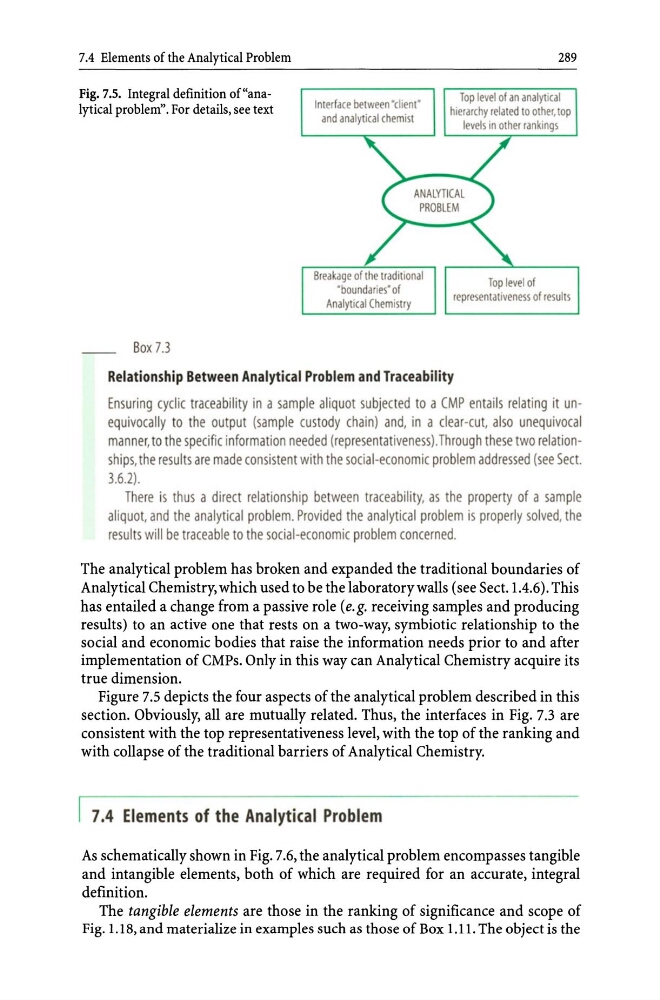
Fig. 7.5. Integral definition of "analytical problem". For details, see text
Box 7.3
Interface between "client"
and analytical chemist
Breakage of the traditional
"boundaries' of
Analytical Ch emistry
289
Top level of an analytical
hierarchy related to other, top
levels in other ranki ngs
Top level of
representativeness of results
Relationship Between Analytical Problem and Traceability
Ensuring cycl ic tracea bility in a sample aliquot subjected to a CMP entails relating it unequivocally to the output (sample custody chain) and, in a clear-cut, also unequivocal
manner, to the specific information needed (representativeness). Through these two relationships, the results are made consistent with the social-economic problem addressed (see Sect.
3.6.2).
There is thus a direct relationship between traceability, as the property of a sample
aliquot, and the analytical problem. Provided the analytical problem is properly solved, the
results will be traceable to the social-economic problem concerned.
The analytical problem has broken and expanded the traditional boundaries of
Analytical Chemistry, which used to be the laboratory walls (see Sect. 1.4.6). This
has entailed a change from a passive role (e. g. receiving samples and producing
results) to an active one that rests on a two-way, symbiotic relationship to the
social and economic bodies that raise the information needs prior to and after
implementation of CMPs. Only in this way can Analytical Chemistry acquire its
true dimension.
Figure 7.5 depicts the four aspects of the analytical problem described in this
section. Obviously, all are mutually related. Thus, the interfaces in Fig. 7.3 are
consistent with the top representativeness level, with the top of the ranking and
with collapse of the traditional barriers of Analytical Chemistry.
7.4 Elements of the Analytical Problem
As schematically shown in Fig. 7.6, the analytical problem encompasses tangible
and intangible elements, both of which are required for an accurate, integral
definition.
The tangible elements are those in the ranking of significance and scope of
Fig. 1.18, and materialize in examples such as those of Box 1.11. The object is the
Fig. 7.5. Integral definition of "analytical problem". For details, see text
Box 7.3
Interface between "client"
and analytical chemist
Breakage of the traditional
"boundaries' of
Analytical Ch emistry
289
Top level of an analytical
hierarchy related to other, top
levels in other ranki ngs
Top level of
representativeness of results
Relationship Between Analytical Problem and Traceability
Ensuring cycl ic tracea bility in a sample aliquot subjected to a CMP entails relating it unequivocally to the output (sample custody chain) and, in a clear-cut, also unequivocal
manner, to the specific information needed (representativeness). Through these two relationships, the results are made consistent with the social-economic problem addressed (see Sect.
3.6.2).
There is thus a direct relationship between traceability, as the property of a sample
aliquot, and the analytical problem. Provided the analytical problem is properly solved, the
results will be traceable to the social-economic problem concerned.
The analytical problem has broken and expanded the traditional boundaries of
Analytical Chemistry, which used to be the laboratory walls (see Sect. 1.4.6). This
has entailed a change from a passive role (e. g. receiving samples and producing
results) to an active one that rests on a two-way, symbiotic relationship to the
social and economic bodies that raise the information needs prior to and after
implementation of CMPs. Only in this way can Analytical Chemistry acquire its
true dimension.
Figure 7.5 depicts the four aspects of the analytical problem described in this
section. Obviously, all are mutually related. Thus, the interfaces in Fig. 7.3 are
consistent with the top representativeness level, with the top of the ranking and
with collapse of the traditional barriers of Analytical Chemistry.
7.4 Elements of the Analytical Problem
As schematically shown in Fig. 7.6, the analytical problem encompasses tangible
and intangible elements, both of which are required for an accurate, integral
definition.
The tangible elements are those in the ranking of significance and scope of
Fig. 1.18, and materialize in examples such as those of Box 1.11. The object is the